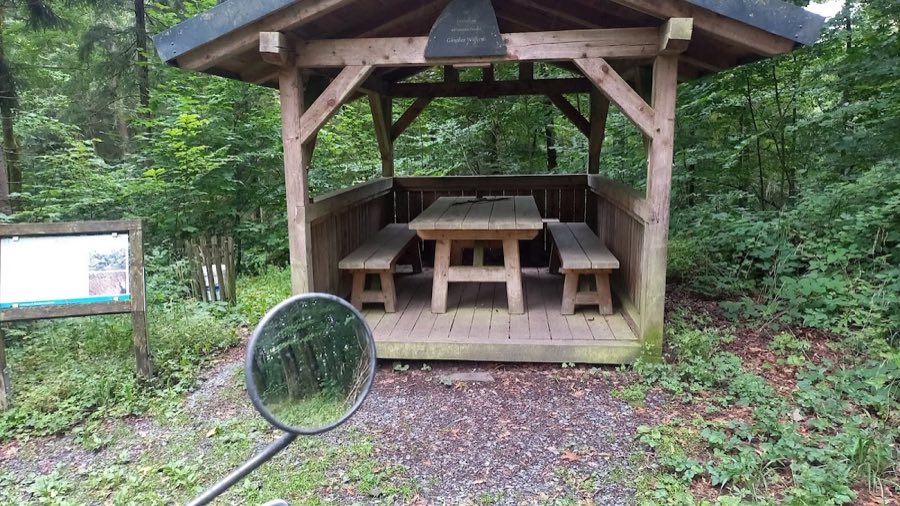
No. 36771
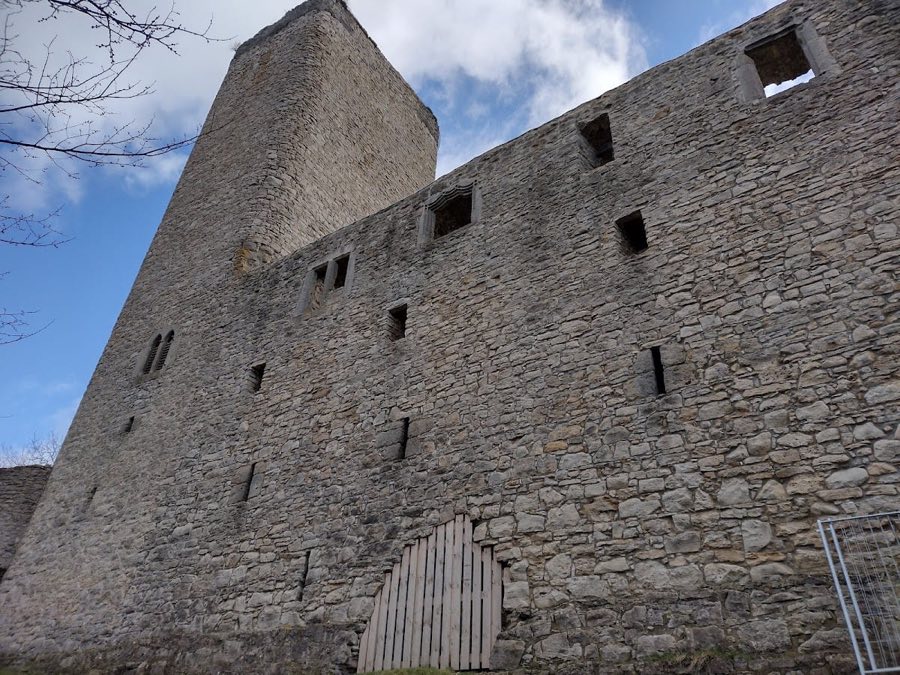
Burg Wallenrode
Germany
CastleRuin13th century
No. 53982
Castle · Germany
No. 53982 · 50.554 N, 11.716 E
Quick summary
Burgk Castle is a castle in Germany with origins associated with the 18th century.
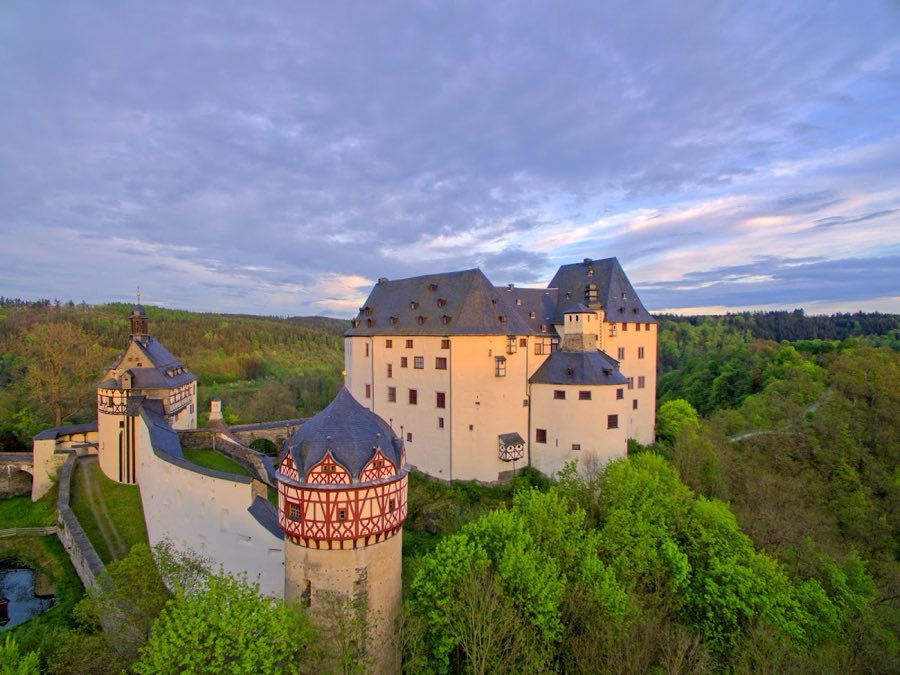
See all castles in GermanyBurgk Castle in Burgk, Germany, is a schloss that began as a medieval fortification erected by the Vogts of Gera, a local German noble family and forebears of the House of Reuss; the site dates to the Middle Ages and was remodelled into a residential schloss around 1403, later receiving Baroque and 18th-century updates. The building belonged to the Reuss family from its medieval origins until 1945 and served at times as the seat of a small princely territory, giving it a long role in regional administration and noble residence.
During the Middle Ages the Vogts of Gera established the original fortification; control passed briefly to the Teutonic Knights before returning to the Gera vogts and, after that line died out, to the Greiz branch of the Reuss family. Around 1403 the defensive complex was transformed into a schloss. A wooden-plank parlour dated to 1402 was later found behind a Baroque interior wall, showing the continuity of occupation from the early 15th century onward.
From the late 16th century Burgk gave its name to the small principality of Reuss-Burgk. The schloss was the princely residence in the periods 1596 to 1640 and again from 1668 to 1697. Heinrich II Reuss of Burgk (1575–1639) established his household here, and in 1632 Albrecht von Wallenstein issued a letter of protection to the residence and village; that measure contributed to the preservation of the building and settlement during the Thirty Years’ War.
In 1697 Reuss-Burgk passed by inheritance to Heinrich XIII, Count Reuss zu Untergreiz (1675–1733), after which the castle served primarily as a hunting and summer house for the counts based at the Greiz lower castle. Heinrich III oversaw a major programme of modernization during his household years, completed in 1763, which altered facades, opened windows, removed an east tower and several outbuildings, and terraced a southern spur to create a formal garden and approach to a new pavilion, transforming the building into a representative pleasure residence.
After Heinrich III died in 1768 the property went to Heinrich XI Reuss zu Obergreiz, who was created an Imperial Prince in 1778. The monarchies of the Reuss older and younger lines ended with the German November Revolution of 1918, the nationwide uprising that led to the abdication of the imperial and many princely rulers and the end of their sovereign status. The older line fell silent in the male line with Heinrich XXIV in 1927, and the castle passed to his sister Hermine, who was married to the former German Emperor Wilhelm II; in 1933 Hermine transferred Burgk to her sister Ida, wife of Prince Christoph Martin zu Stolberg-Roßla.
The property remained in family hands until 1945, which allowed much of the original interior to survive intact; after the Second World War the castle was expropriated and became state property. It opened as a public museum in 1952 and later became a cultural centre for East Thuringia and the Vogtland. From 1980 the museum director Lothar Lang, collaborating with the Pirckheimer Society, greatly expanded an exlibris collection into one of the world’s most important holdings. The schloss has also served as a film and television set for productions such as the 1968 Im Himmel ist doch Jahrmarkt, the 1975 Til Eulenspiegel, and the 2013 Die goldene Gans.
The complex stands on a rocky plateau above the village of Burgkhammer and a bend of the Saale River, laid out as a compact fortified residence combining medieval defensive works with later pleasure-garden features. The main residential block, the palas (the principal great-hall building), remains intact and retains the scale and layout of the medieval residence that was adapted in successive centuries. A large defensive tower, the bergfried (defensive tower), also survives and marks the original military character of the site.
Access to the inner ward is by two stone bridges that were once drawbridges, linking the approach to the main building; the outer bridge runs beneath the former district office, where a historic toll tariff board is displayed. In front of the inner gates large wheeled stones, known locally as wheel deflectors, were reused to protect the entrance and remain set near the gateway. When a second gatehouse was taken down in 1739, a chamber was found containing a mummified dog, apparently sealed into the wall about four centuries earlier; that dog is now shown behind glass in the entrance area.
The castle chapel and the kitchens are preserved in good condition. The kitchen retains an impressive chimney and extraction system that illustrates pre-industrial cooking arrangements for a noble household. At the western end of the compound the so-called Red Tower stands capped by a timber-framed roof executed in late Renaissance manner; a covered defensive wall-walk (a raised passage for guards) leads to this tower and from it three further wall-walks continue, one above another, within the curtain wall.
South of the buildings a mid-18th-century French-style park was laid out, with a late Baroque to Classicist pavilion known as the Sophienlust at its centre. Inside the schloss the former Rittersaal (knights’ or assembly hall) functions as a concert space, while a baroque state room retains a bed alcove and several residential suites display 18th-century Rococo and chinoiserie furnishings. The hunting room presents an extensive array of weapons and trophies that reflect the site’s use as a noble hunting residence.
The chapel houses a largely original organ by Gottfried Silbermann from 1743, with twelve registers on one manual and pedal; it was first sounded at the dedication service on 14 April 1743. The instrument underwent a probable retuning around 1860 to equal temperament, a 1939 restoration that added a pedal coupling by Hermann Eule, a 1956 reduction of wind pressure by Eule, and further restorations and reintonations in 1982 that established a modified Silbermann-Sorge tuning; the organ now sounds at a pitch of Chorton a1 = 463 Hz with wind pressure near 84 mm water column. A small five-register positive organ (a compact movable organ) built by Johann Tobias Hübe in 1722 remains in the Rittersaal; pedalwork that had been added later was removed during a 1974 restoration.
No. 36771
No. 85466
No. 54171
No. 75616
Comments
Comments for Burgk Castle will require a verified account before posting.
We'll send a verification link before your first comment is published.