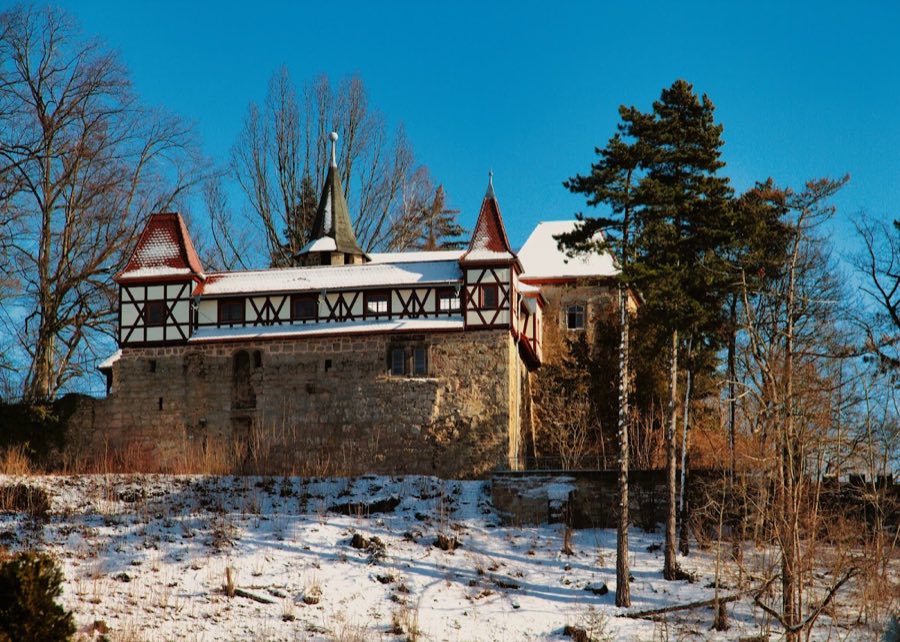
No. 54171
Burg Neuhaus
Germany
CastleRuinFor events13th century
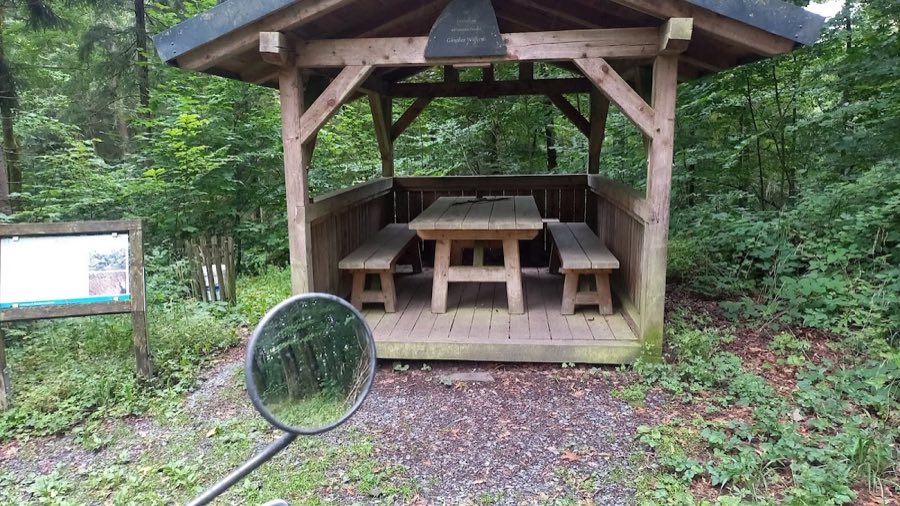
No. 36771
Castle · Germany
No. 36771 · 50.327 N, 11.569 E
Quick summary
Burg Wallenrode is a castle in Germany with origins associated with the 13th century.
See all castles in GermanyBurg Wallenrode stands in the Geroldsgrüner Forst in northern Bavaria. It was founded in the mid 13th century by Albert von Waldinrode, son of the Meranian marshal Eberhard Förtsch von Thurnau, and served as the family seat of the von Wallenrode line, ministeriales of the Meranian house of Andechs. After the Meranian dynasty died out the site passed into the possession of the bishops of Bamberg.
The castle appears in the episcopal property register Urbar A around 1325 but is absent from the 1348 register, indicating its destruction between those dates. Contemporary disputes over the Meranian inheritance involved the counts of Orlamünde, and the loss of the stronghold occurred during the episcopates of Johann Wulfing von Schlackenwerth and Heinrich II von Sternberg. The von Wallenrode family thereafter moved toward Bad Berneck and built Neu-Wallenrode, while the ruined place became known as Alt-Wallenrode and was also called Burgstein; Burg Hohenrod is cited as a predecessor site.
A map by Johann Christoph Stierlein from 1816 recorded the visible features of the ruin, and the location is now protected as an archaeological monument under the registration number D-4-5635-0010.
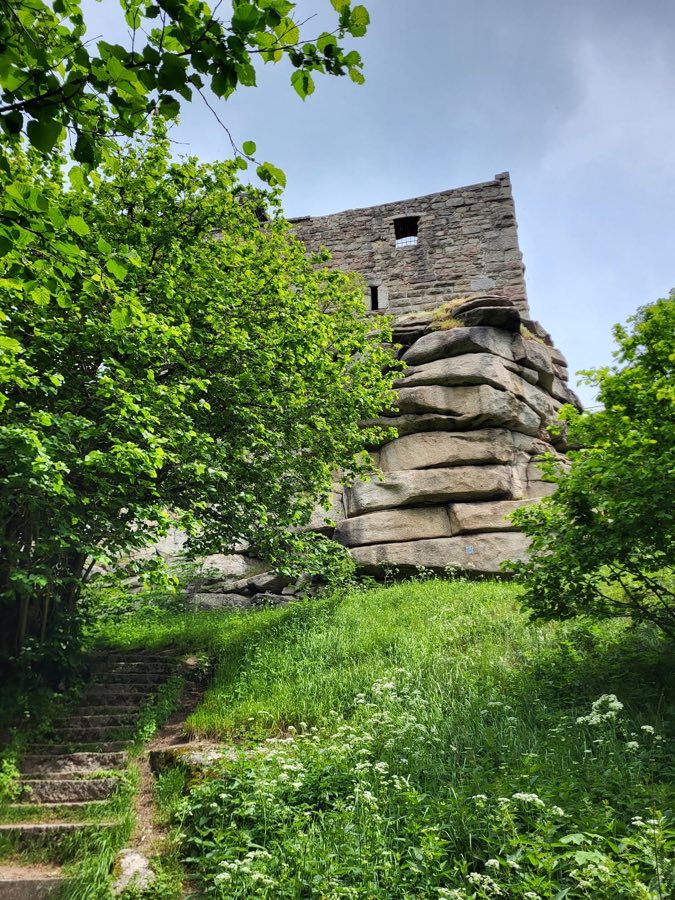
The site occupies a rocky spur and follows the typical hill-castle plan, with earth banks and cut ditches forming a linear enclosure along the ridge. It lies at about 575 meters above sea level and roughly two kilometres west-southwest of the church in Geroldsgrün. Measurements indicate the enclosure extended approximately 314 by 60 metres and was divided into four compartments by multiple defensive ditches.
Within the layout a wedge-shaped inner enclosure of about 8 by 30 metres marks the compact core that once held the principal buildings against the rock. Surviving earthworks include two preserved neck ditches that cut off the spur, several subsidiary wall ditches, and banks that separate two forward zones interpreted as outer baileys. The principal rock stronghold was defended by two particularly deep neck ditches.
The form of the banks has been taken to suggest measures against horse-borne attack, a feature that has led to proposals that parts of the plan may relate to responses to earlier incursions. Many of the features shown on Stierlein’s 1816 map remain visible as ditches, banks and the footprint of the core enclosure, and they are recorded and protected under the site’s monument designation.
No. 54171
No. 53982
No. 85466
No. 99011
Comments
Comments for Burg Wallenrode will require a verified account before posting.
We'll send a verification link before your first comment is published.