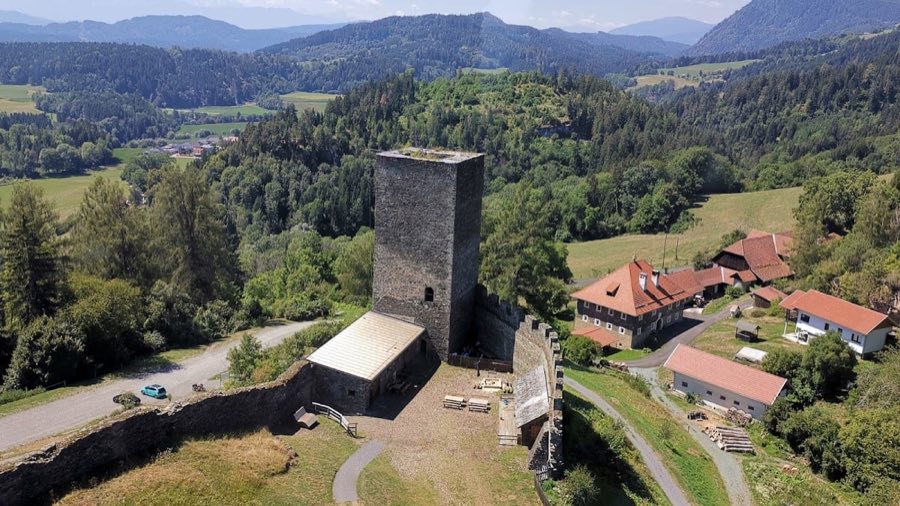
No. 94130
Burgruine Liebenfels
Austria
CastleRuin14th century
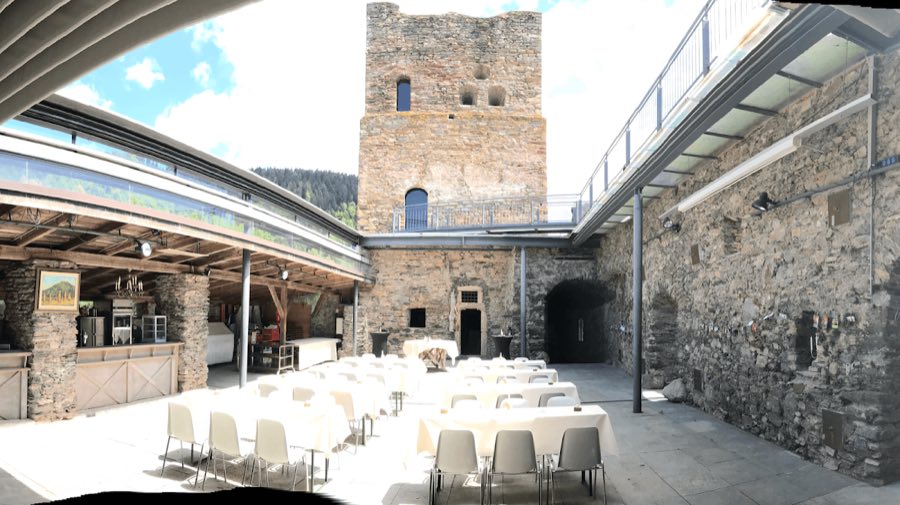
No. 51991
Castle · Austria
No. 51991 · 46.727 N, 14.182 E
For events
Burgruine Glanegg is marked as a château or castle venue lead. Capacity, indoor/outdoor spaces, catering rules, and accommodation options are published only after public verification.
Event types: Weddings, Private events, Cultural gatherings, Filming and photography
Ceremony spaces: Ceremony setting to verify
Quick summary
Burgruine Glanegg is a castle in Austria with origins associated with the 15th century.
See all castles in AustriaBurgruine Glanegg is a historic castle located in the municipality of Mautbrücken, Austria. It was constructed by medieval European nobility and played an important role in the region’s military and administrative history.
The first known record of the castle dates back to 1121, when it was under the possession of Duke Heinrich III of Carinthia, a member of the Eppenstein noble family. After Heinrich’s death in 1122, ownership transferred to his nephew, Count Bernhard von Spanheim. Bernhard subsequently passed the castle to his nephew, Margrave Ottokar III of Styria. After Ottokar III’s death, his son Ottokar IV transferred Glanegg to Duke Leopold V in 1192, reflecting the shifting political alliances and inheritance patterns common in the region during the High Middle Ages.
During the late 15th century, from 1473 to 1478, the castle faced military pressure amid Turkish incursions into the area. While it suffered some damage during these attacks, Glanegg was never captured by the invaders. By 1534, King Ferdinand I owned the property, but financial difficulties forced him to pledge the castle to Ulrich II von Ernau. Under the Ernau family, the castle underwent significant reconstruction and expansion, transforming it into a more formidable fortress. The Ernau heirs solidified full ownership in 1588, ensuring the lineage’s control over the estate for several generations.
In the early 18th century, the castle changed hands to Count Stampfer in 1713, who contributed to local infrastructure by initiating construction of the first road through the Glan valley. The castle saw renewed military importance during the 1813 Sixth Coalition War when it was fortified in preparation for defense, although it was not engaged in combat during that conflict.
Ownership passed to Hofrichter Hirzegger of Ossiach in 1818, who gifted the castle as a wedding present to his daughter Josephine. By 1860, the castle was owned by Anton Kinz, a wine merchant and mayor of Bregenz. During Kinz’s tenure, the castle’s condition began to decline, accelerated in part by the removal of roofs and wooden components. This dismantling was influenced by the roof tax introduced by Emperor Joseph II in the late 18th century, which penalized the possession of roofs, encouraging owners to remove them to reduce tax burdens. Despite this decline, portions of the castle remained inhabited into the late 19th century.
Today, the property belongs to the Zwilling family. Since 1996, the municipality of Glanegg has leased the site for 25 years, entrusting it to the “Burgverein Glanegg” society to oversee renovation and revitalization efforts, reflecting an ongoing commitment to preserving the castle’s cultural heritage.
Burgruine Glanegg stands as the third largest historic fortress in the Austrian province of Carinthia. It occupies a commanding position above the Glan river valley, where it historically controlled movement through this important passage. The castle’s structure reflects a lengthy construction history, with architectural elements dating from the Romanesque period through the Renaissance.
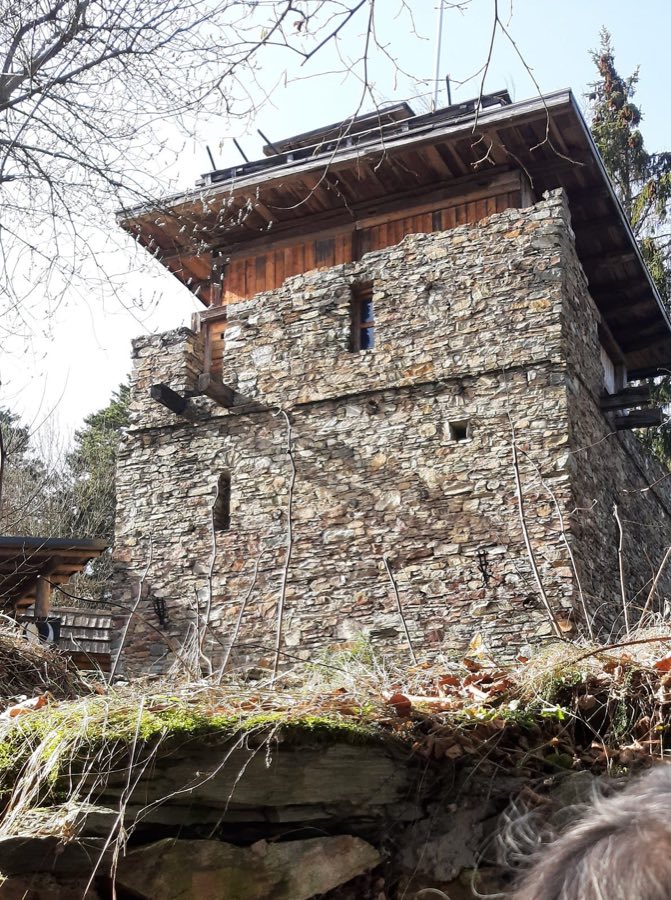
At the heart of the complex is a Romanesque bergfried, a type of tall, fortified tower serving as the main stronghold or keep. This central tower contains a signal window, a feature designed to facilitate visual communication or observation over the surrounding landscape. The bergfried represents the earliest core of the castle’s defensive architecture.
One of the most striking surviving elements is the large round tower that guards the castle entrance. This tower’s considerable size and position underscore its role in protecting access to the fortress. Construction materials vary throughout the complex, indicating continuous building campaigns and adaptations over several centuries. Such variations reveal transitions in local building practices and the castle’s evolving defensive requirements.
By the mid-19th century, Burgruine Glanegg remained fully intact, preserving roofs and wooden structures. However, following 1860, these elements were systematically removed, hastening the building’s deterioration. The loss of such coverings exposed the stonework to weathering, contributing to structural decline. Despite this, some portions of the castle layout supported habitation into the late 1800s, hinting at its continued albeit diminished use.
While detailed records of inscriptions, decorative details, or specific archaeological discoveries are not documented in available sources, the castle’s overall form and surviving elements continue to convey its medieval and early modern role as a fortified residence controlling an important valley route. Restoration efforts initiated in the late 20th century aim to stabilize these remains and celebrate Glanegg’s place in the historic landscape of Carinthia.
No. 94130
No. 92730
No. 32569
No. 84233
Comments
Comments for Burgruine Glanegg will require a verified account before posting.
We'll send a verification link before your first comment is published.