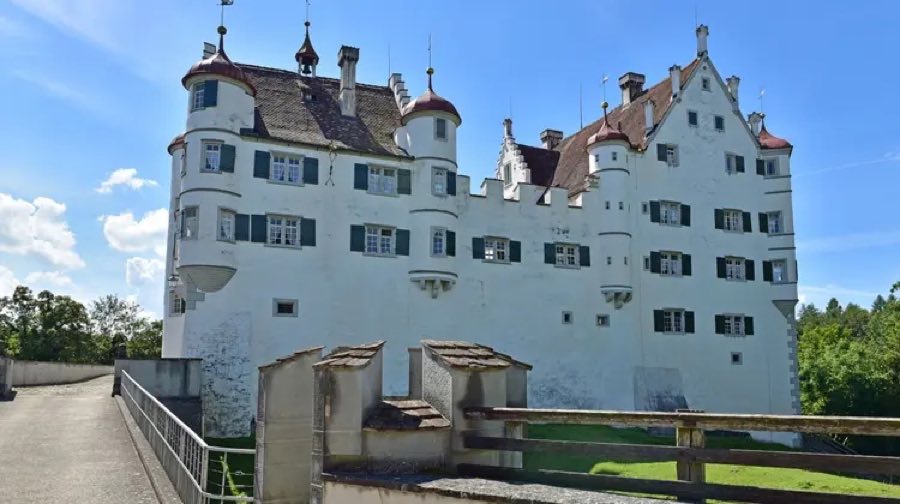
No. 39615
Altenklingen Castle
Switzerland
CastleRestored9th century
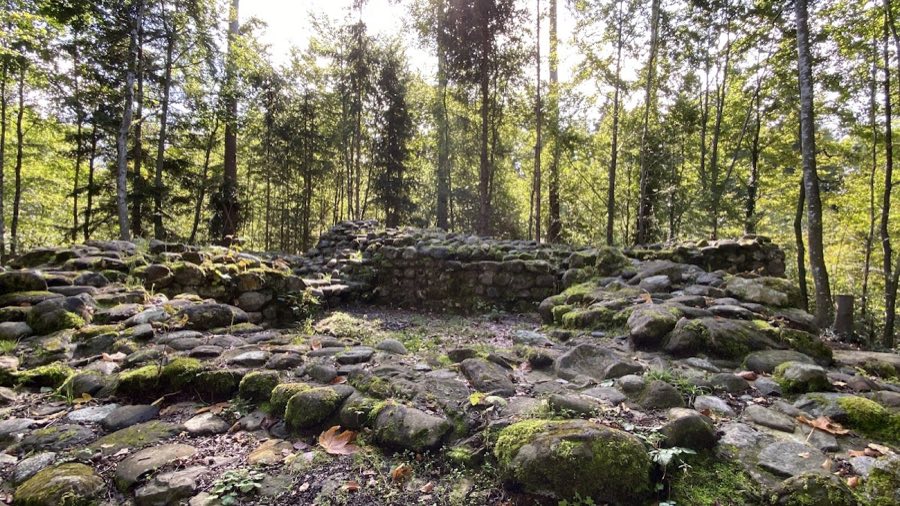
No. 43235
Castle · Switzerland
No. 43235 · 47.514 N, 9.055 E
Quick summary
Burgruine Heitnau is a castle in Switzerland with origins associated with the 13th century.
See all castles in SwitzerlandBurgruine Heitnau stands above the municipality of Braunau in Switzerland and was established in the medieval period by the feudal authorities connected to the Counts of Toggenburg.
The place-name first appears in a document of 4 July 1209, where Arnold von Heitnau is recorded as a ministerial, a knight in service to Count Diethelm II of Toggenburg. The castle served as the local seat that managed Toggenburg holdings in the upper Lauchetal. Its older name likely derived from the phrase “Au eines Heito,” an early form that evolved into the modern toponym.
During the 1200s control of the local lordship passed progressively to the Tobel commandery. In 1258 the commandery obtained the vogtei, or protective authority, over certain goods at Tägerschen, and in 1275 Diethelm IV of Toggenburg formally bequeathed the castle together with its rights and possessions to the Tobel commandery. In the mid-13th century the castle was damaged by fire and then rebuilt, but after that rebuilding it entered a period of gradual decline.
Occupation continued until about the middle of the 14th century. The estate remained under the authority of the Herrschaft and the Tobel commandery through the centuries that followed, up to the political changes of 1798. In 1807 stones taken from the castle’s defensive structures were used in construction of the evangelical church in Braunau and were later incorporated in the village schoolhouse. Between 1950 and 1954 the ruins were cleared under scientific supervision using penal labour; those excavations revealed building phases despite strong disturbance of the occupation layers by earlier, undocumented digging.
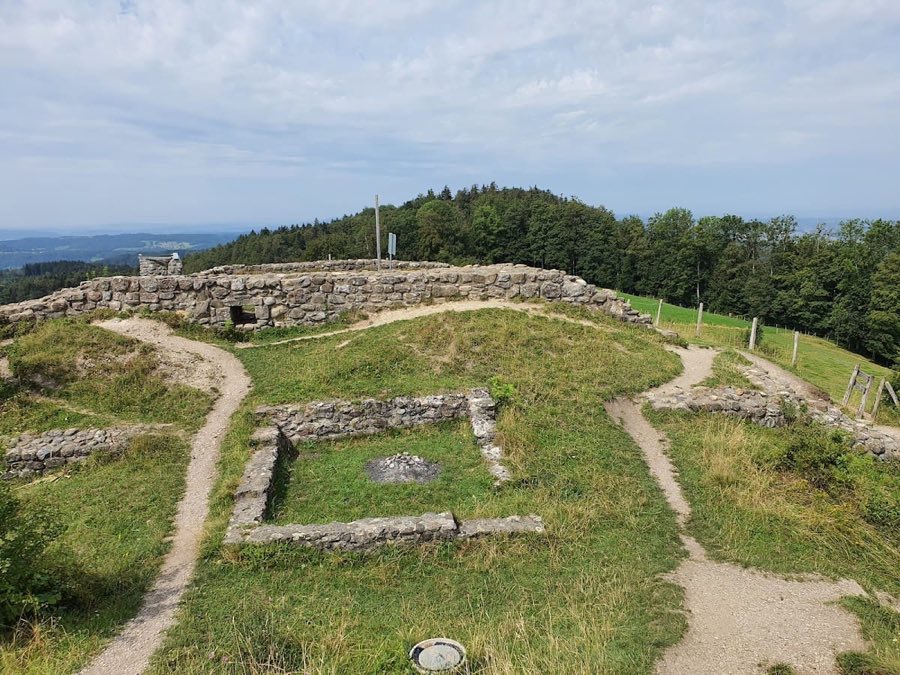
The site is a hilltop castle ruin occupying a tongue-shaped spur that measures roughly 62 metres across at the northern end and about 50 metres at the southern end. The slope falls gently from the north edge of the Oberhausen plateau and then drops away steeply on three sides into deep ravines, a position chosen for natural defence. The Burgbach runs along the eastern ravine, and a smaller stream beneath the northwest foot of the spur joins it, defining the castle’s protected perimeter.
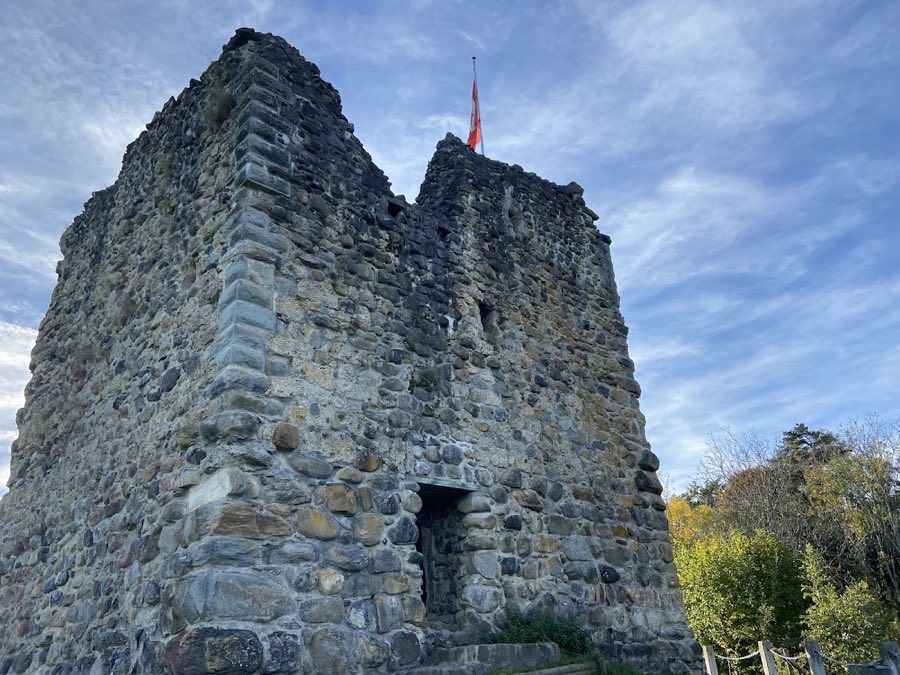
Archaeology has confirmed surviving sections of masonry that once formed the castle’s defensive and domestic walls. These stone walls date to the medieval occupation of the site; documentary evidence records a mid-13th century rebuilding after a destructive fire, so parts of the visible masonry relate to that reconstruction. Over time elements of the fortification were quarried for local building projects; a substantial removal of stones in 1807 provided masonry for the evangelical church at Braunau and later for the schoolhouse, so many standing fragments were lost to later reuse.
Excavation work carried out from 1950 to 1954 exposed the stratigraphy and remaining construction phases. The clearance revealed the layout of surviving wall courses and provided important information about the sequence of building and repair, though the archaeological layers had been heavily disturbed by earlier unrecorded digs. Today the site remains as fragmentary wall remnants and visible masonry set into the hilltop, with the exposed stratigraphic profile documenting the castle’s long history of construction, damage, and partial reuse.
No. 39615
No. 99445
No. 14966
No. 44123
Comments
Comments for Burgruine Heitnau will require a verified account before posting.
We'll send a verification link before your first comment is published.