No. 47923
Gülek Castle
Turkey
CastleIntact13th century

No. 90807
No. 90807 · 37.019 N, 34.615 E
Quick summary
Çandır Castle is a castle in Turkey with origins associated with the 13th century.
See all castles in TurkeyÇandır Castle stands in Çandır, Toroslar municipality, Türkiye, and the stone work that survives was built during the Armenian Kingdom of Cilicia.
The fortress has been linked to the Byzantine fort known as Papirion and to the emperor Zeno, who is reported to have built a stronghold and sought refuge there in the fifth century, but that connection lacks archaeological support. The castle rose to wider prominence in the period of the Armenian principality in the twelfth through the fourteenth centuries, when the site became a center of Het’umid authority. During those centuries the stronghold served as a residence for Armenian lords and kings.
Çandır controlled two routes leading northward into central Anatolia, one road providing a direct link to the nearby Het’umid fortress of Lampron. The castle was the home of Sempad the Constable, who commissioned a church that was completed in 1251. A dedicatory Armenian inscription on the church’s southern exterior recorded that completion and honored Sempad’s father; that inscription was still visible into the mid-1930s but had disappeared by 1946. After the Armenian period the site passed in turn to the Karamanoğulları, to the Mamluks, and later into Ottoman hands. The site was surveyed in 1979 and an archaeological and historical plan was published in 1987. In recent decades a small house, described alternatively as a fire tower, was erected within the outer enclosure for a fire warden appointed by the Ministry of Forestry.
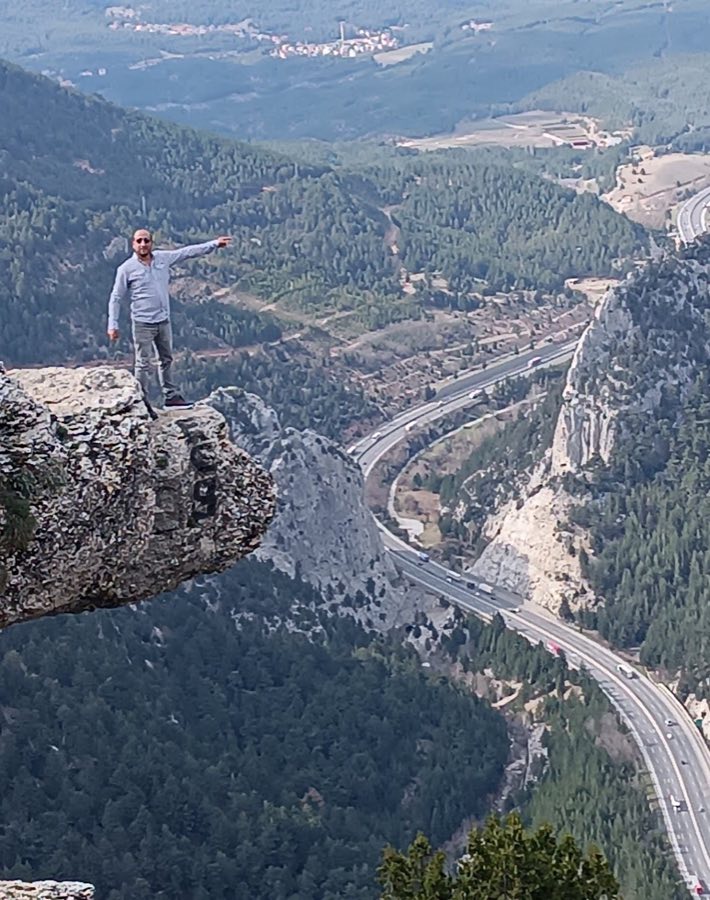
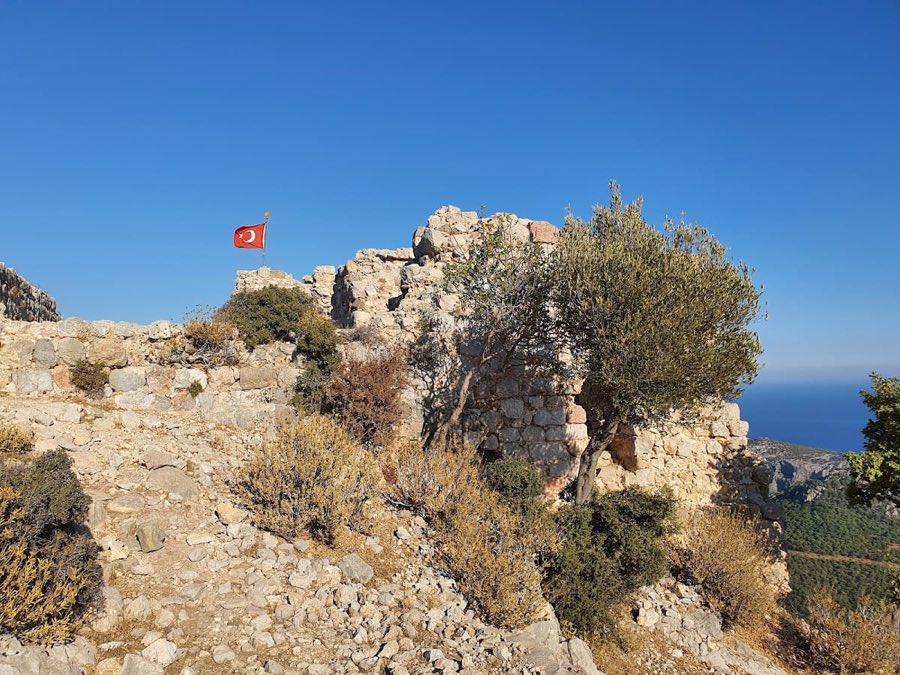
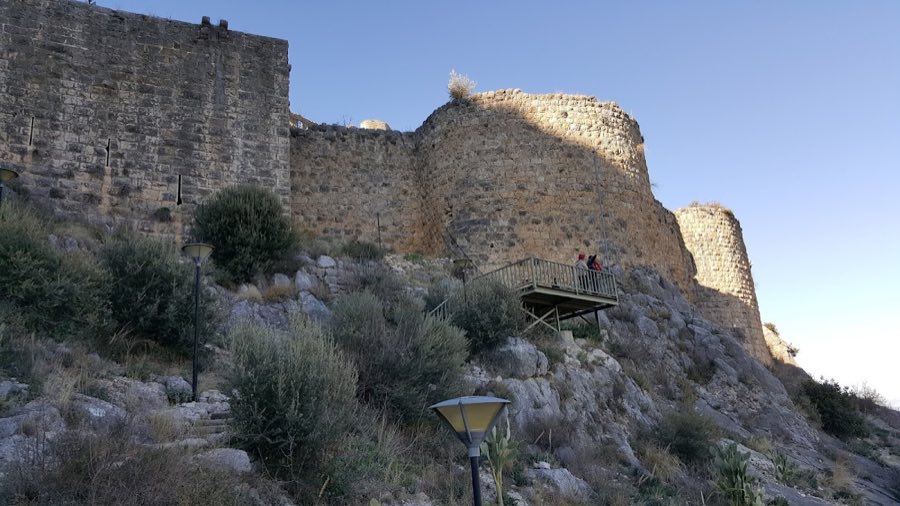
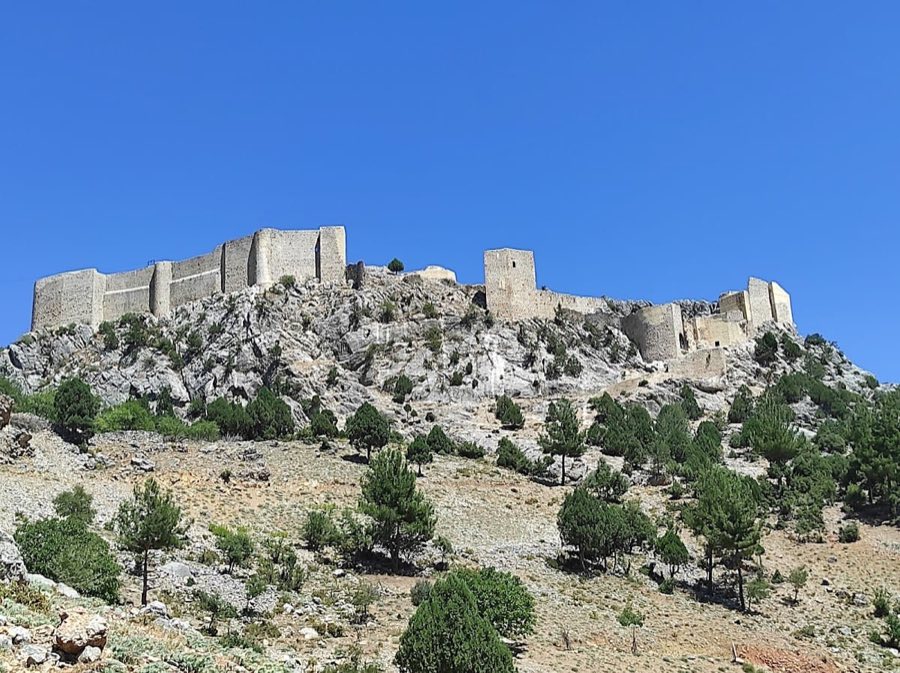
Perched atop a block-like table mountain in the Taurus range, the castle occupies a broad plateau at about 1,125 metres above sea level. The defensive enclosures and internal buildings cover a wide area across the flat summit, and much of the masonry and many of the interior structures survive only as ruins. Remnants of projecting defensive bastions remain along the circuit, indicating the position of the original perimeter.
Access to the summit was deliberately limited and is reached by a single rock-cut approach. A steep stair is cut into the vertical face of the mesa and is at places partially vaulted; the flight is commonly described as roughly 140 steps and runs alongside a sloping platform that appears to have been used for hauling goods. Other descriptions give a count of 172 steps, and traces of steps also descend from the southwest side to a natural water source below. A narrow, roughly thirty-metre approach is recorded before the stairway begins, followed by a long run of steps up the slope.
Two of the more substantial buildings on the plateau survive enough to be remarked. A two-storey residential block stands among the ruins, its walls built of carefully dressed stone showing refined masonry. Nearby the remains of a church display similarly finished ashlar work; the church’s southern outer wall once carried the Armenian dedicatory inscription dated 1251 that recorded its completion by Sempad the Constable in honor of his father. The church fabric is partially preserved in situ, with dressed stone blocks still forming sections of walling.
Later reuse within the enclosure includes a small house or fire tower constructed for forest protection purposes, placed inside the historic bounds to house a fire warden appointed by the Ministry of Forestry. Today the principal medieval buildings are fragmentary, while the dressed stone technique of the residence and the church remains evident where their masonry still stands.
No. 47923
No. 21414
No. 16826
No. 51815
Comments
Comments for Çandır Castle will require a verified account before posting.
We'll send a verification link before your first comment is published.