No. 82433
Paleis op de Meir
Belgium
PalaceRestoredFor events18th century
No. 35566
No. 35566 · 51.177 N, 4.464 E
Quick summary
Cantecroy Castle is a castle in Belgium with origins associated with the 13th century.
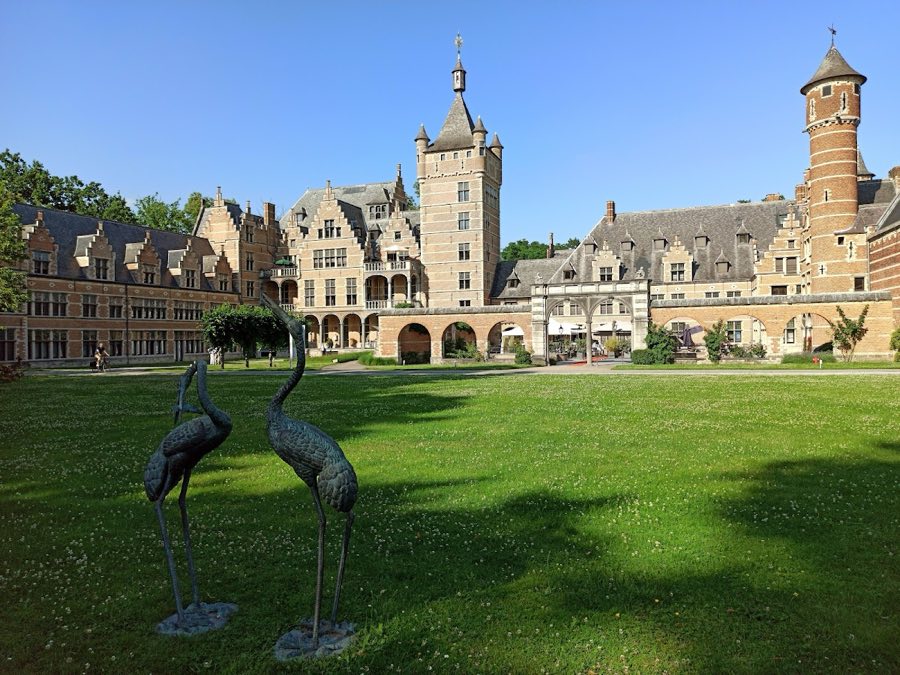
See all castles in BelgiumCantecroy Castle in Mortsel, Belgium, is a medieval estate whose recorded history begins in the 13th century and whose exterior reflects later Flemish Renaissance rebuilding. The site likely grew from an early Frankish allod (a privately held landholding), and it ranks among the oldest fortified residences in the region. Over many centuries the property served as a noble residence, an administrative center tied to the Duchy of Brabant, and a local stronghold that changes of ownership, legal disputes and intentional demolition repeatedly reshaped.
The earliest documentary reference occurs in 1239 when a local noble signed a charter under the name Cantincrode, a placename that later corrupted into Cantecroy and is not connected to the House of Croÿ. In the late 13th century stewards for the duchy administered the estate; after criticism of one steward’s rule the goods tied to the site were transferred to Duke John II of Brabant. In 1296 the site passed to William III Berthout (also called William of Berchem), who had the main keep built between 1296 and 1308.
During the 14th and 15th centuries the property passed through members of the van Ranst and van Berchem families. One lord converted the residence into a fortified stronghold while holding high office at the Burgundian court, serving Philip the Good and Charles the Bold. Subsequent inheritance disputes divided the estate among branches of related families; in the early 16th century half the property came briefly into the hands of Hendrik van Pontaillier, who soon died and whose widow sold her interest.
In the mid-16th century Nicolas Perrenot de Granvelle became owner and was succeeded by his son Antoine, who in 1564 was appointed Viceroy of Naples. Antoine placed his relative Thomas Perrenot de Granvelle in charge as administrator; Thomas later became owner. In 1566 the castle withstood an attack by iconoclasts. Thomas elevated the site and its neighbouring villages into a county. The estate next passed through members of the Granvelle family and then, by testamentary arrangement, to François-Thomas d’Oiselet under a condition approved by Emperor Rudolf II that the heir marry Rudolf’s acknowledged daughter, Charlotte of Austria.
Jan Baptist Maes purchased the property in 1616, but because of Maes’s debts the city of Antwerp ordered the defensive works torn down; shortly after this period the medieval keep was demolished in 1618. The castle changed hands again, passing to Philip de Godines and, through marriage, into the Fiennes family in 1655. The Fiennes owners rebuilt the house in the Flemish Renaissance manner and laid out the surrounding gardens, producing the front façade that survives from around the end of the 17th century. The estate left the Fiennes line in 1718 and entered the De Termeeren family, before being sold in 1823 to Jozef Renier Osy de Wichem, one of the delegates who invited Leopold of Saxe-Coburg to accept the Belgian throne in 1831.
In the early 20th century the property passed through private hands, and restorations were undertaken by Arthur De Groodt and Juliette Adant after 1921. Between 1927 and 1932 the poet Alice Nahon lived in the chapel, and during the same interwar years the castle hosted a circle of intellectuals, artists, scientists and politicians; Albert Einstein spent a period there while awaiting a United States visa after leaving Nazi Germany. In the second half of the 20th century Rosalie Van Daele purchased the neglected house and carried out a program of repair and reconstruction that sought to restore elements to a sixteenth-century appearance on the basis of historic drawings. After her death the property entered corporate management and was developed into luxury serviced flats with a public foyer, meeting rooms, a wellness centre and a grand café.
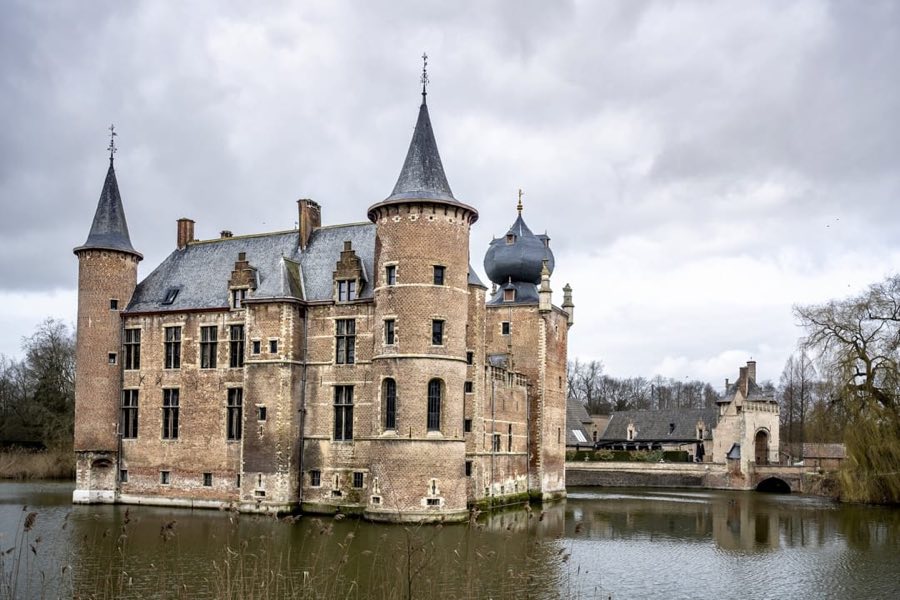
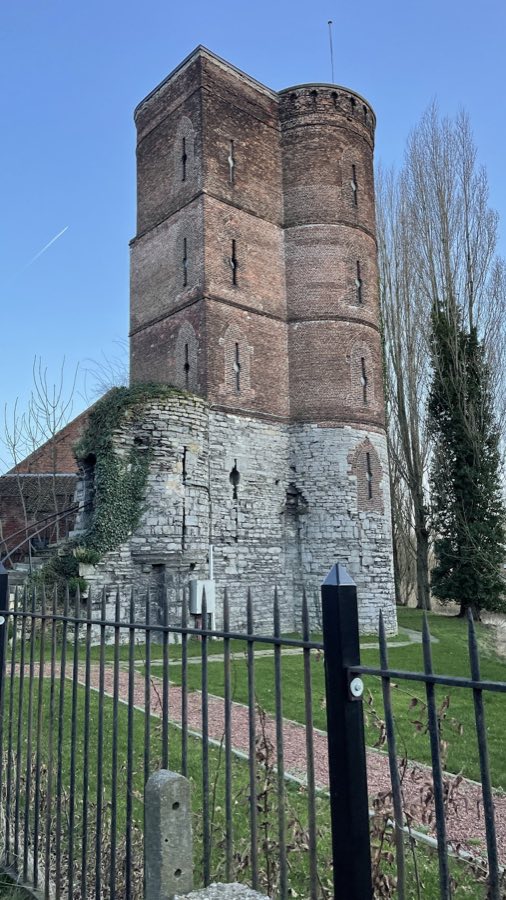
The complex presents as a layered historic site where medieval defenses and later Renaissance façades sit within a sequence of alterations. The earliest surviving structural fabric dates to the 13th and 14th centuries, reflecting its origin as a fortified noble residence. A keep, built between 1296 and 1308 to serve as the principal defensive tower and residence core, was deliberately removed in 1618 following the ordered demolition of fortifications a few years earlier.
The chapel on the grounds originates in the 15th century and remains part of the ensemble today; its principal front was changed in the 17th century, reflecting the period when the house adopted a Renaissance appearance. A gatehouse that controlled access belongs to the 15th–16th centuries and marks the route into the inner court. Parts of the defensive circuit survive as a fragment of the ring wall dated to 1576; a lower substructure with a round corner tower, assigned to about 1450, shows how outer defenses were arranged and later incorporated into the evolving complex.
Domestic and judicial functions are visible in surviving ancillary elements. An old Gothic farm building stands within the estate and an associated pillory, used by the local court for public punishment, attests to the manorial jurisdiction once exercised from the site. The late 17th-century rebuilding by the Fiennes family produced the front façade seen today and the formal gardens laid out at that time, creating the ensemble’s Renaissance character. In the 20th century repair work and reconstructed buildings, carried out to approximate a sixteenth-century look from historic drawings, have further altered and conserved the ensemble. The site now combines restored historic fabric with adapted interiors housing serviced flats, a public foyer, meeting rooms, a wellness centre and a grand café.
No. 82433
No. 14019
No. 10733
No. 58598
Comments
Comments for Cantecroy Castle will require a verified account before posting.
We'll send a verification link before your first comment is published.