No. 68417
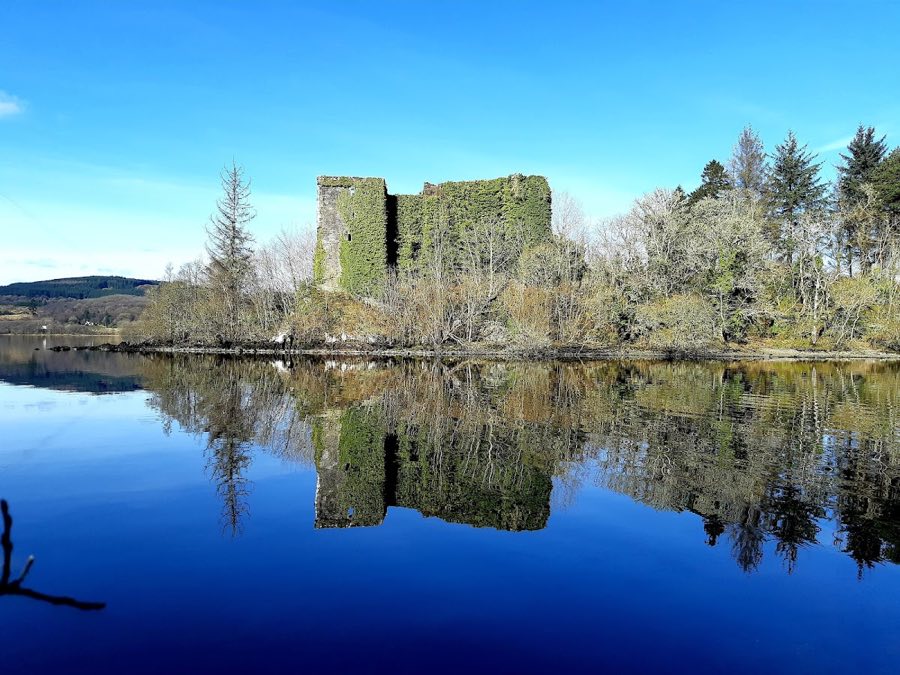
Innes Chonnel Castle
United Kingdom
CastleRuin13th century
No. 29370
Castle · United Kingdom
No. 29370 · 56.151 N, 5.481 W
For events
Carnasserie Castle is marked as a château or castle venue lead. Capacity, indoor/outdoor spaces, catering rules, and accommodation options are published only after public verification.
Event types: Private events, Cultural gatherings, Filming and photography
Quick summary
Carnasserie Castle is a castle in United Kingdom with origins associated with the 16th century.
See all castles in United KingdomCarnasserie Castle is located near Kilmartin in Scotland. It was constructed in the mid-16th century by John Carswell, an Anglican clergyman who held important religious positions including Rector of Kilmartin, Chancellor of the Chapel Royal at Stirling, and later Bishop of the Isles. Carswell is notable for translating and publishing the first book printed in Scottish Gaelic, adapting John Knox’s Book of Common Order. With financial support from the Earl of Argyll, who acted as his patron, Carswell built the castle primarily as his personal residence, reflecting both status and domestic needs.
Following Carswell’s death in 1572, ownership of the castle reverted to the Earl of Argyll. In 1643, the property was sold to Sir Dugald Campbell, the 3rd Baronet of Auchinbreck, marking the start of the Campbell family’s long association with the site. During the turbulent events of Argyll’s Rising in 1685, Duncan Campbell, one of the estate’s later owners, took an active role in this rebellion against King James VII. After the uprising failed, royalist forces swept through Argyllshire, inflicting heavy damage on the castle and the surrounding lands.
In 1690, Duncan Campbell submitted a petition to Parliament reporting that the castle had been set ablaze by Maclean clansmen. He lamented the loss of 2,000 cattle stolen during the raid and mourned the killing of his uncle, Alexander Campbell of Strondour. Although much of the castle’s outer walls were left standing, the structure was never repaired or restored after this destruction, and the Campbell family eventually faced financial ruin.
During the 19th century, ownership of the estate passed to the Malcolms of Poltalloch, a family who also possessed nearby Duntrune Castle. Today, Carnasserie Castle remains under official protection as a scheduled monument, preserving its historical significance within Scotland’s cultural heritage.
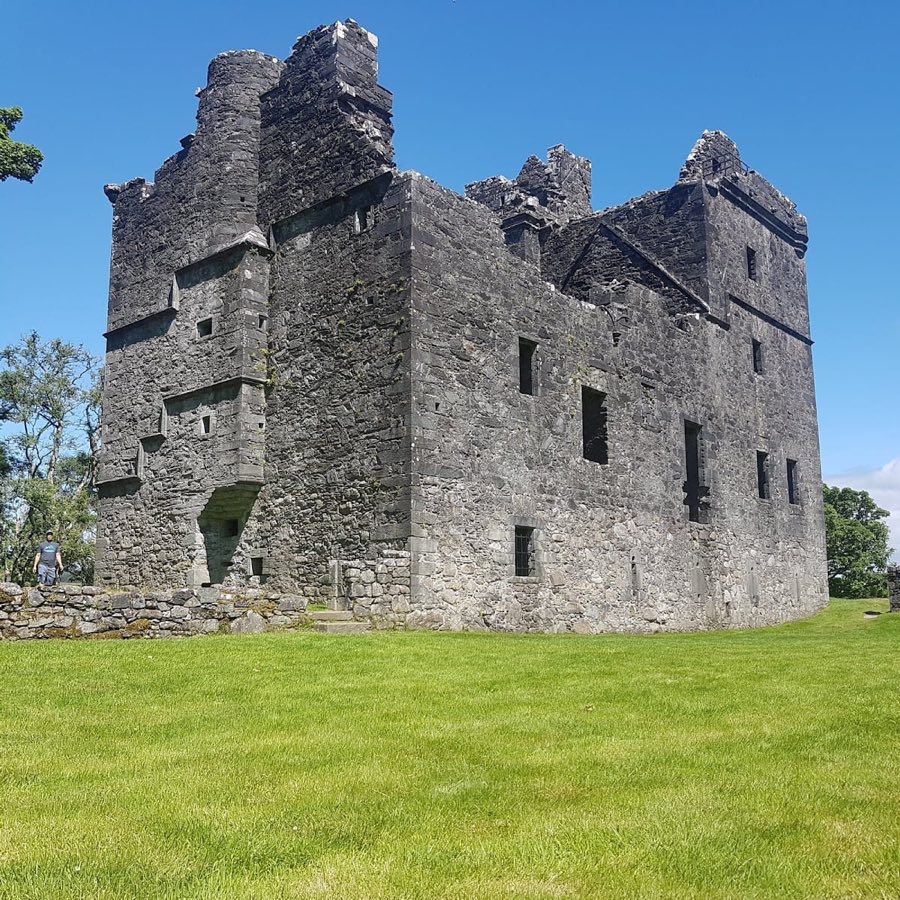
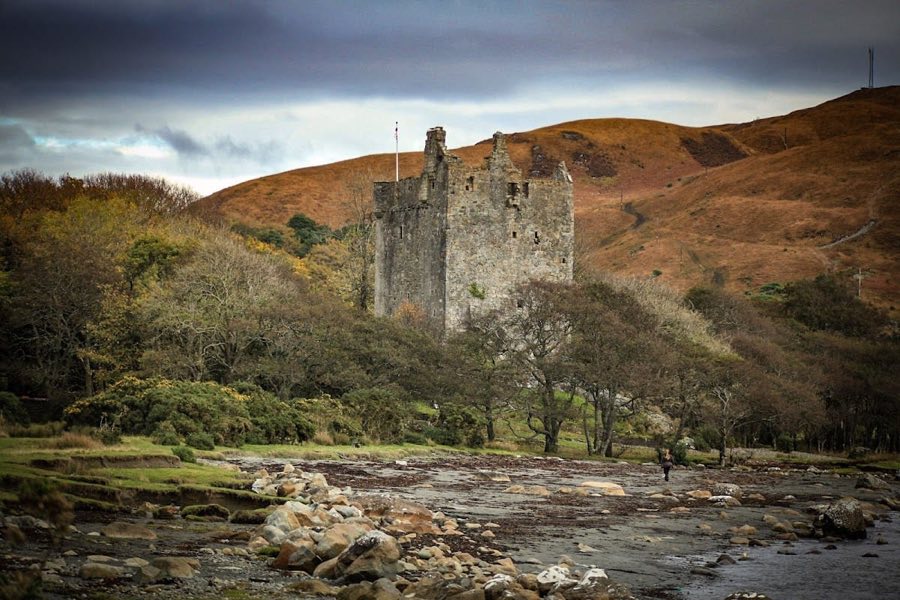
Carnasserie Castle is composed of a large tower house rising five storeys, attached to a longer, lower hall house with three storeys. This combination of buildings reflects its design as a substantial residence rather than a fortress built solely for defense. The tower house connects directly to the hall, creating a spacious domestic complex.
Beneath the castle lies a basement area containing remnants of cellars along with a kitchen that features a large fireplace and a water channel, indicating provisions for food preparation and storage. Above the basement is a large main hall, which leads into a drawing room within the tower house. The drawing room retains its original stone floor and a notable fireplace carved with decorative stonework, illustrating the refined living quarters within the castle.
A broad staircase ascends from the entrance, which is set into a small tower on the northwest side of the building, rising to the hall. From this hall, a smaller stairway climbs to a parapet walk encircling three sides of the tower house. This walkway would have provided access around the upper levels, and the top floors likely contained private bedrooms for the owner and his family.
Externally, the castle is distinguished by numerous double keyhole-shaped gunloops—narrow slits designed for firearms—as well as carved horizontal stone bands and corbels supporting upper sections. Above the entrance, blank stone panels are framed by sculpted supports and crowned with the coat of arms belonging to the 5th Earl of Argyll. This is accompanied by the Gaelic motto “DIA LE UA NDUIBHNE” meaning “God be with O’Duine,” a reference to the semi-legendary ancestors of Clan Campbell, linking the castle’s decoration to the clan’s heritage.
At the tower’s summit, features include remnants of open defensive rounds—small projecting platforms along the parapet—and a cap-house, which is a small structure above the stairway. Fragments of intricately carved drain spouts have been recovered and are displayed within the cellars, illustrating the level of craftsmanship involved in the castle’s original construction.
Surrounding the main building on the south and west sides is a partly enclosed courtyard garden. Visitors gain entry through an arched gateway inscribed with “SDC LHL 1681,” marking the initials of Sir Duncan Campbell, 4th Baronet, and Lady Henrietta Lindsay. This inscription commemorates the couple whose involvement in Argyll’s Rising ultimately brought about the castle’s destruction just a few years later. The garden’s walls and access arch remain visible as part of the castle’s enduring historical fabric.
No. 68417
No. 11415
No. 55120
No. 33598
Comments
Comments for Carnasserie Castle will require a verified account before posting.
We'll send a verification link before your first comment is published.