No. 56106
Castle of Vilella
Spain
CastleIntactFor events13th century
No. 14228
Castle · Spain
No. 14228 · 38.843 N, 0.107 E
Quick summary
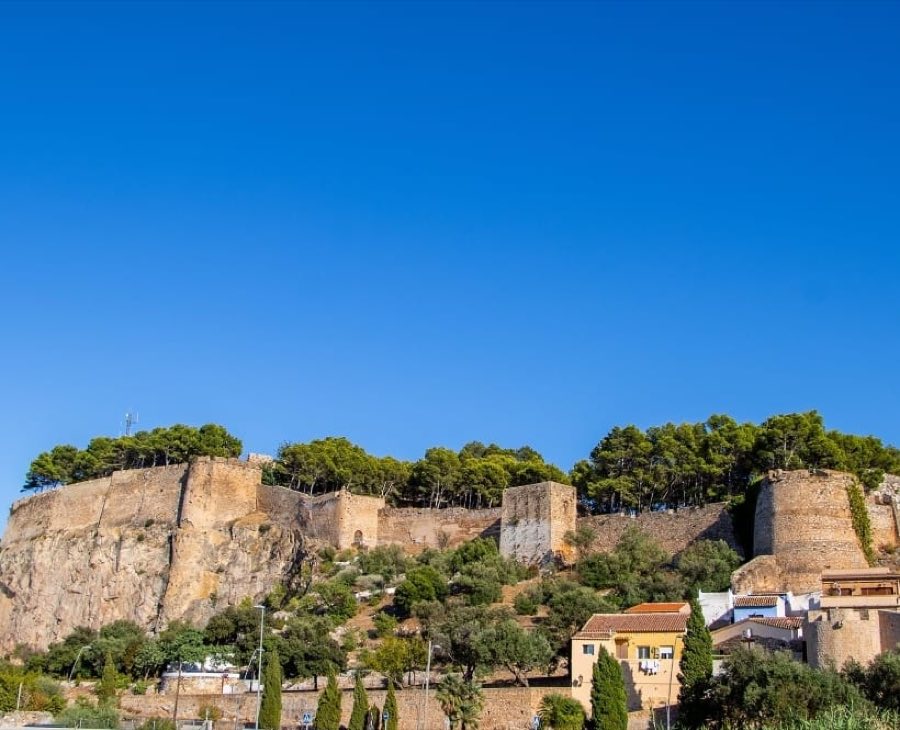
Castell de Dénia is a castle in Spain with origins associated with the 15th century.
See all castles in SpainThe Castell de Dénia is situated in the city of Dénia within modern Spain. This fortress traces a long history beginning with Roman settlement when the area was known as Diannium. Over time, the site has experienced multiple phases of occupation and transformation reflecting its strategic importance in the Mediterranean region.
During the Islamic period between the 11th and 12th centuries, the castle’s foundational design took shape, introducing architectural elements typical of Muslim fortifications. In the 15th century, under Almohad influence, significant structures such as the Torre Roja and the Torre del Consell were erected. These towers not only reinforced the castle’s defenses but also served administrative and military functions, with the latter acting as a meeting place for the city council.
The late 16th and early 17th centuries brought substantial renovations spearheaded by the 1st Duke of Lerma, a prominent nobleman serving King Felipe III. The medieval Governor’s Palace was rebuilt and modernized to accommodate royal visits, incorporating new features like elaborated gardens, sea-facing royal quarters, and a grand staircase likely designed by architects Francisco de Mora or Fray Alberto de la Madre de Dios. In 1612, a marble statue of the Duke, sculpted from Carrara marble by Giuseppe Carlone, stood near the palace entrance, though this artwork has since been lost.
The castle’s military role extended into the early 19th century when it came under French control on January 19, 1812, during the Peninsular War. Spanish forces reclaimed the fortress after a prolonged siege lasting from June 15 to December 7, 1813. Earlier, during the War of Spanish Succession in the early 18th century, the Governor’s Palace and the adjacent old town, known as Vila Vella, were destroyed. By 1859, the fortress had been abandoned for military purposes.
Today, the Castell de Dénia remains a preserved cultural heritage site, illustrating its long-standing historical significance through ongoing restoration and interpretation efforts.
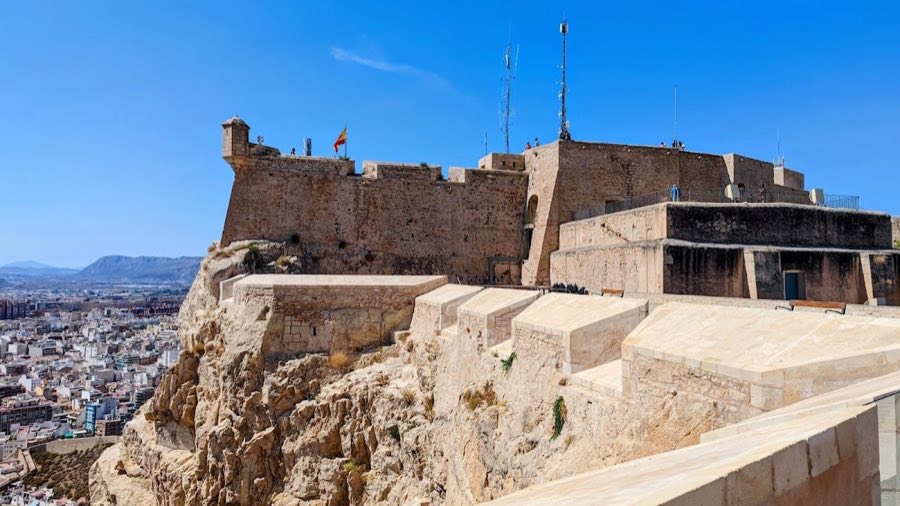
The Castell de Dénia is established on a hill 48 meters above sea level, overseeing flat land to the northwest and hills toward the south, with proximity to the sea on the northeast side. Its layout reflects several historical layers of construction, from Roman times through the medieval Islamic period and later Christian modifications.
The castle’s main entrance, known as the Portal de la Villa, dates back to the 12th century and is built in the Almohad architectural style. Its exterior is characterized by pointed arches common to that period, while inside, portions of an original barrel vault arch remain intact. Flanking this gateway are two prominent towers: the Torre Roja, constructed in the 15th century with masonry techniques consistent with Almohad military architecture, and the Torre del Cos de Guardia, originally from the 12th century and remodeled during the 16th and 17th centuries to bolster defense.
Another key structure, the Torre del Consell, also from the 15th century, functioned as a civic pavilion where the city council convened, underscoring the castle’s role as a center of local administration beyond its military purpose.
Within the complex stands the Governor’s Palace, located on a spacious esplanade. Though now partially in ruins, this palace was transformed in the 16th and 17th centuries with Renaissance-style features and currently serves as the archaeological museum. Its design reflects the palace’s former prominence as a residence accommodating royal guests.
The fortress contains the Quarter dels Infants, an area believed to have served either as storage or housing for permanent troops, indicating the castle’s role as a military stronghold. Nearby, the Portal del Baluart contains three arches from different historical periods and connects to the Torre del Baluart, an 18th-century bastion constructed to control access to the palace enclosure strategically.
Another defensive feature is the Punta del Diamant, a bastion named for its distinctive diamond-shaped tower, designed to strengthen the fortifications on the castle’s perimeter. Water needs were met by the Aljub, a cistern built in the 15th century that collected and stored rainwater for the occupants.
Access to the castle is primarily via the Camino Empedrado, dating from the 14th century. This cobbled street represents the only route suitable for wheeled vehicles and functioned as a main thoroughfare facilitating movement to and from the fortress.
Together, these architectural elements narrate the castle’s evolution through centuries of occupation, combining Roman roots with Islamic architectural principles and later Christian military modifications. Their state of preservation offers valuable insights into the site’s continuous use and adaptation to changing historical circumstances.
No. 56106
No. 34159
No. 20047
No. 76584
Comments
Comments for Castell de Dénia will require a verified account before posting.
We'll send a verification link before your first comment is published.