No. 31274
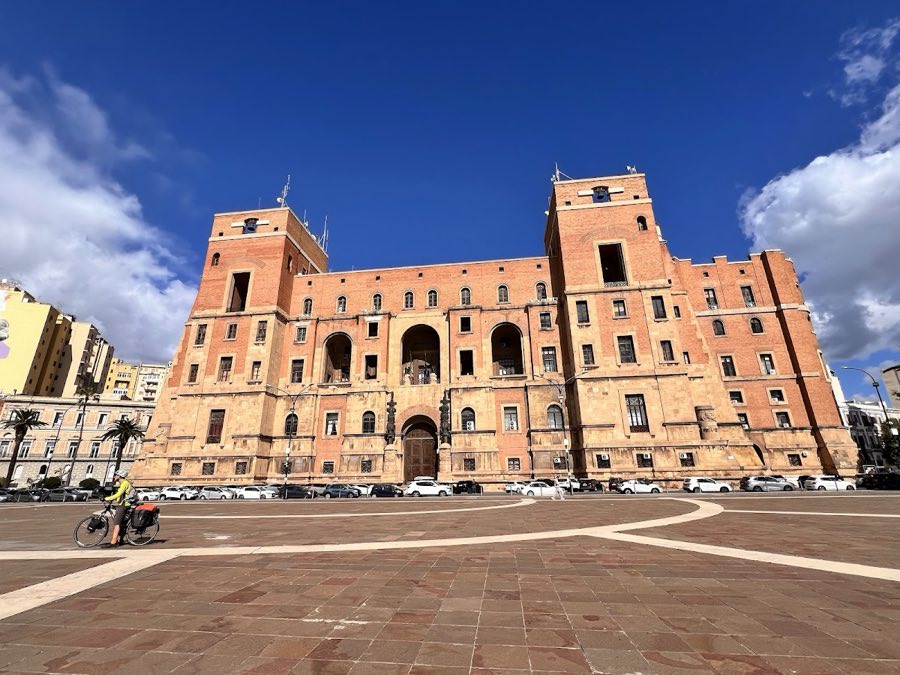
Palazzo del Governo, Taranto
Taranto, Italy
PalaceIntactFor events20th century
No. 23267
Castle · Italy
No. 23267 · 40.384 N, 17.355 E
Quick summary
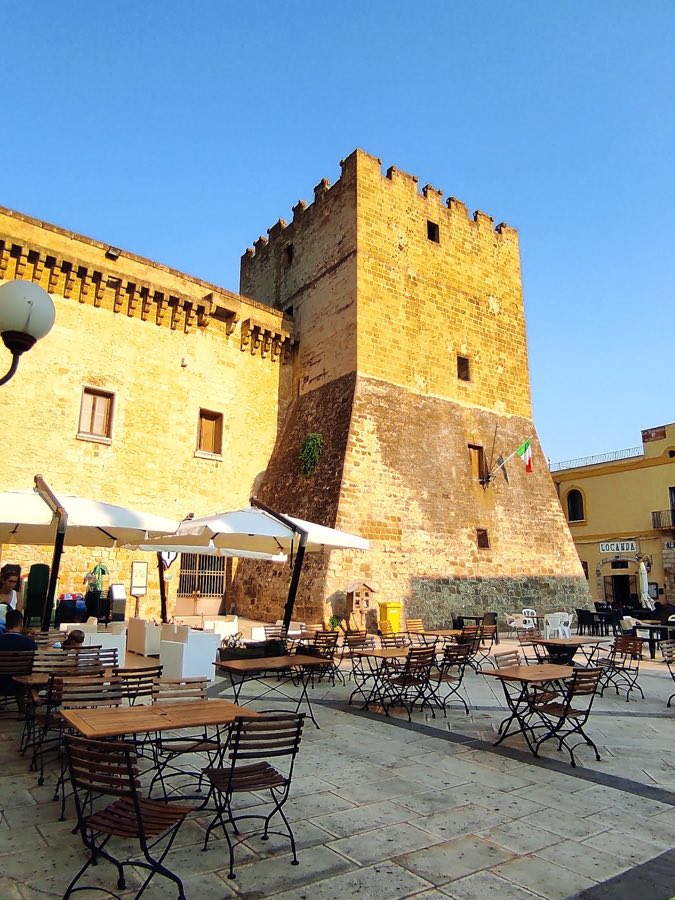
Castello De Falconibus is a castle in Italy with origins associated with the 14th century.
See all castles in ItalyCastello De Falconibus is situated in the municipality of Pulsano, Italy. Its origins trace back to a single tower constructed during the medieval period by local inhabitants who sought a secure refuge from frequent Saracen pirate raids. This earliest structure, originally called the Torre Quadrata or Torre Massima, faced the main square and initially served as a hunting lodge before becoming a defensive shelter around the year 1100.
In the centuries that followed, the partially ruined tower came into the possession of the De Falconibus family. This noble lineage expanded the site by adding four more towers of differing shapes, transforming the modest tower into a fortified complex. By 1274, the castle and its lands were under the rule of the Sambiasi family, and by the mid-14th century, it passed to F. dell’Antognietta. Subsequently, Ercole Petugy acquired the fortress and undertook restoration work on the original tower.
The castle suffered destruction in 1388 but was rebuilt starting in 1430 by the De Falconibus family, who completed the reconstruction five years later. This extensive renewal established the fortress’s present form and secured the family name’s association with it. An underground passage, now sealed, once linked the castle to the nearby Castello Muscettola and extended toward the sea, possibly providing a secret route for escape or supply.
Later on, ownership transferred to the Muscettola family. Under their stewardship, the castle was further fortified by the addition of a moat and a drawbridge, enhancing its defensive capabilities. In the early 1800s, the fortress played a small military role when three cannons stationed there were removed by Joachim Murat, the King of Naples, and redeployed to defend the city of Taranto during conflict with Spanish forces.
By 1819, Giovanni Muscettola leased out the area surrounding the moat to local residents for use as gardens, a distinctive arrangement that contributed to parts of the castle being incorporated into private properties. In the early 20th century, following the death of the last male heir of the Muscettola family, the castle was purchased by Giovanni Giannone, who generously donated it to the local community. Since then, the site has served multiple cultural functions, including hosting art exhibitions, municipal council meetings, and for several years, a seasonal living nativity scene.
Throughout its history, the castle has preserved heraldic emblems belonging to the De Falconibus and Muscettola families, alongside fragments of painted decorations and stone relief carvings, bearing witness to its noble heritage and evolving role in the town’s life.
The castle occupies a prominent position at the northeast corner of Pulsano’s ancient town walls. It features a rectangular, or quadrangular, layout rising three stories high and is characterized by five towers of various sizes and shapes. The core structure remains the original Torre Quadrata, or Torre Massima, which faces west toward the main piazza and forms the dominant element of the façade.
The four additional towers, added by the De Falconibus family during the medieval expansion, exhibit different architectural forms and stand as integral parts of the fortress’s defensive system. These towers, together with the main body of the castle, demonstrate the complex’s evolution from a solitary refuge tower to a more elaborate stronghold.
During the era of Muscettola ownership, the castle was encircled by a moat and accessed by a drawbridge, defensive features intended to repel attackers. Although the moat today has been leased out and transformed into garden plots, the castle’s original boundary is still discernible in the layout of the surrounding properties. This leasing resulted in the northern and eastern walls, as well as three of the five towers, being absorbed into adjacent private buildings and thus hidden from external view.
Until the late 20th century, a section of the southern wall was obscured by a small public structure erected in the early 1900s, which operated as a public telephone booth until the 1960s. This building was later demolished, allowing partial restoration of the castle’s original outline.
Within the fortress’s interior, visitors can observe remnants of decorative wall paintings and several small sculpted stone reliefs, reflecting the artistic details that once adorned the site. The coats of arms of both the De Falconibus and Muscettola families remain visible, serving as enduring markers of the castle’s historical occupants.
Together, these architectural features and decorative elements illustrate the castle’s layered history, showcasing its adaptation across centuries from a secure hideaway to a noble residence and finally a community landmark.
No. 31274
No. 15954
No. 41982
No. 91285
Comments
Comments for Castello De Falconibus will require a verified account before posting.
We'll send a verification link before your first comment is published.