No. 15954
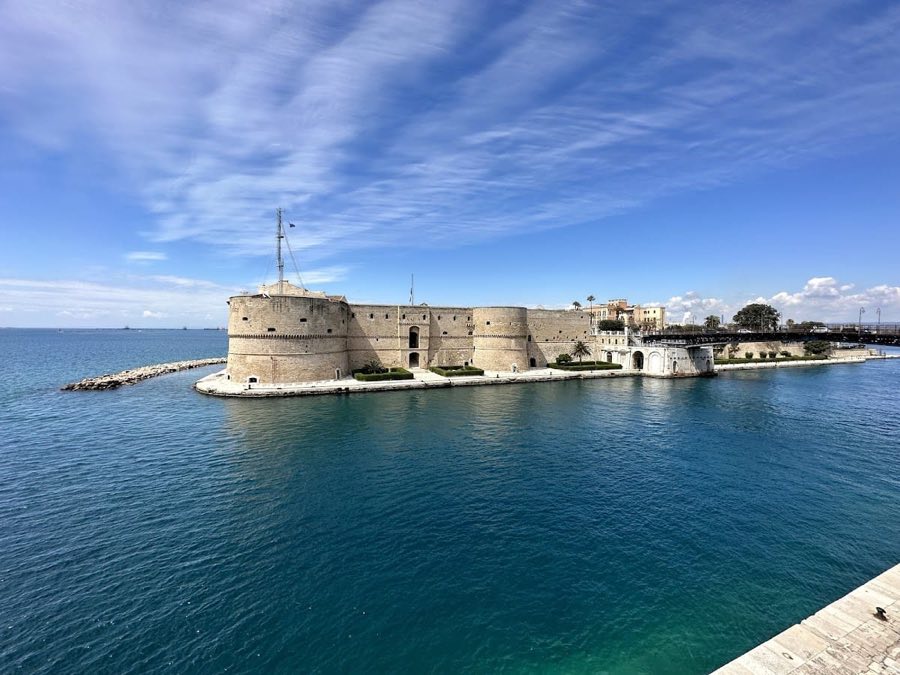
Castello Aragonese, Taranto
Taranto, Italy
CastleIntact10th century
No. 31274
Palace · Italy
No. 31274 · 40.471 N, 17.238 E
For events
Palazzo del Governo, Taranto is marked as a château or castle venue lead. Capacity, indoor/outdoor spaces, catering rules, and accommodation options are published only after public verification.
Event types: Private events, Cultural gatherings, Filming and photography
Quick summary
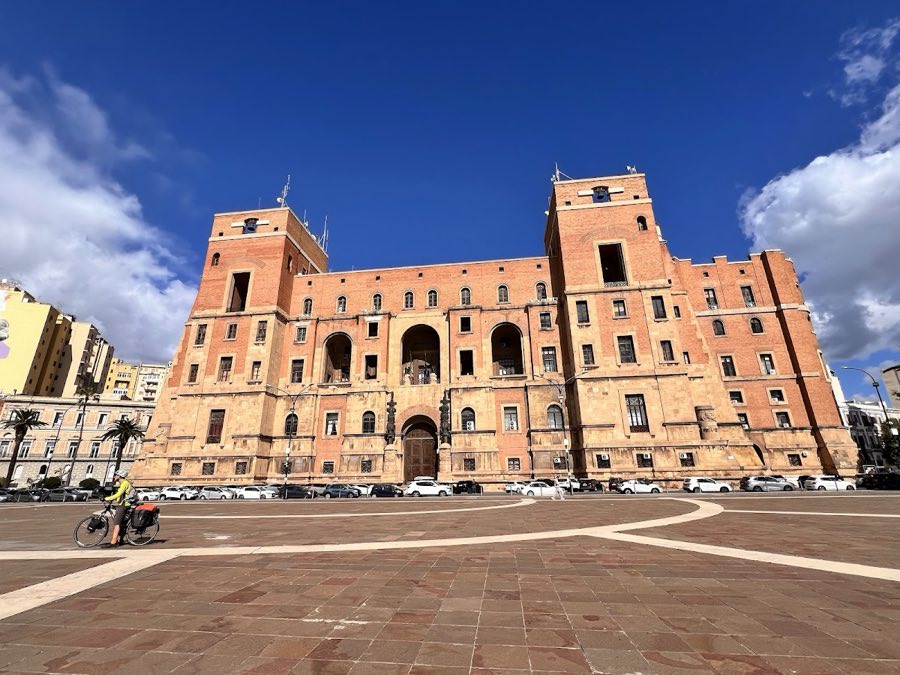
Palazzo del Governo, Taranto is a palace in Taranto, Italy with origins associated with the 20th century.
See all castles in ItalyPalazzo del Governo, Taranto, Italy, is a government palace erected by the Italian state under the Fascist regime and completed in the early 20th century. It was inaugurated on 7 September 1934 in a public ceremony led by Benito Mussolini. Constructed in a monumental Fascist style, the building was intended to house the new provincial authorities and to reflect the regime’s emphasis on Italy’s maritime strength, closely linked to the nearby naval arsenal at Taranto. The palace replaced the Politeama Alhambra theatre, which was demolished to make way for the new seat of government.
Work on the palace lasted four years and was carried out under the direction of an architect working together with technicians from the provincial administration; the total cost amounted to 21,000,000 lire. From its opening the building functioned as the office of the Prefecture, the provincial administration, and the police headquarters, known in Italian as the Questura. Its prominent siting and monumental form were meant to represent the province within the national political framework established in that period.
During the Fascist years the entrance was given a strongly political character: two large fasces, each roughly 20 metres high, were placed beside the main doorway as visible symbols of the regime. Those fasces were later taken down. The palace’s plan and massing were also used for propaganda, the overhead outline being read as a graphic reference to Benito Mussolini’s initial.
After the fall of the regime the building continued to serve administrative functions. The open square before the main façade was completed with the palace and is now dedicated to the Sailors of Italy; it has been used for large public gatherings and civic events. On occasion the interior has housed important works of art from private collections, including paintings by Bernardo Cavallino, Paolo de Matteis, Francesco Solimena and Leonardo Antonio Olivieri; those works have since been transferred to the National Archaeological Museum of Taranto. In more recent years the square in front of the palace has hosted cultural events such as the Medimex festival and international sporting gatherings like SailGP.
The palace occupies a footprint of about 4,500 square metres and rises six storeys to a height of 52 metres; with two bronze antennae on the roof the structure reaches 85 metres above sea level. The building is executed entirely in brown carparo stone, lending a uniform, warm-coloured exterior. From above the massing describes a spur-shaped block with arcaded façades that evoke a harbour fortification and, by design intent, suggest the form of a Roman military camp.
A broad covered gallery, a loggia (a covered gallery or open arcade), runs along the main façade facing the front square. Within this arcade stand two bronze eagles set on cylindrical pedestals. Flanking the central entrance are two cylindrical bases decorated with bas-relief figures of nude, armed figures, and above these sit large sculptural trophies with shields, capped by winged figures representing Victory. During the Fascist period two monumental fasces, each about 20 metres tall, stood at the doorway; those elements were later removed.
Two lateral towers rise from the building and were fitted with large bells intended to ring on special occasions. On the roof two bronze antennae mark the summit. The open square in front of the principal façade, the rotonda (the square before the main façade), was completed contemporaneously with the palace, is capable of holding thousands of people, and is dedicated to the Sailors of Italy.
Inside, the interior unfolds over six floors and contains large halls finished with frescoes and furnished in a representative manner. Local artists from the Grottaglie School carried out decorative work in these rooms. Named ceremonial spaces include the Hall of Coats of Arms, where the Provincial Council meets, and the Representative Hall, both arranged to serve official functions and public ceremonies. The palace’s interior has at times been used to display paintings later moved to the National Archaeological Museum of Taranto.
No. 15954
No. 23267
No. 41982
No. 21119
Comments
Comments for Palazzo del Governo, Taranto will require a verified account before posting.
We'll send a verification link before your first comment is published.