No. 91196
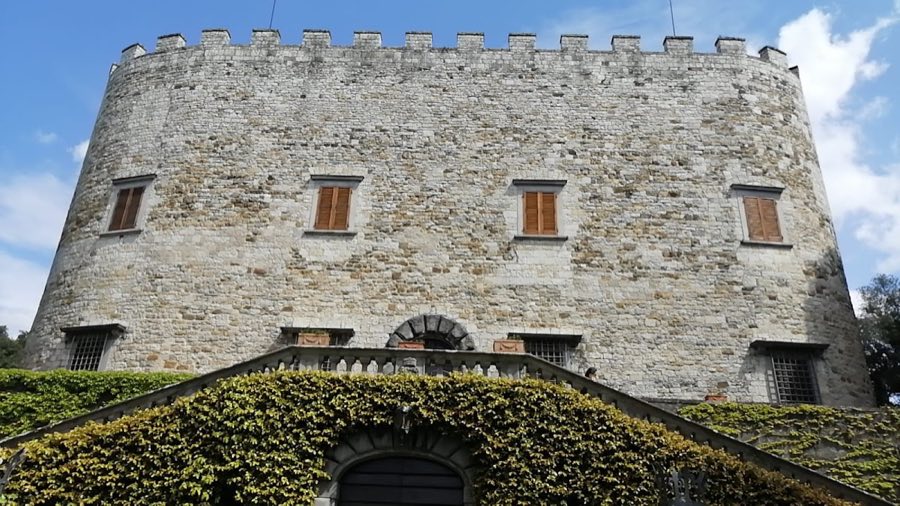
Castello di Montemurlo
Italy
CastleRestored10th century
No. 99142
Castle · Italy
No. 99142 · 43.931 N, 11.023 E
For events
Castello della Smilea is marked as a château or castle venue lead. Capacity, indoor/outdoor spaces, catering rules, and accommodation options are published only after public verification.
Event types: Private events, Cultural gatherings, Filming and photography
Quick summary
Castello della Smilea is a castle in Italy with origins associated with the 15th century.
See all castles in ItalyCastello della Smilea stands in the municipality of Montale, Italy, and it originated as a medieval fortification first associated with local Pistoiese nobles.
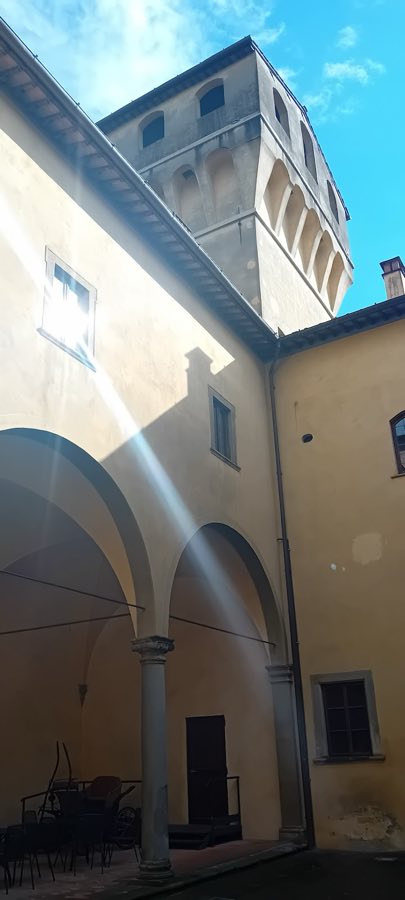
The structure began life in the later Middle Ages, described as a fortification dating back to the fourteenth century and appearing in documentary records in 1427 under the ownership of the Panciatichi, a Ghibelline family from Pistoia. During the Panciatichi tenure the building was enlarged and a porticoed courtyard was added. The site retained a mainly military role and became one of the places where the Panciatichi clashed with the rival Guelf family, the Cancellieri.
In 1540 Grand Duke Cosimo I intervened to impose a truce between the contending parties, an action recorded by Benedetto Varchi. By the early seventeenth century the castle changed hands; in 1611 the Panciatichi sold it to Francesco di Piero Covoni. The Covoni adapted the complex, altering its appearance and turning it toward the character of a signorial villa rather than a purely defensive stronghold.
Owners toward the end of the seventeenth century reorganized the estate to generate farming income, converting the palace and surrounding land into an agricultural enterprise. The property passed within the Covoni family and in 1770 was inherited by the brothers Marco and Zanobi Covoni. In 1799, retreating Napoleonic soldiers sacked Montale and caused damage to the Smilea; Zanobi Covoni was taken prisoner by French forces and was later released. The last named heir from the family line is Maria di Pier Francesco Covoni Pandolfini, who was married to Prince Giuseppe Borghese.
During the twentieth century the family ceased to live in the building from the 1940s onward. In the Second World War the castle sheltered displaced people, and after the war it continued to function in connection with agricultural commerce until the 1960s. Following several later changes of ownership, the municipality of Montale purchased the property in 2003 in order to renovate it and dedicate it to cultural activities. It now accommodates the municipal library and some local offices, hosts temporary exhibitions and conferences, and displays a permanent exhibition of works by the sculptor Iorio Vivarelli. Two explanations for the name Smilea are recorded: one deriving it from Latin for “six miles,” referring to the distance from ancient Pistoria, and another linking the name to Latin mausoleum, a term used for tumuli, burial markers, or boundary monuments.
The complex presents a roughly square plan and retains a general appearance marked by Gothic forms. It is located in the centre of Montale and shows the accretive development typical of a building that began as a defensive work and later acquired residential and agricultural roles.
Two towers remain as prominent vertical elements of the silhouette. One tower is medieval in date and served military purposes; it dates to the fifteenth century and belongs to the castle’s original defensive phase. A second tower was added in the seventeenth century not for defence but to harmonize the composition with the renovated villa-like parts of the complex.
The main approach opens into an ample stone courtyard that served as the principal entrance and working yard. At the centre of this courtyard stands a well, in its present state decorated with sculptures by Iorio Vivarelli. Below the courtyard a basement level exists that functioned as a cellar when the estate operated as a farm during the later seventeenth and eighteenth centuries.
The Panciatichi enlargement is visible in the porticoed courtyard that they added, while southern extensions carried out by the Covoni family include the buildings that once housed the peasants who worked the estate. Interior spaces on the first floor include a small private chapel and rooms decorated with delicate Neoclassical motifs; these rooms now display works by Iorio Vivarelli and serve for temporary exhibitions. Wall paintings applied around the end of the eighteenth century run along the first floor and the piano nobile; these frescoed landscapes were executed to give viewers the feeling of being outdoors. Today the complex has been restored and adapted for municipal and cultural use, with the courtyard, towers, internal chapel, frescoed rooms and cellar all conserved within the repurposed building.
No. 91196
No. 57916
No. 36036
No. 55752
Comments
Comments for Castello della Smilea will require a verified account before posting.
We'll send a verification link before your first comment is published.