No. 74582
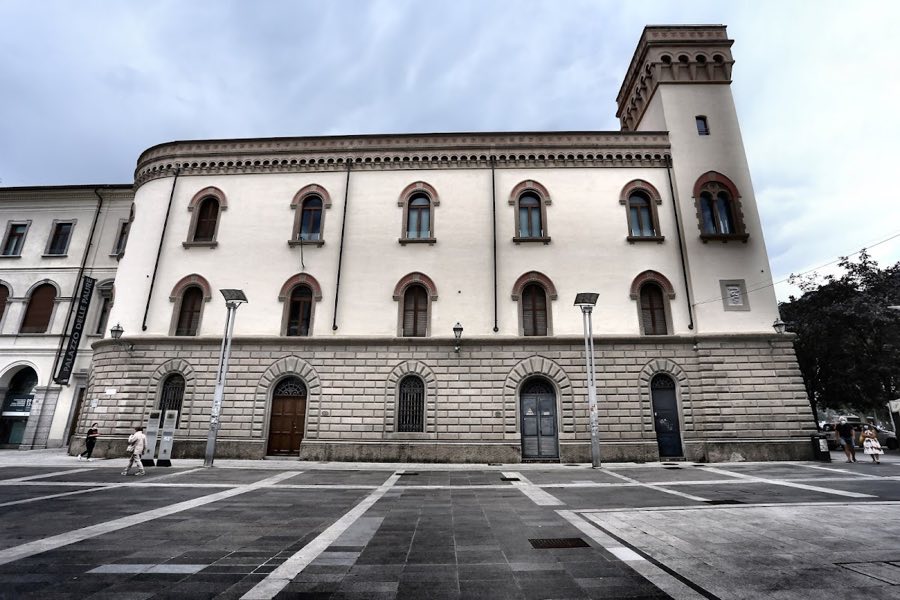
Palazzo delle Paure, Lecco
Lecco, Italy
PalaceIntact20th century
No. 54816
Castle · Italy
No. 54816 · 45.805 N, 9.438 E
Quick summary
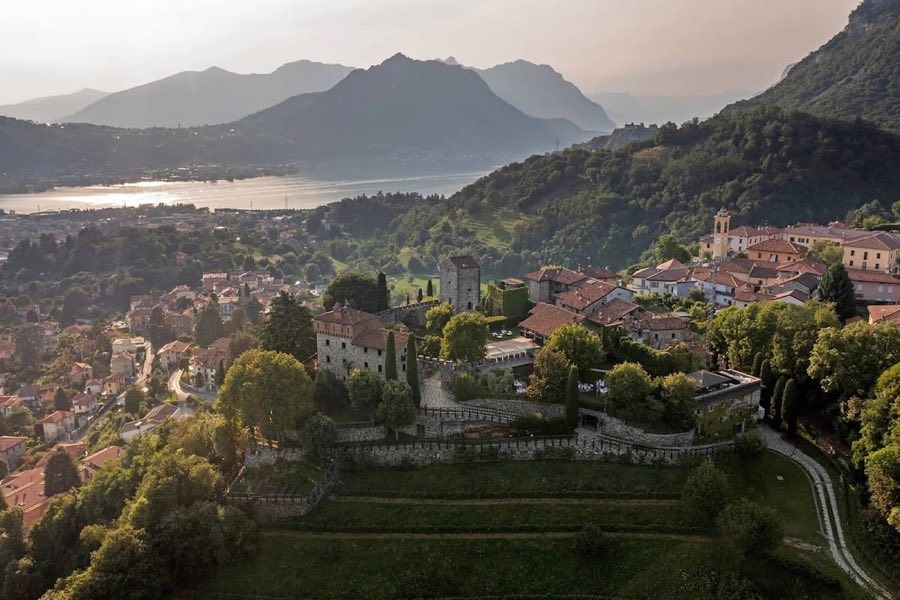
Castello di Rossino is a castle in Italy with origins associated with the 11th century.
See all castles in ItalyLocated in the municipality of Lecco, Italy, Castello di Rossino traces its origins to the Roman era as a military outpost. The fortress was established to oversee and secure the Bergomum-Comum road, a vital route linking the cities of Bergamo and Como. Its strategic position near a stone bridge over the Adda River underscored the importance of controlling river crossings and movements in the region. The military function of the site continued into the early Middle Ages, with local noble families contributing to its expansion.
In the 11th century, the castle likely underwent significant enlargement under the stewardship of the da Prezzate family, whose lineage stemmed from the Longobard people and who held possessions locally. The earliest recorded mention of the castle dates to 1281, during which time it belonged to the Salvioni family. The Salvioni were aligned with the Benaglio family, influential controllers of the valley, and incorporated the castle into their defensive network. This era saw the castle engaged in the factional conflicts between Guelfs and Ghibellines, siding with the Guelf faction under the leadership of the Della Torre family against the Ghibelline Visconti.
By the late 14th century, control of the castle passed to the Rota family. Under their ownership, between the 15th and 17th centuries, the castle’s role shifted from a primarily military stronghold to a commercial center. This change corresponded with the valley’s incorporation into the Republic of Venice. The castle became a hub for wool trade and served as a marketplace where merchants conducted business and formalized land transactions. This commercial function continued actively until the 1600s. Later research and excavation have revealed an extensive underground system linked to the castle, suggesting the tunnels were historically used for both strategic defense and commercial activities, facilitating secure movement beneath the site.
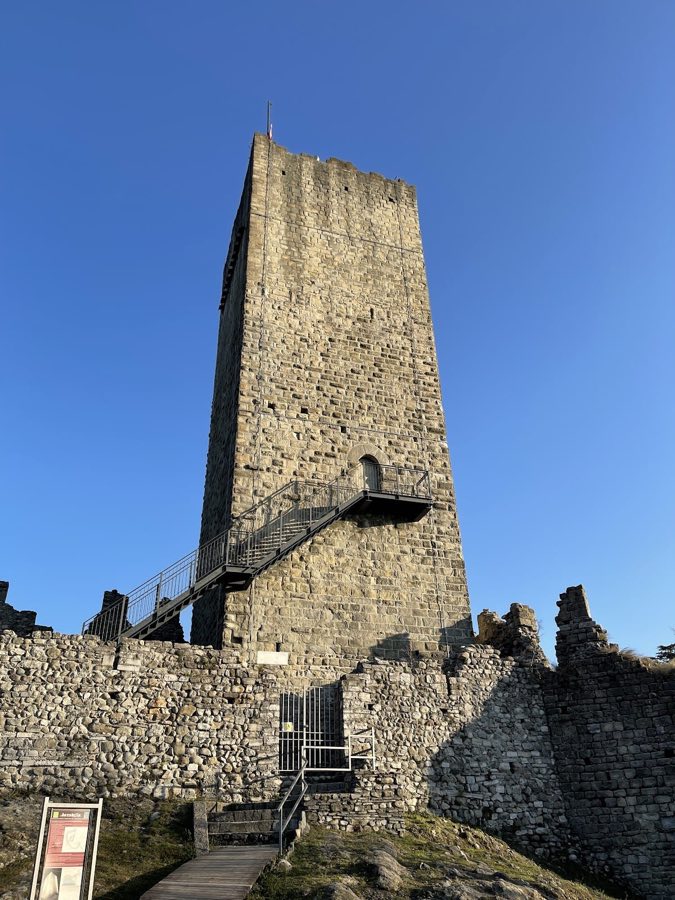
The Castello di Rossino features a compact layout centered around a mastio, or keep, located within the courtyard. This central tower is notable for a window dating back to the 13th century, marking a tangible connection to the medieval phase of the castle’s development. The original defensive design likely included four towers. Over time, one tower was lowered and incorporated into the northwest corner of the surrounding curtain wall, while the other two were dismantled. The stones from these removed towers were repurposed in the construction of the nearby church dedicated to San Lorenzo, illustrating a close material relationship between the castle and local ecclesiastical architecture.
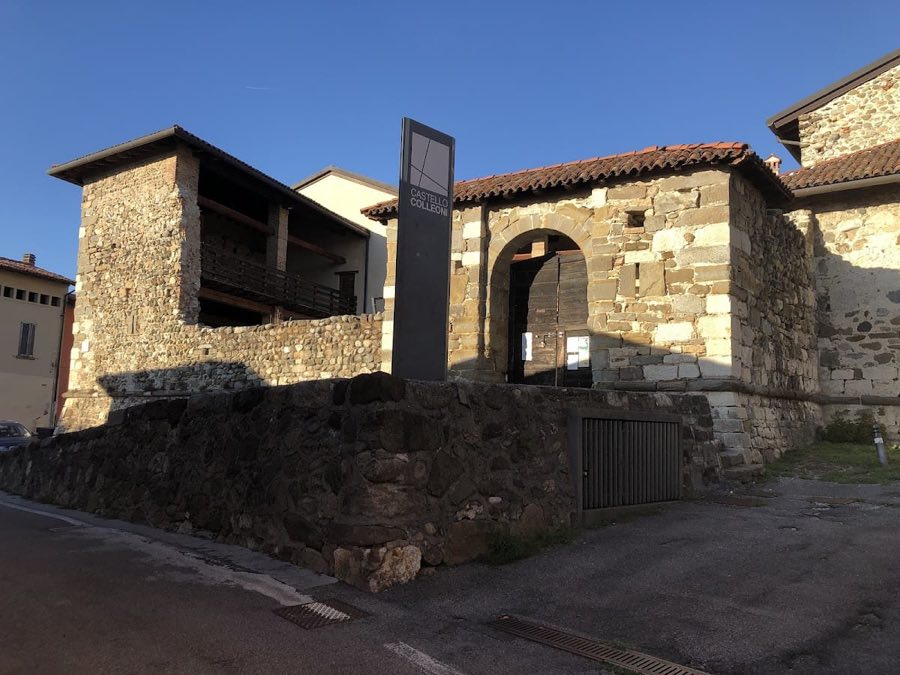
A prominent building within the complex is known as “la dogana,” which historically served as a customs house. This structure has retained much of its original form, including the entrance gate and two windows once used to collect tolls from merchants crossing between the Duchy of Milan and the Republic of Venice. The rooms adjoining the façade display masonry work from the 19th century, indicating later modifications. Within other walls of the dogana, reused Roman materials have been identified, reflecting the site’s long continuity and the reuse of ancient building fabric over centuries.
Beneath the castle lies an extensive network of masonry-lined tunnels branching in two main directions. One tunnel extends roughly half a kilometer toward Piazza Regazzoni, passing through the settlement of Calolzio and running close to the Buliga stream. The other stretches about 1.5 kilometers toward the Castle of Somasca, with portions traced near the Gallavesa stream, the Malanotte mill, and the Sanctuary of San Girolamo Emiliani. These underground passages were constructed tall enough to allow standing passage and included defensive features such as concealed deep pits, likely intended to hinder or trap intruders. Over time, their structure has been altered or disrupted by subsequent construction and infrastructure developments, but archaeological investigations have confirmed their presence and connection to the castle’s defensive and commercial functions.
No. 74582
No. 48622
No. 51020
No. 42557
Comments
Comments for Castello di Rossino will require a verified account before posting.
We'll send a verification link before your first comment is published.