No. 54816
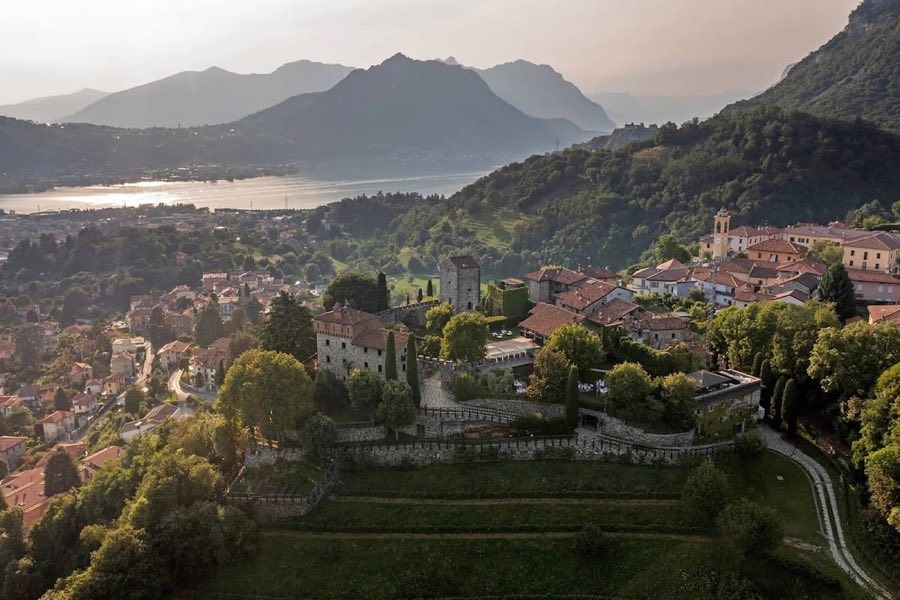
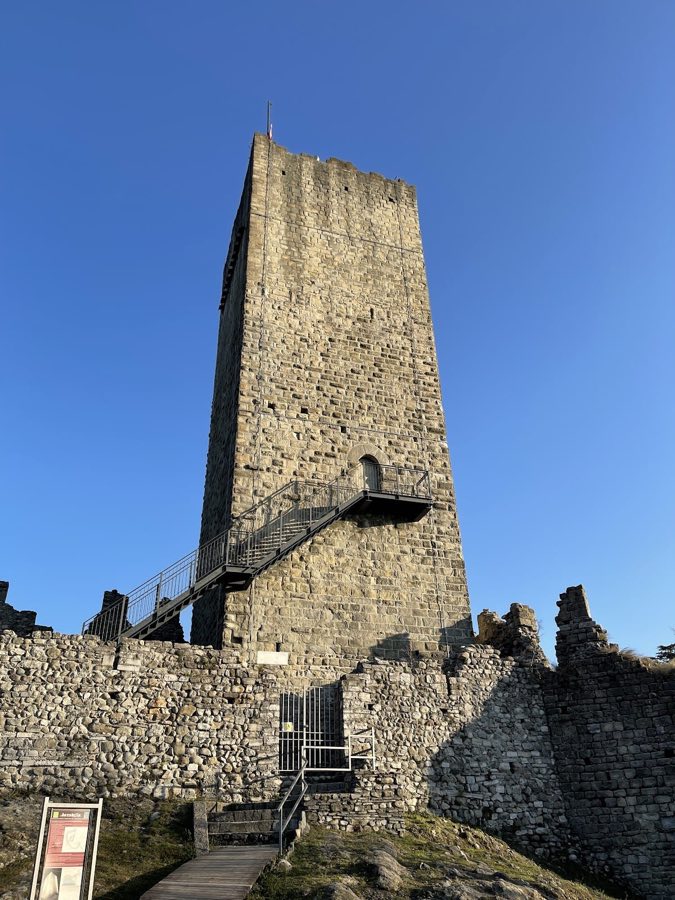
Castello di Rossino
Italy
CastleIntact11th century
No. 74582
Palace · Italy
No. 74582 · 45.855 N, 9.389 E
Quick summary
Palazzo delle Paure, Lecco is a palace in Lecco, Italy with origins associated with the 20th century.
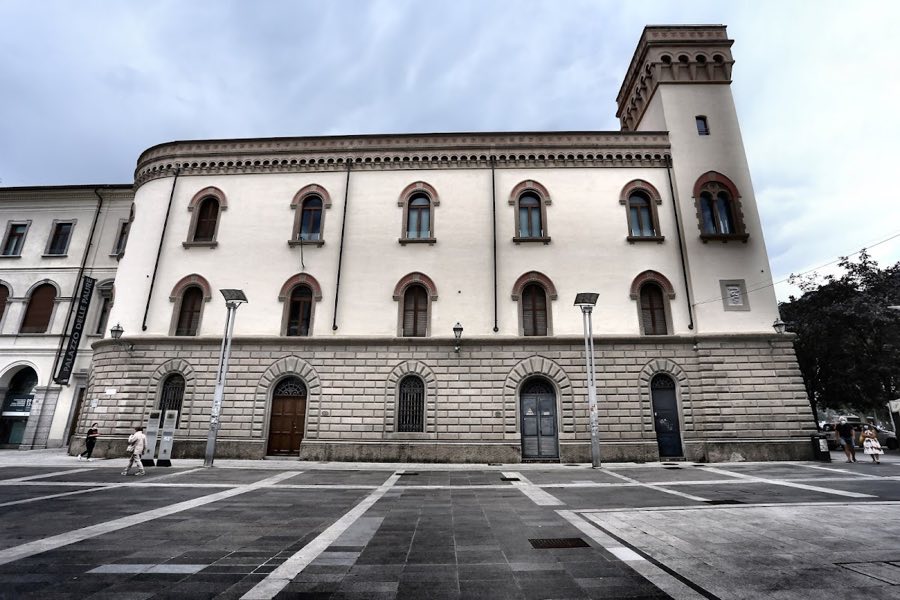
See all castles in ItalyPalazzo delle Paure in Lecco, Italy, is a civic building whose present form dates to the early twentieth century and was executed in an eclectic neo‑medieval style. The site originally held the palazzo della Dogana, the customs house erected in 1905; that structure was taken down in 1916 and replaced by the building that stands today. Because of the administrative functions it hosted, the complex acquired the local name “delle Paure” while it served as a centre for fiscal and customs offices.
From its reconstruction after 1916 the palace functioned as the city’s offices for finance and land records. The building housed the Intendency of Finance, the cadastre, and the customs office, and it continued in those administrative roles through 1964. The concentration of those state services at this address is the reason the municipal population associated the palace with the nickname that persisted into later decades.
Alongside the main block, a contiguous porticoed structure had been raised in 1902 to contain the Chamber of Commerce. That Chamber of Commerce was later suppressed by the Fascist government in the interwar period, and the institution was moved to Palazzo Falck in 2004. The complex also served the city’s educational needs for several years when it was used as a school immediately prior to its conversion to cultural use.
A comprehensive renovation culminated in the reopening of the building as a museum on 6 October 2012. On that day the second floor began operating as the graphics, photography and contemporary art section of the Municipal Gallery, incorporating works transferred from the Municipal Gallery that had been established at Villa Manzoni in 1983. Among the artists whose works moved into the palace are local painters Tino Stefanoni and Alfredo Chiappori, painters of broader national interest Enrico Castellani and Enrico Baj, and the sculptors Alik Cavaliere and Giò Pomodoro. The ground floor has been used for rotating exhibitions, including a show devoted to Pablo Picasso in 2014.
Since 2014 the building has accommodated the Lecco tourist information and reception office. From 26 June 2016 the third floor opened as the Lecco Alpine Observatory, a permanent exhibition space focused on the mountain and on the history of mountaineering, created through institutional and territorial collaboration to present the achievements of local alpinists.
The complex occupies a prominent triangular position facing Piazza XX Settembre, the lakeside promenade and Piazza Cermenati, and it reads as a single ensemble linked to the waterfront. A significant element is the adjacent porticoed building, a covered walkway with supporting arches, whose arches connect the lakeside promenade with Piazza XX Settembre. After the 2012 restoration those arches became the route to the main entrance, so the portico functions both as a visual link between public spaces and as the primary approach into the palace.
The ground level of the palace is finished with a pronounced rusticated stone facing, a roughened masonry surface that emphasizes the building’s base and gives the lower story a heavy, monumental appearance. This treatment frames the ground floor visually as a strong basement zone and was retained and highlighted in the modern restoration.
On the north side a slender rectangular tower rises above the block; built around 1926, the tower incorporates a Visconti coat of arms that was moved here from the nearby feudal Praetorium. The tower presents a three‑part window, a trifora or three-light window, toward Piazza Cermenati, an opening that marks the elevation and connects the tower to the square. These elements were integrated into the twentieth-century composition and have been preserved as distinctive features of the building’s exterior.
The ensemble’s overall appearance has been noted as visually distinct from the neighbouring houses and the proportions of the square. The complex therefore reads as an intentionally assertive civic grouping, with the portico, rusticated base and the later tower and emblematic coat of arms combining forms from the neo‑medieval vocabulary used in the reconstruction and in later additions.
No. 54816
No. 51020
No. 48622
No. 42557
Comments
Comments for Palazzo delle Paure, Lecco will require a verified account before posting.
We'll send a verification link before your first comment is published.