No. 36941
Castello Borgia
Italy
CastleIntact16th century
No. 31894
No. 31894 · 42.384 N, 12.281 E
Quick summary
Castello Ruspoli is a castle in Italy with origins associated with the 9th century.
See all castles in ItalyCastello Ruspoli is located in the town of Vignanello, Italy. The site’s origins trace back to at least the mid-9th century, when it was first recorded in 847 as a fortress. This stronghold structure was associated with early medieval defenses and later found a religious role when Pope Leo IV converted it into a monastery. It served as a Benedictine monastic residence until the late 11th century, around 1081.
In the latter half of the 12th century, the fortress became part of the Free City of Viterbo under the authority of Emperor Frederick Barbarossa in 1169. Over the following centuries, control of Vignanello shifted frequently, contested between the Papacy and prominent noble families such as the Aldobrandini, Orsini, de Vico, and Borgia dynasties, reflecting the political complexities of the region.
The 16th century marked a significant transformation when Pope Clement VII granted the fief of Vignanello to Beatrice Farnese in 1531. When her daughter Ortensia Farnese married into the Marescotti family, the fortress passed into their hands. Around 1574, Ortensia commissioned the military architect Antonio da Sangallo the Younger to redesign the fortress into a more comfortable residence while maintaining defensive features. There is evidence that Jacopo Barozzi da Vignola, a leading architect of the time, may have contributed to the external appearance.
The early 17th century saw further developments under Ottavia Orsini, who was married to Marcantonio Marescotti and was the daughter of Vicino Orsini, the creator of the famous Sacro Bosco in Bomarzo. Starting in 1610, she established the Renaissance gardens surrounding the castle, enhancing its status as a noble estate with refined landscape design.
Within the castle, a chapel located on the ground floor is dedicated to Sister Giacinta Marescotti, a family member who was canonized by Pope Pius VII in 1807. Ownership remained with the Marescotti lineage until the Ruspoli family acquired the estate. Francesco Maria Ruspoli, the 6th Count of Vignanello and 1st Prince of Cerveteri, elevated the family’s rank to princely status. Since then, the castle has remained a private residence under the Ruspoli family, who have preserved and maintained it continuously into the present.
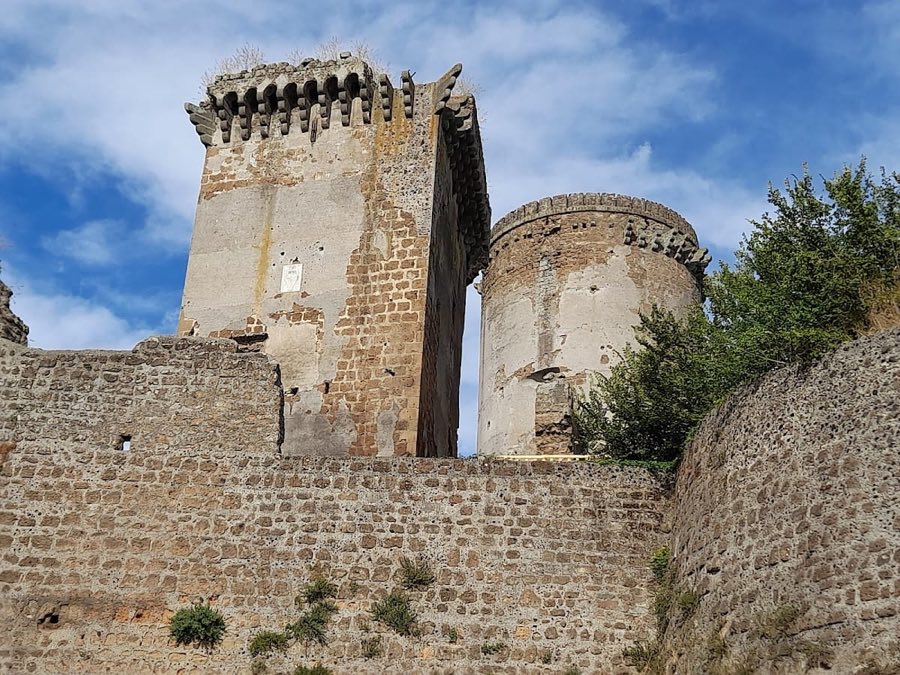
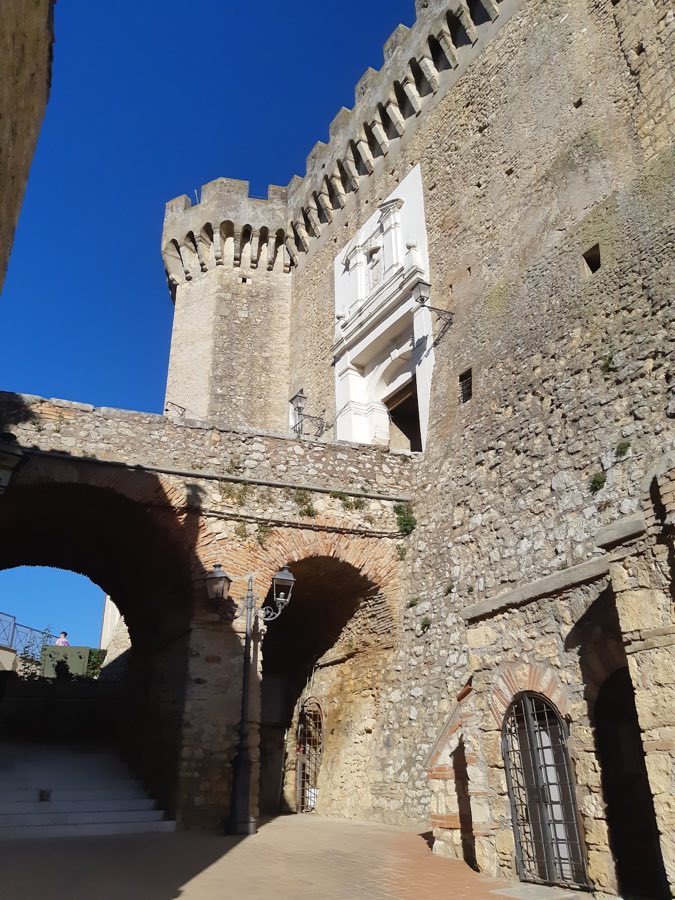
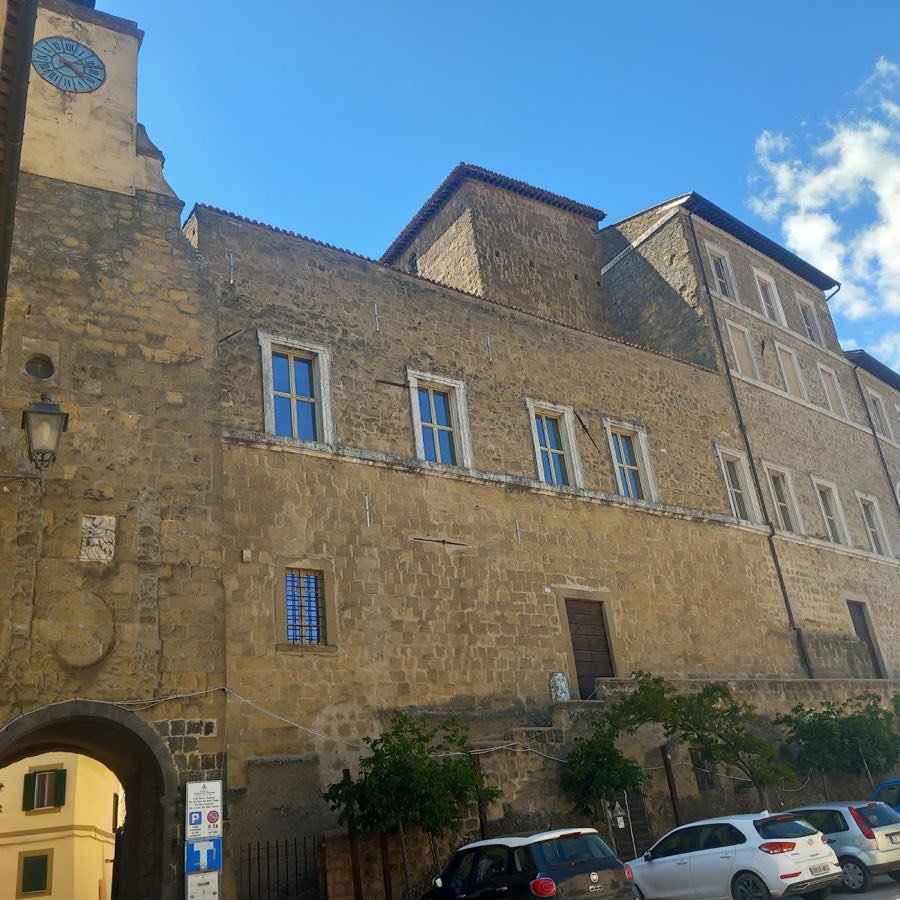
The Castello Ruspoli presents as a 16th-century structure that preserves much of its original fortress character despite adaptations into a noble residence. Its layout reflects this dual function, combining fortified defensive architecture with Renaissance stylistic elements introduced during its transformation in the late 1500s.
The castle’s redesign, undertaken by Antonio da Sangallo the Younger circa 1574, features construction techniques typical of that era, including robust masonry walls suited for defense. Jacopo Barozzi da Vignola’s possible input is linked to the castle’s external treatments, which blend military solidity with Renaissance aesthetic refinement.
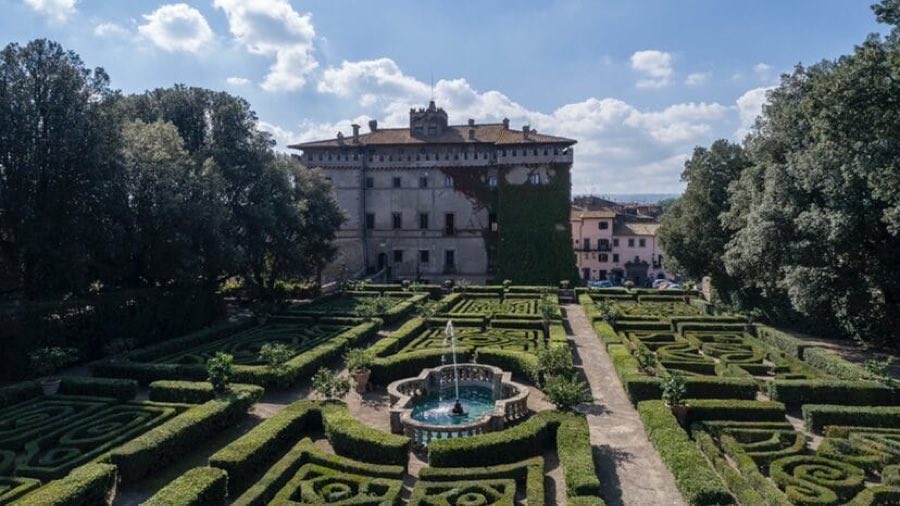
Surrounding the castle is a notable Renaissance garden laid out from 1610 under Ottavia Orsini’s direction. The garden exemplifies the Italian Renaissance style, known as Giardino all’italiana, characterized by clear geometric order. Its design divides the space into twelve rectangular plots by four walkways, all bordered originally by rosemary which has since been replaced by boxwood hedges. At the center stands a fountain decorated with four shell-shaped balustrades, adding an ornamental water feature typical of such gardens.
Beneath the main garden area lies a so-called “Secret Garden,” complementing the primary garden’s geometric plan, while to the east the former hunting grounds of the Ruspoli family extend beyond the cultivated landscape. The garden complex also includes a labyrinth, a decorative element associated with Renaissance symbolism and leisurely pursuits.
Inside the castle, the ground floor houses a chapel dedicated to Saint Giacinta Marescotti. This space remains preserved as a testament to the family’s religious devotion and historical continuity.
Castello Ruspoli today remains well-preserved, with ongoing efforts to maintain the structure and its gardens. The castle’s entire landscape, encompassing its fortified residence, Renaissance garden, secret garden, and adjacent grounds, offers a comprehensive example of an aristocratic estate evolving through centuries of Italian history.
No. 36941
No. 66243

No. 50698
No. 10803
Comments
Comments for Castello Ruspoli will require a verified account before posting.
We'll send a verification link before your first comment is published.