No. 53854
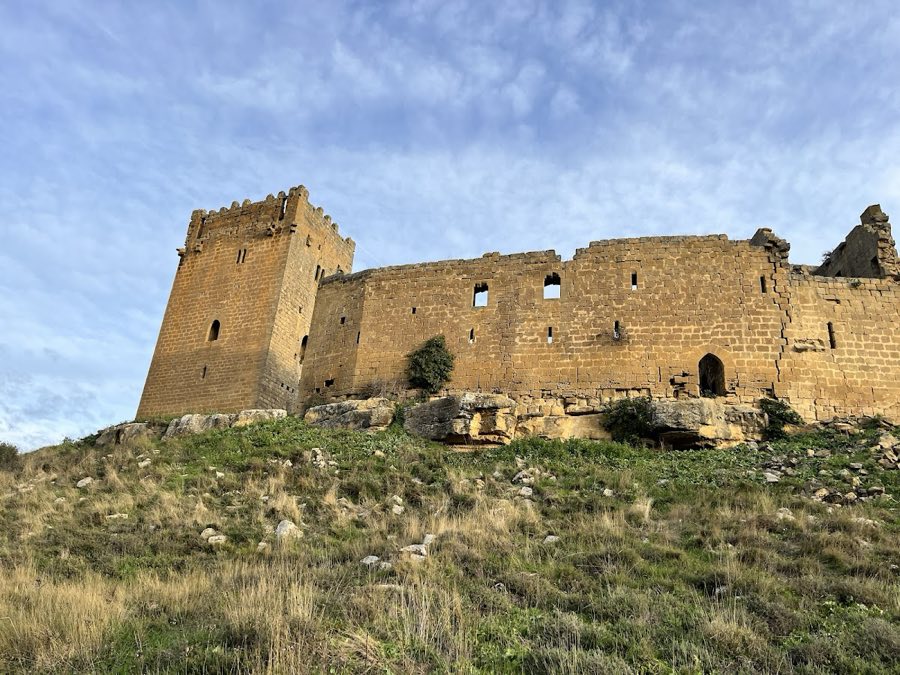
Castillo de Yéquera
Spain
CastleRuin11th century
No. 91994
Castle · Spain
No. 91994 · 42.435 N, 1.031 W
Quick summary
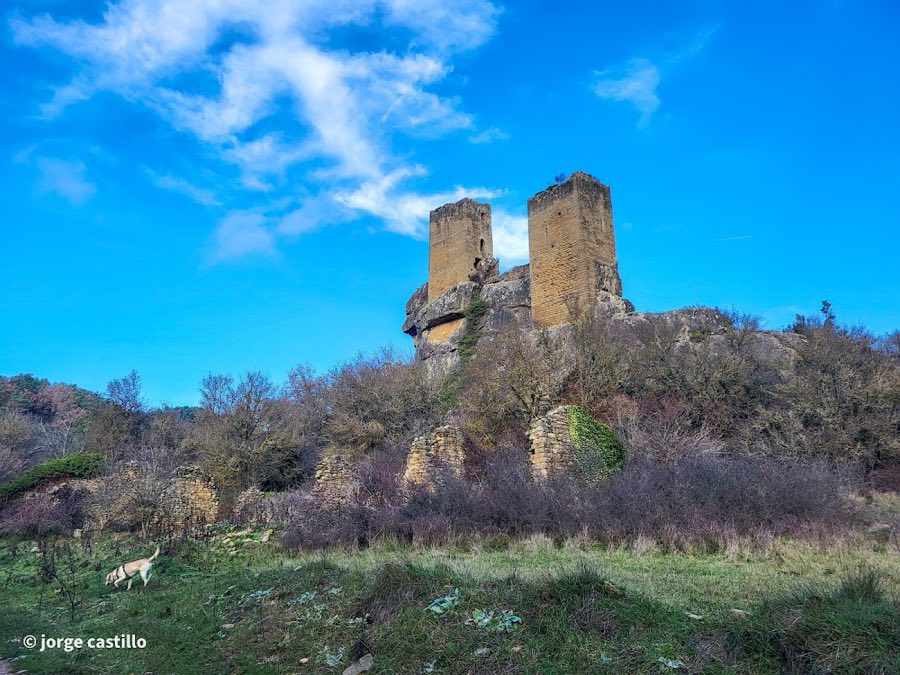
Castillo de Sibirana, Uncastillo is a castle in Uncastillo, Spain with origins associated with the 9th century.
See all castles in SpainThe Castillo de Sibirana in Uncastillo, Spain began as an Islamic tower built by the Banu Qasi and was later expanded into a Christian stronghold.
An original tower stood on this site by 891, in the hands of the Banu Qasi. Between 905 and 925 a program of defensive works placed fortifications on the region’s high points, and in 921 King Sancho Garcés I captured Sibirana and constructed the Christian fortress on top of the earlier tower. The place appears in documents of 1063 under the names Sibrana and Siurana. In 1086 the castle and its settlement entered royal property as part of the dowry granted to Felicia of Roucy on her marriage to King Sancho Ramírez of Aragón. A later charter of Alfonso I to Luesia refers to descending to where the Sibrana river runs, linking the site to known medieval routes.
From 1159 to 1162 the estate was held in tenancy by Pedro López de Luna. The small accompanying village remained occupied into the modern era; parish records show habitation extending into the late 1700s. The settlement emptied at an uncertain moment between the 1600s and 1700s, with the difficult access, a harsh local climate and recurrent epidemics recorded as factors in its abandonment. Today the ruined castle and the Romanesque hermitage of Santa Quiteria survive on private land and are protected as a Bien de Interés Cultural.
The site occupies a narrow valley beside the Sibirana ravine, a tributary of the Arba de Luesia, and stands directly above the track that links Uncastillo and Luesia with the Onsella valley. The defensive complex is built atop a steep rocky crag, which blocks approach from the south and concentrates access to the north. Immediately north of the crag a broad plaza opens, reached by circling the rock on its western side; the hermitage of Santa Quiteria sits just above that plaza. At the southern foot of the crag are the foundations of roughly ten to twelve village houses.
The fortress is formed by two tall, square towers set on the rock, a layout tied to the early medieval re-fortification of the area in the first decades of the 10th century and to the earlier Islamic tower of the late 9th century. Each tower measures about four metres across and rises to some twenty-five metres, with the interior divided into three wooden-floored levels. The towers were entered from the north by a timber stairway, traces of whose beam sockets remain cut into the stone. The towers retained their outer form well into the 2010s, including their battlements. The north faces lack openings and arrow slits, a choice made to shelter interiors from the cold northern wind known locally as the cierzo and because the northern approach was the more vulnerable side.
Water for the fortification was taken from the ravine at the rock’s base, while food and supplies depended on nearby lands where livestock provided an important part of subsistence. The Romanesque hermitage of Santa Quiteria, oriented to the east, consists of a single nave ending in an eastern apse and was built with finely cut ashlars. Its roof, originally wooden beams covered with Arabic tiles, collapsed almost entirely in the first decade of the 21st century. The entrance is modest, with a semicircular tympanum bearing a crismon above a rounded arch flanked by two capitals; the southern portion of the chapel has largely fallen away and a single semicircular window in the east wall now provides limited light.
No. 53854
No. 57334
No. 55877
No. 56282
Comments
Comments for Castillo de Sibirana, Uncastillo will require a verified account before posting.
We'll send a verification link before your first comment is published.