No. 26236
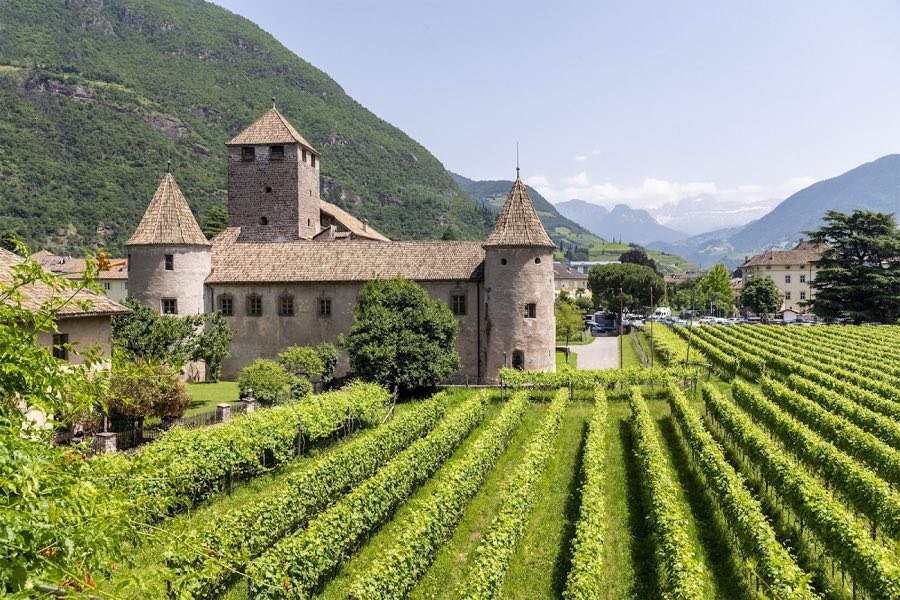
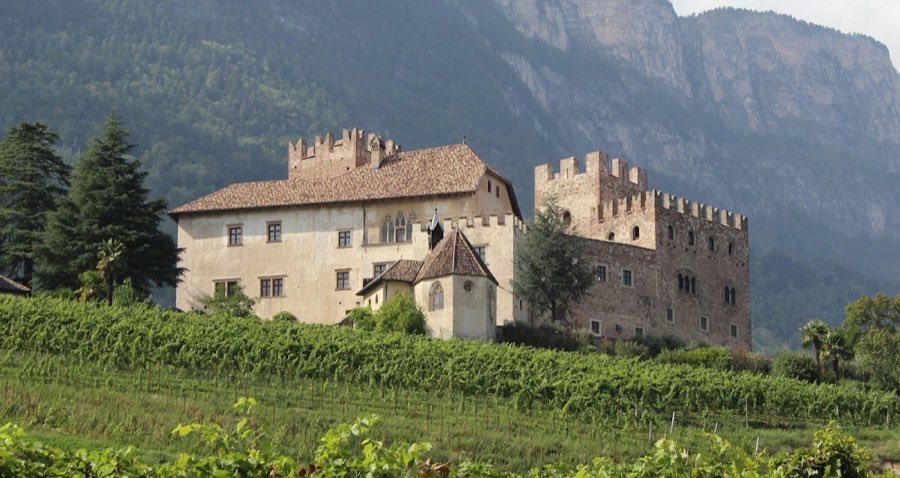
Maretsch Castle, Bolzano
Bolzano, Italy
CastleRestoredFor events13th century
No. 38745
Castle · Italy
No. 38745 · 46.542 N, 11.367 E
For events
Castle Afing is marked as a château or castle venue lead. Capacity, indoor/outdoor spaces, catering rules, and accommodation options are published only after public verification.
Event types: Private events, Cultural gatherings, Filming and photography
Quick summary
Castle Afing is a castle in Italy with origins associated with the 13th century.
See all castles in ItalyCastle Afing stands in the municipality of Jenesien, Italy, and it is associated with medieval local nobility. Its origin and early development are not fully documented, and the sequence of construction and occupation cannot be reconstructed with certainty from surviving records.
A documentary link ties the site to the family called the lords of Afing, who appear in written records in 1214 with a member named Gottschalk, and who served as ministeriales to the lords of Wangen. Because the family died out early and the position of the ruin is hard to reach, the place name and the remains fell into obscurity over time. The ruin later came to be known locally as Unterkofler‑Schlössl, a name taken from the nearby higher Unterkofler farm.
Interpretations of the site’s former role vary in the modern record. One assessment proposed that the walls functioned as a refuge castle, erected to offer short‑term shelter rather than as a permanently garrisoned stronghold. Another report described evidence for a metallurgical activity on the southern rock head, interpreted as a possible wind‑driven furnace or smelting installation. Local stories have long been attached to the stonework, with oral legends recorded that connect the walls to past events and people.
Throughout the twentieth century the ruin received intermittent attention: it was recorded and photographed, a plan was made of the surviving layout, and the spur was mapped and measured, producing an inventory of wall volumes and describing the site’s steep, exposed situation and the lack of a reliable water source. These modern records documented both the fragmentary masonry and the difficulties of access that have shaped the ruin’s later history.
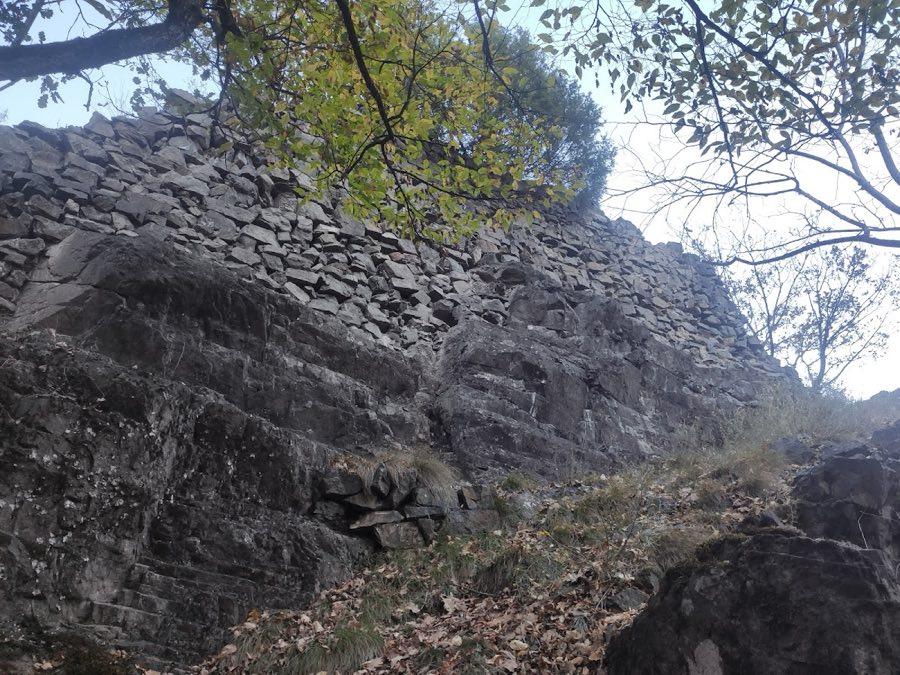
The remains occupy a narrow rock spur that projects toward the Sarner Gorge and falls away steeply on three sides. Masonry survives on two small rock heads close to the saddle at the western end of the spur, and the surviving stonework rises to about two metres in places. The construction uses Bozner quartz porphyry, and the workmanship varies across the visible sections of wall.
On the northern, slightly higher rock head a roughly rectangular building footprint is preserved, measuring approximately twelve by eight metres, accompanied by several fragments of mortar‑bonded wall. This cluster of walls has been interpreted as the main structural block of the complex and has been equated with the documentary references to Castle Afing. The masonry here remains in situ and stands visibly above the rock platform.
The southern rock head contains far fewer traces, with only scattered wall fragments reported and unstable sections threatened by slippage. On that same southern head a worked area has been identified as a possible smelting location; observers suggested it may have functioned as a wind‑furnace for metal processing, a feature interpreted as a special‑purpose installation rather than domestic accommodation.
A surrounding forework was reported in early reports of the ruin, indicating an outer defensive or approach feature tied to the western access. Measurements made during mapping work estimated the total preserved masonry at well over one hundred cubic metres. Today the remains are fragmentary and confined to the two rock prominences, with collapsed and slipping sections noted and no extensive standing buildings beyond the low rubble walls and the rectangular foundation on the northern head.
No. 26236
No. 11186
No. 46075
No. 69654
Comments
Comments for Castle Afing will require a verified account before posting.
We'll send a verification link before your first comment is published.