No. 68292
Castle of Castelo Bom
Portugal
CastleRuinFor events16th century
No. 10576
Castle · Portugal
No. 10576 · 40.592 N, 6.950 W
Quick summary
Castle of Castelo Mendo is a castle in Portugal with origins associated with the 13th century.
See all castles in PortugalThe Castle of Castelo Mendo is located in the municipality of Castelo Mendo, Portugal. This site reveals a long history of human settlement that began well before the medieval era, with origins traced to an early proto-historic castro settlement, later adapted during the Roman period.
The castle’s initial medieval construction dates back to the late 12th or early 13th century, likely under the rule of King Sancho I of Portugal (1185–1211). By 1229, during the reign of King Sancho II, the settlement was granted a Foral Charter from Vila do Touro. This charter established the first official fair in the kingdom, held three times a year, and included mention of the castle and its then alcaide (castle governor), Mendo Mendes.
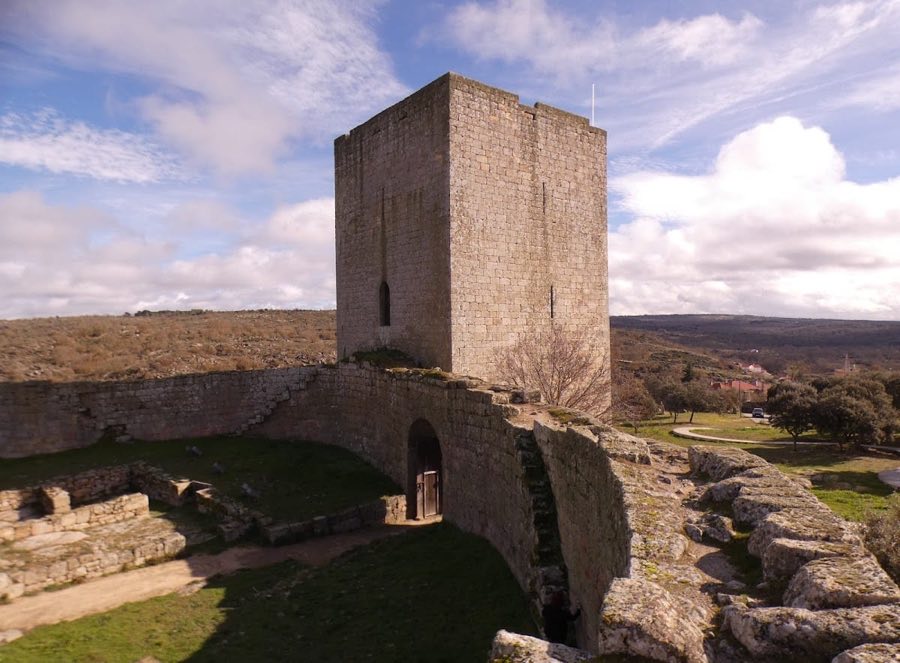
Throughout the late medieval period, the castle and village formed part of the Ribacôa territory, a border region contested between neighboring powers. In 1297, the Treaty of Alcanices secured this land definitively for Portugal under King Dinis (1279–1325). Recognizing the strategic importance of the site, King Dinis confirmed the village’s Foral in 1281 and introduced a tax-free fair. This prosperity enabled the construction of a second defensive wall and the keep tower, also known as the Torre de Menagem. These efforts strengthened the castle as part of broader border fortification during his reign.
However, following a peaceful period, the village and castle experienced economic and demographic decline. By the reign of King João I (1385–1433), the area had become a refuge for outlaws. The castle’s deterioration was recorded in the early 16th century by Duarte de Armas in his “Livro das Fortalezas” (Book of Fortresses), around 1509, indicating its condition had deteriorated by that time.
Centuries later, during the Peninsular War, a small garrison of nineteen soldiers defended the village against French troops led by Marshal André Masséna. The village eventually lost its status as a municipal seat in 1855, which accelerated its decline further.
In 1946, the castle was formally recognized as a National Monument. This designation led to restoration and consolidation efforts managed by the Directorate-General for National Buildings and Monuments (DGEMN). These works involved rebuilding sections of walls, gates, and towers, although some interventions altered the structure’s original medieval appearance. Additionally, the former Town Hall and Jail building was repurposed as a museum exhibiting artifacts from the Roman period, showcasing the long history of occupation at the site.
The castle is perched atop a rocky hill at an elevation of 762 meters, overlooking the Côa River and Cadelos stream. Its layout is defined by an irregular oval shape with two main sections: an eastern inner citadel and a larger outer village enclosure. The walls and structures are built predominantly in Gothic style using local stone, reflecting medieval construction techniques.
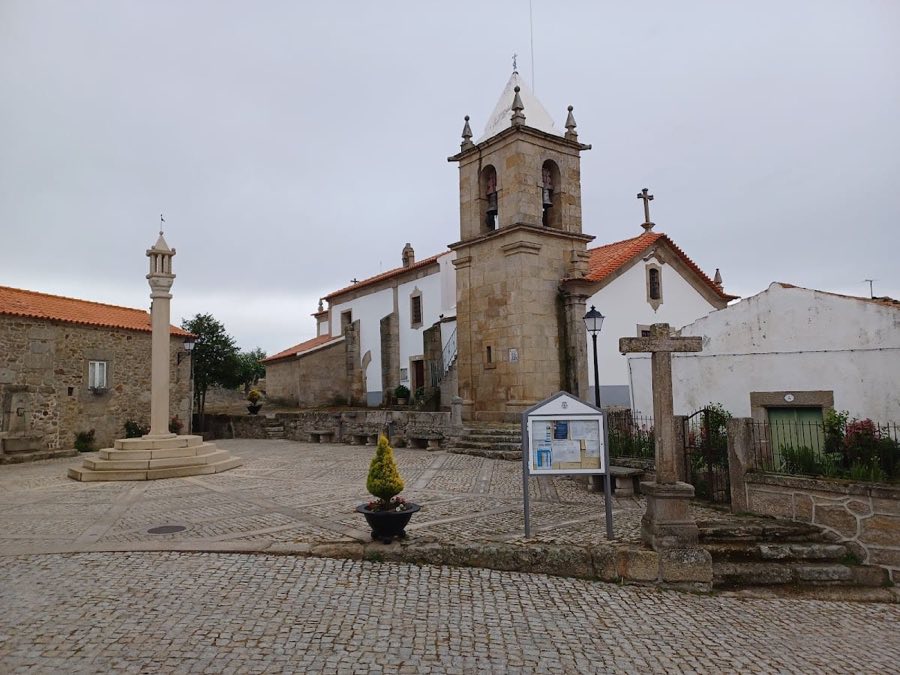
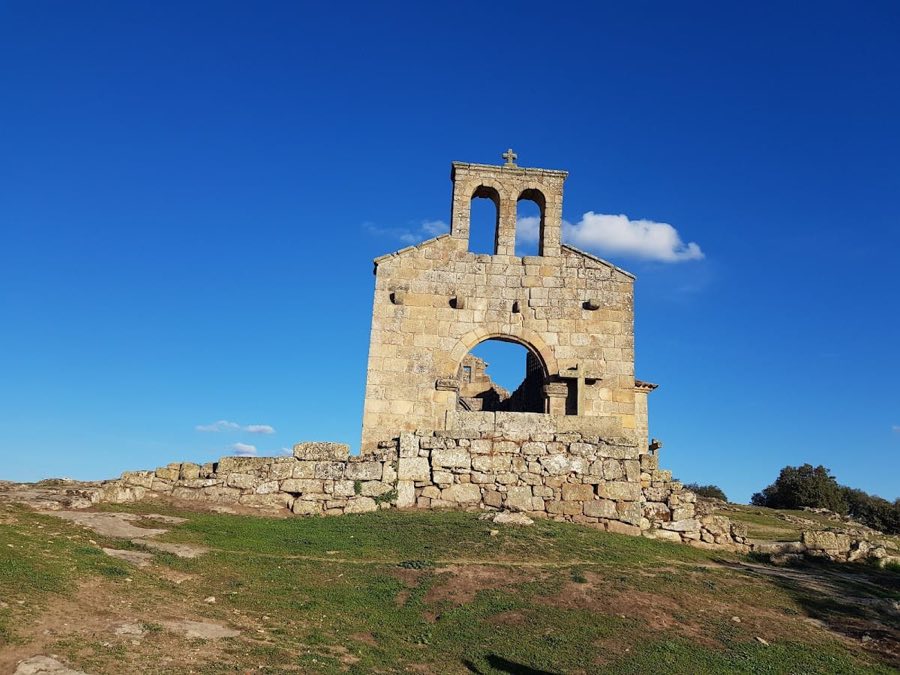
Within the citadel, the most prominent feature is the keep tower, or Torre de Menagem, attached directly to a segment of the defensive wall. This tower was erected during King Dinis’s reign and stands as a central stronghold of the castle complex. The citadel also contains the main western gate, a quadrangular cistern used for water storage, the Church of Santa Maria do Castelo, and the old Town Hall building that now functions as a museum.
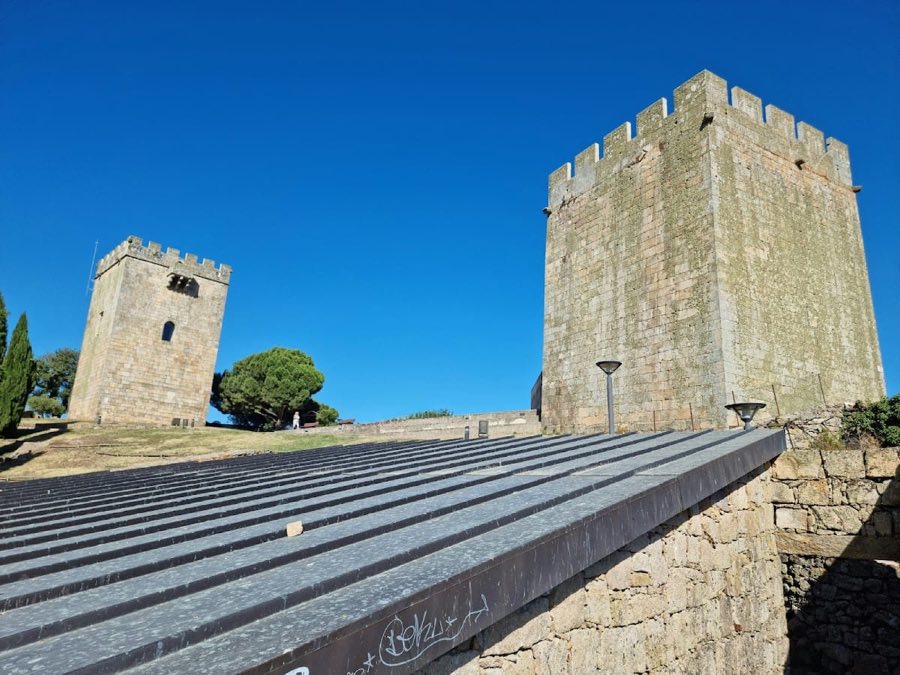
Surrounding the citadel is the village enclosure, which dates mainly from the era of King Dinis. This section has an irregular shape fortified by multiple towers, originally including three principal gates. Two of these gates, the Porta do Sol and the Porta dos Berrões, are each associated with adjacent towers, providing controlled access points. Inside this enclosure stood important religious buildings, such as the Churches of São Pedro and São Vicente, serving both spiritual and communal roles.
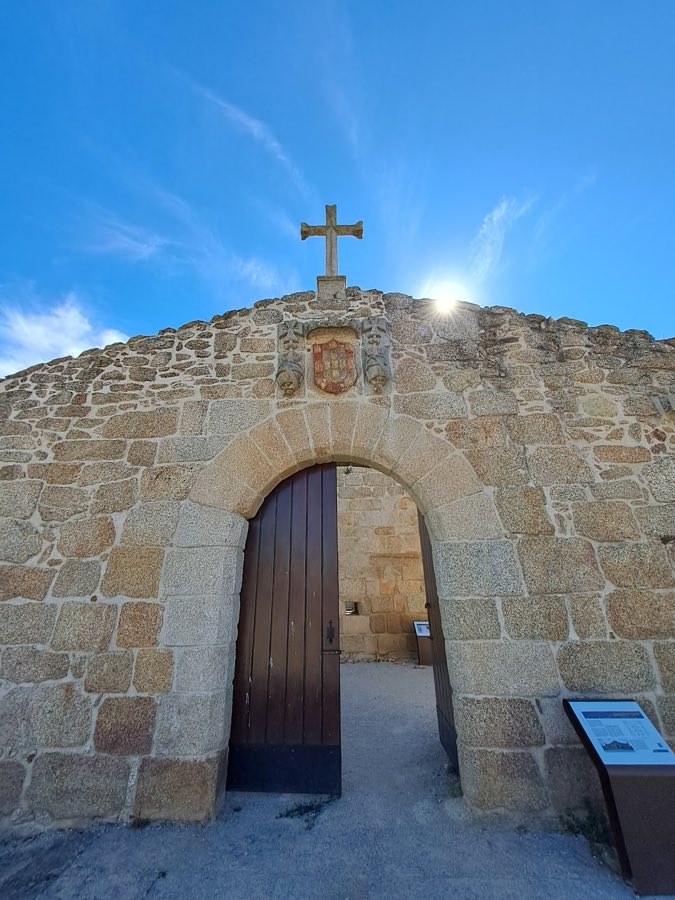
The citadel and village are linked by the Porta da Vila, a monumental gate featuring a pointed arch, flanked by two square towers. It carries the coat of arms of King Dinis, symbolizing his influence on the castle’s fortifications. Guarding this gate are two granite sculptures shaped like boars or wild pigs, dating to the 4th century BCE from the proto-historic period. These zoomorphic figures had their snouts deliberately damaged, a measure believed to have been taken historically to scare away animals that might seek shelter near the gate.
Over time, some parts of the defensive structures have been restored, rebuilt, or consolidated, sometimes changing their original medieval features. The preservation efforts have stabilized walls, gates, and towers to maintain the site’s integrity. Inside the museum housed in the former municipal building, visitors can view Roman-period artifacts uncovered in archaeological excavations, reflecting the castle’s long continuum of habitation from ancient to medieval times.
No. 68292
No. 63006
No. 87270
No. 62294
Comments
Comments for Castle of Castelo Mendo will require a verified account before posting.
We'll send a verification link before your first comment is published.