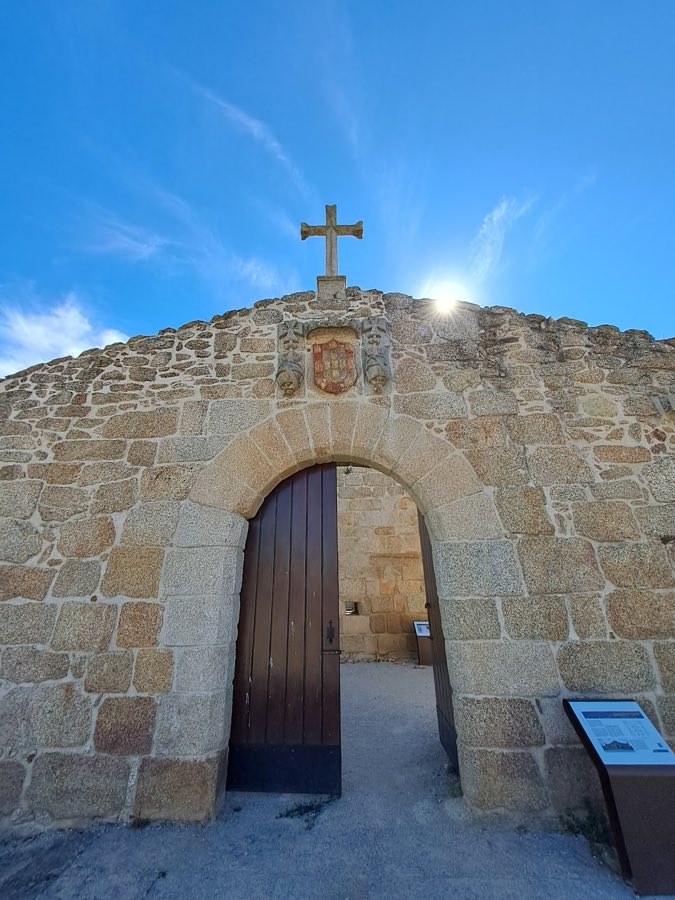
No. 62294
Castle of Alfaiates
Portugal
CastleRuin17th century
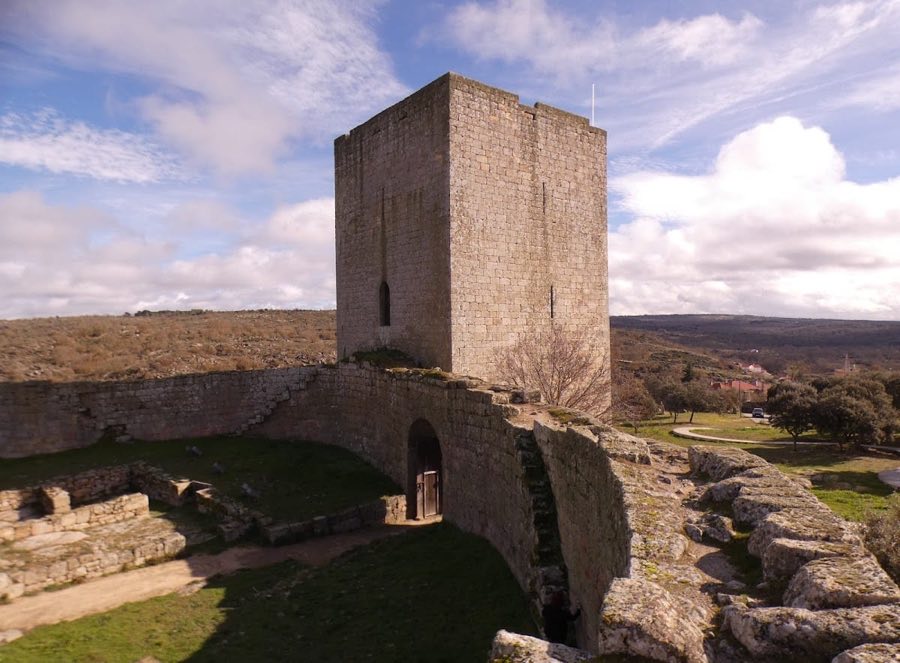
No. 63006
Castle · Portugal
No. 63006 · 40.476 N, 6.941 W
Quick summary
Castle of Vilar Maior is a castle in Portugal with origins associated with the 12th century.
See all castles in PortugalThe Castle of Vilar Maior is located in the municipality of Sabugal, Portugal. Its origins trace back to a site with long-standing human occupation, initially established by pre-Roman peoples who built a fortified settlement known as a castro. This early community existed before the Roman conquest of the region around 60 A.D., after which the Romans strengthened the site’s defenses.
During the medieval period, the castle first appears in records dating to the 11th or 12th century, in the context of the Christian Reconquista—a series of campaigns to reclaim territories under Moorish control. After Leonese forces captured the settlement from the Moors in 1139, the castle was rebuilt. Throughout the 1200s, the fortress and its lands saw frequent disputes between the Kingdom of León and the nascent Portuguese state. In 1296, King Dinis of Portugal secured the castle, granting it a formal charter, known as a foral, that same year. The castle and surrounding territory were definitively incorporated into Portugal by the Treaty of Alcanices in 1297, which settled borders between Portugal and Castile-León.
Royal attention continued in the later Middle Ages. King Fernando (reigned 1367–1383), John I (reigned 1385–1433), and Manuel I (early 1500s) all contributed to the castle’s maintenance and fortification. Under their orders, improvements such as a double line of defensive walls and a barbican—a fortified outpost protecting the entrance—were added. In 1440, the town surrounding the castle was granted the status of couto, a protected area intended to encourage settlement and development. Population records indicate modest growth, from 234 inhabitants in 1496 to over 400 by 1527.
By the 17th century, the castle’s military role diminished. Defensive adaptations focused on bastion modifications rather than full-scale fortifications. Its condition deteriorated over time. By 1758, accounts described the castle as largely in ruins with limited defensive capacity. Despite widespread destruction caused by the 1755 Lisbon earthquake, the Castle of Vilar Maior was not affected.
In the 19th century, the site and township experienced turmoil linked to broader conflicts. French troops pillaged the area during the Napoleonic invasions, and the region was further impacted by the Liberal Wars, which lasted from 1834 to 1853. Subsequently, the municipality of Vilar Maior was dissolved in 1855, and its administration was absorbed into Sabugal.
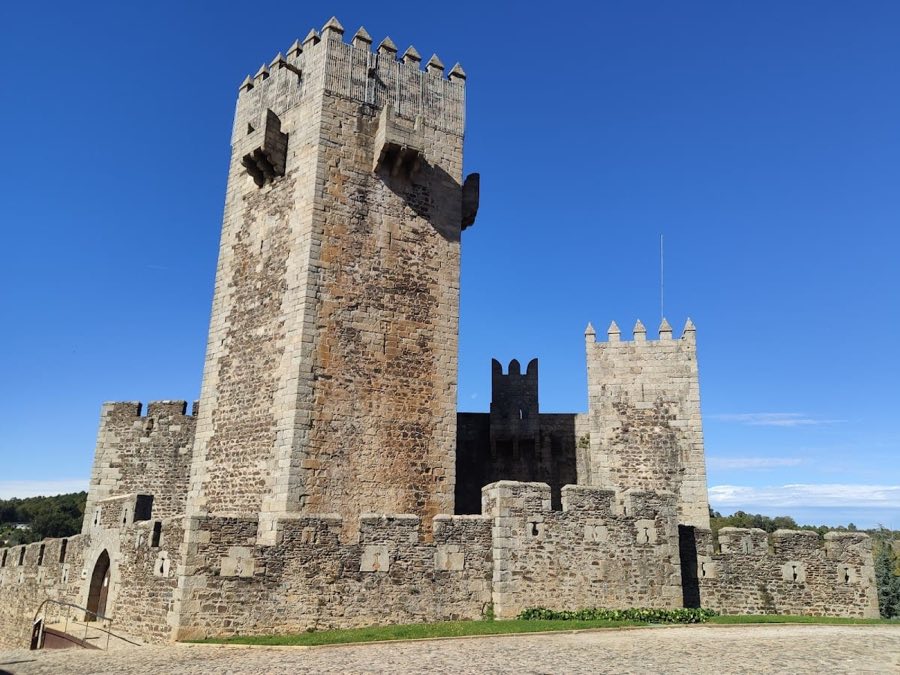
The Castle of Vilar Maior stands on a rocky plateau that overlooks the valley of the Rio Cesarão as well as the settlement below. The fortress utilizes the natural landscape for defense, with sheer cliffs on the eastern side and steep slopes to the west. Its plan is irregular and oval in shape, characteristic of a mountain fortress built in the Romanesque and Gothic styles.
At the heart of the castle is a rectangular keep tower rising approximately 35 meters tall over three levels. This tower, almost attached to the outer wall, is roofless and lacks its original battlements. Its northern face features straight, narrow arrow slits designed for archery defense, while the eastern side contains embrasures equipped with gun ports, framed by projecting rectangular stone frames. The southern facade includes additional embrasures and a doorway on the second floor topped by a pointed, broken arch. Access between the keep and battlements is provided by a series of five staircases. Many stones bear abbreviations associated with the Knights Templar, indicating their participation in the castle’s construction or occupation.
The main entrance to the castle is distinguished by a broken barrel vault—a curved ceiling segment—and is secured by large, monumental hinges. A secondary gate features a broken bow (a pointed arch) and a full round arch, both preserving ornate stone hinges. Surrounding the courtyard is a remarkable circular cistern, 35 meters in diameter, which is uncovered. This reservoir was vital for collecting and storing water within the castle walls.
Originally, the fortification included a double line of defensive walls, providing multiple layers of protection. A barbican was constructed to reinforce the main access point. Beyond these, traces of a third wall survive near the stairs leading to the old town hall and along adjacent streets, indicating the castle’s extensive fortifications extended into the town perimeter. Portions of these walls are incorporated into the current Museum of Vilar Maior.
The battlements that crown the curtain walls have a distinctive rounded profile. Several commemorative inscriptions are carved into the stone, most notably on the gate called Rua do Arco. This inscription dates from the late 13th century and records construction ordered by Alfonso X of Castile, reflecting the contested history between neighboring kingdoms.
Ruins of the town’s defensive walls and three watchtowers form part of the complex, although by the 18th century these structures were already in decline. Noteworthy are the scaffolding remains around the keep tower, designed to allow defenders to fire arrows or drop objects straight down on attackers, similar in function to machicolations found in other medieval fortifications. These features highlight the strategic thought behind the castle’s defenses throughout its active use.
No. 62294
No. 10576
No. 68292
No. 33289
Comments
Comments for Castle of Vilar Maior will require a verified account before posting.
We'll send a verification link before your first comment is published.