No. 51696
Castle of Estremoz
Portugal
CastleRestored12th century
No. 79880
Castle · Portugal
No. 79880 · 38.772 N, 7.716 W
Quick summary
Castle of Evoramonte is a castle in Portugal with origins associated with the 20th century.
See all castles in PortugalThe Castle of Evoramonte stands in the civil parish of Evoramonte, within the municipality of Estremoz, Portugal. Its origins trace back to around 1160, when construction began during the Gothic period. This followed the Christian reconquest of the region from Moorish control, led by the knight Geraldo Sem Pavor. The castle’s location atop the Serra d’Ossa escarpment provided strategic oversight of the surrounding territory.
In 1248, King Afonso III granted a foral, or charter, to encourage settlement in the area. This charter was reaffirmed in 1271, signaling continued royal interest in developing the region. Around 1306, King Denis ordered the fortification of the town, initiating the building of the castle’s main walls, gates, and defensive structures. This phase established the medieval foundation of the fortress.
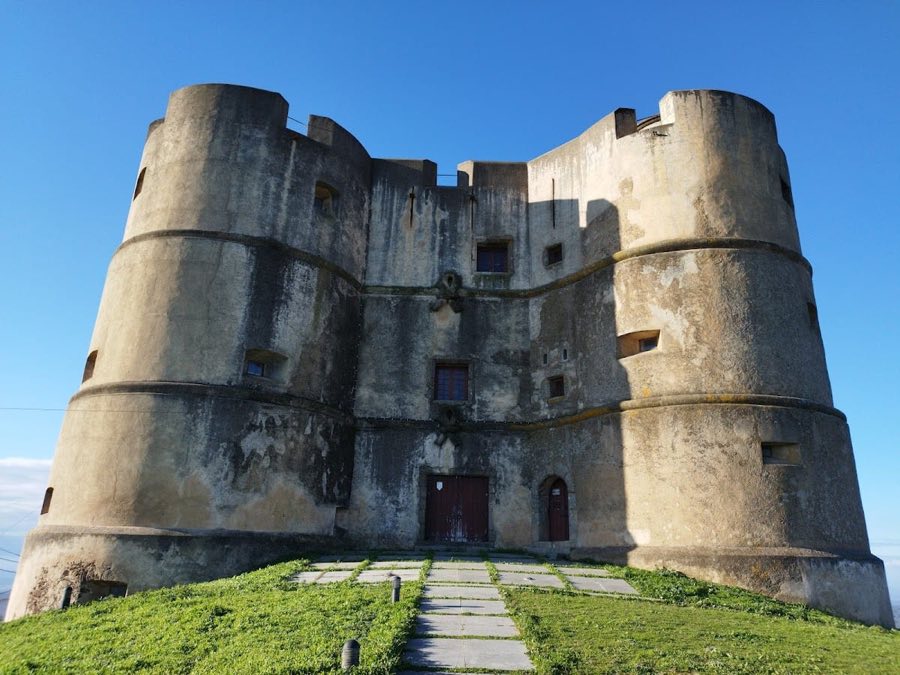
Following King John I’s rise to the throne, the castle and its lands were granted to Constable Nuno Álvares Pereira, a key military figure. Ownership later passed to his grandson. In 1516, King Manuel issued a new foral and began a major reconstruction campaign. This project, completed in 1531 under architect Francisco de Arruda, transformed the castle with four cylindrical towers arranged in a rectangular layout, enhancing its defensive capabilities.
The 1531 Lisbon earthquake destroyed the original medieval keep tower. It was rebuilt under the direction of Teodósio I, Duke of Braganza, who then held lordship over the region. This reconstruction preserved the castle’s role as a fortified residence and military stronghold.
On May 26, 1834, the castle became the site of the Concession of Evoramonte, a significant event that ended the Liberal Wars. This agreement marked the defeat of the absolutist forces of Miguel of Portugal by the liberals supporting Queen Maria II, under the regency of Peter IV.
The municipality of Evoramonte was dissolved in 1855, with its lands divided among neighboring municipalities. Restoration efforts began in the 20th century, notably between 1930 and 1940, focusing on tower repairs and parapet consolidation. Further restoration took place from 1971 to 1987, including wall repairs and installation of modern utilities.
In 1992, stewardship of the castle passed to the Instituto Português do Património Arquitectónico (IPPAR) for rehabilitation and management. The castle was officially classified as a Portuguese National Monument in 1910. In 2006, celebrations marked its 700th anniversary. Responsibility for the site transferred to the local municipal authority in 2021.
The Castle of Evoramonte features a distinctive rectangular plan with four cylindrical towers at each corner. These towers are wider at their bases and integrated into the castle’s walls, creating a compact and robust quadrangular form. The structure rises three stories high, with each level separated by decorative cornices carved in the Manueline style, which resembles twisted ropes.
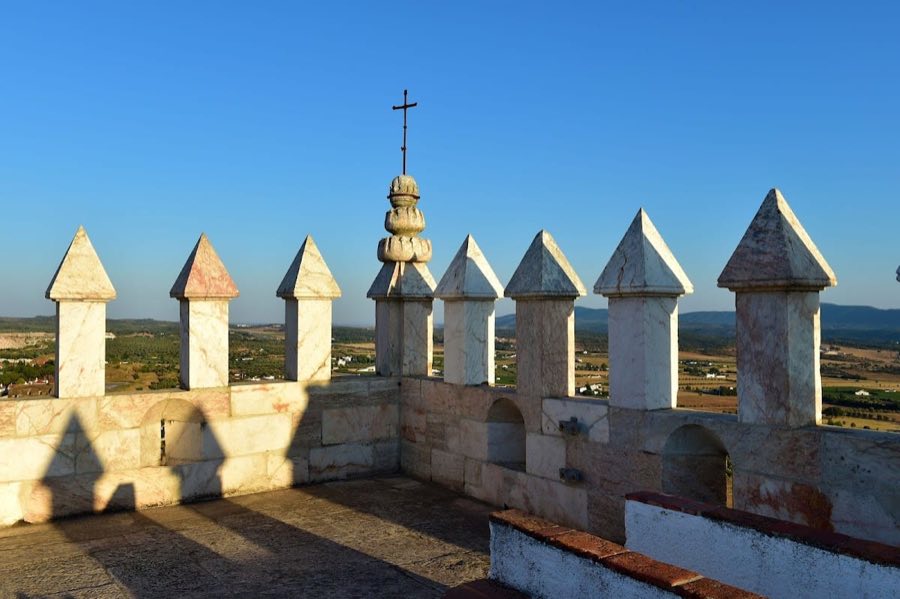
Constructed primarily of stone masonry and granite ashlar, the castle combines Gothic and Renaissance architectural influences. The terrace is crowned with large merlons, or battlements, which served as a platform for artillery. Cannon openings are located along the cylindrical towers; these narrow inward, enhancing the fortress’s defensive design.
Inside, the first floor contains a large salon with an ovular vaulted ceiling supported by four sculpted columns. The ribbed vaulting forms an intricate pattern, a feature repeated in smaller scale on the upper floors. Access between levels is provided by a circular staircase housed within the western cylindrical towers.
The castle’s walls are adorned with sculpted stone knots, a decorative element typical of the Manueline style. The overall chamfered shape of the building, combined with its wide merlons and tower design, contributes to its imposing and fortified appearance. Restoration efforts have preserved these features, maintaining the castle’s historical integrity.
No. 51696
No. 30614
No. 19055
No. 45747
Comments
Comments for Castle of Evoramonte will require a verified account before posting.
We'll send a verification link before your first comment is published.