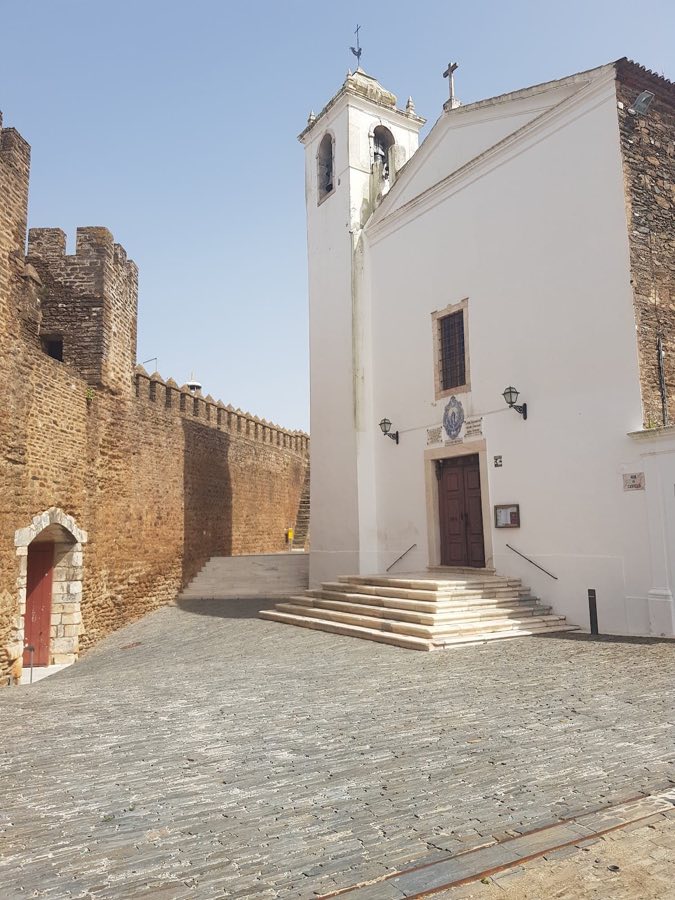
No. 64077
Castle of Alandroal
Portugal
CastleRuin13th century
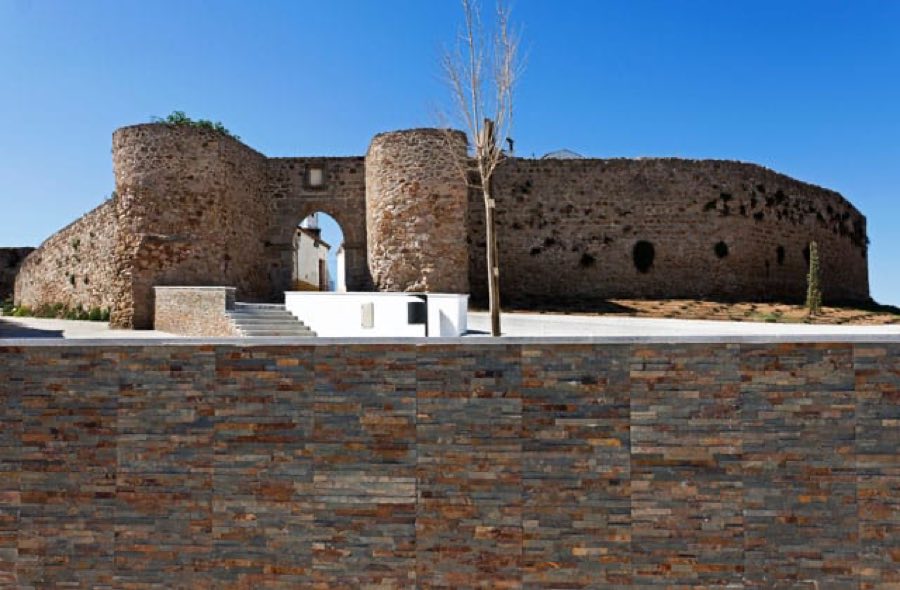
No. 30614
Castle · Portugal
No. 30614 · 38.650 N, 7.543 W
Quick summary
Castle of Redondo is a castle in Portugal with origins associated with the 15th century.
See all castles in PortugalThe Castle of Redondo is located in the municipality of Redondo, Portugal. Its origins trace back to the Roman era, as the fortress was constructed on the ruins of a Roman stronghold, indicating the site’s long-standing strategic importance.
The first major medieval construction began in 1250 under the directive of King Afonso III of Portugal, following the issuance of a formal charter, known as a foral, to the town of Redondo. This period marked the initial phase of establishing the settlement’s fortifications and administrative identity. In 1312, King Dinis I initiated significant rebuilding efforts, adding crucial defensive features such as the keep tower and surrounding walls with several towers. He reaffirmed the town’s charter in 1318, reinforcing its legal and political status. Throughout the late Middle Ages, the castle formed part of a broader defense system in northern Alentejo, alongside nearby strongholds like Estremoz, Monsaraz, and Portel, helping protect the region and the important city of Évora.
During the 15th century, especially in 1418, King John I granted special privileges to the Redondo castle and decreed that all travelers moving between Alandroal and Vila Viçosa should pass through Redondo, thereby encouraging commerce and increasing the town’s regional significance. By the end of the 1400s, the previously important Torre da Alcaidaria lost its strategic role, while the keep tower reached completion. Around this time, King Manuel I issued a new charter for Redondo in 1516 and included the castle in a royal donation to Vasco Coutinho, the first Count of Redondo and captain of Arzila from 1500. The castle also saw architectural updates in the Manueline style, a Portuguese late Gothic design prevalent in the early 16th century.
By the 18th century, remains of the palace belonging to the Counts of Redondo were still found near the keep tower, pointing to the noble family’s ongoing influence. In the 20th century, preservation efforts began in earnest: the Directorate-General for National Buildings and Monuments (DGEMN) initiated restoration in 1920 and undertook several conservation campaigns throughout the decades. Between 1940 and 1950, the castle’s keep tower was repurposed as an isolation center for tuberculosis patients. Further repairs took place periodically, focusing on the walls, towers, and gates, with collaboration from the local municipal council. Since 1946, the castle’s walls and keep tower have been officially recognized as a National Monument.
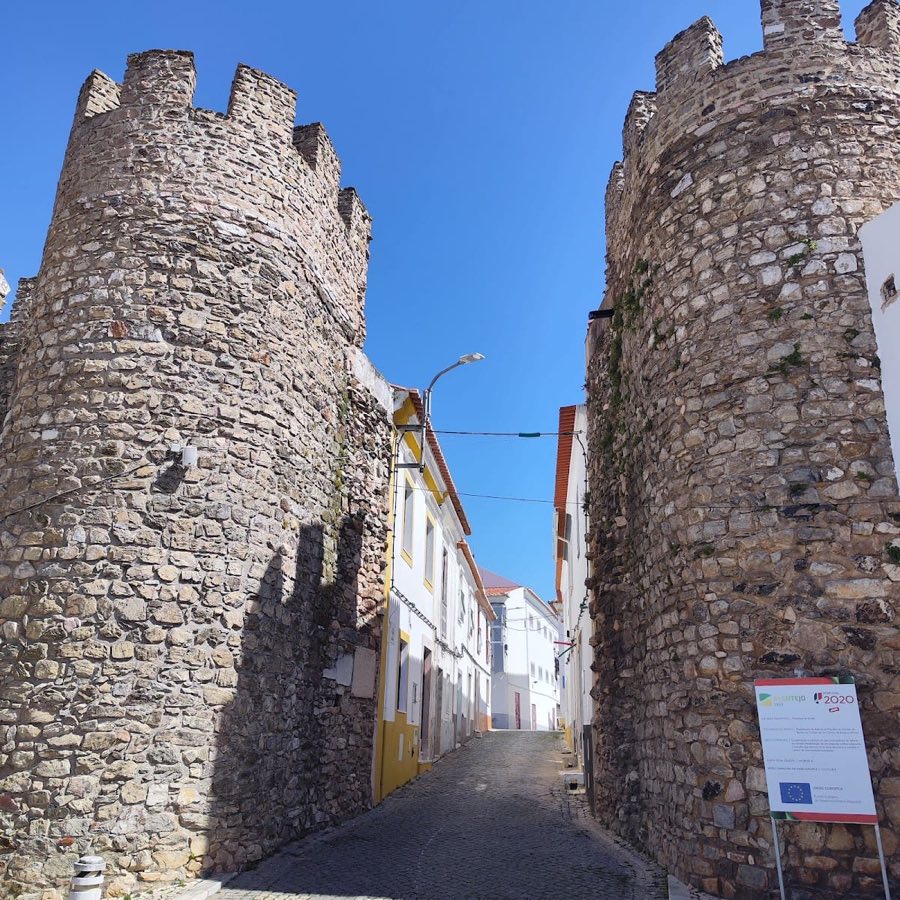
The Castle of Redondo occupies a hilltop about 300 meters above sea level on the southern slope of the Serra d’Ossa, offering a commanding view over the surrounding landscape. The fortifications mainly consist of early 14th-century walls and a central keep tower, constructed primarily from stone and later modified in the Manueline style. These defensive structures once formed part of a medieval line of fortifications guarding the region around Évora.
Within the enclosure, some residential buildings are integrated into the medieval walls or built along adjacent rocky ledges. These houses reflect the local Alentejo architectural tradition, characterized by single-story whitewashed walls, prominent rectangular chimneys, and accents of ochre and blue paint. Nearby stand notable ecclesiastical and charitable institutions, such as the Hospital of Santa Casa da Misericórdia do Redondo and the parochial church of Nossa Senhora da Anunciação, situated west of the keep tower.
The castle’s main entrance, known as the Ravessa Gate, features a royal coat-of-arms carved above it and an inscription plaque, testifying to its official status and historical importance. To the right of the keep tower’s staircase, a tombstone bearing an inscription is preserved, though details of its dedication are not specified. Over time, multiple restoration and consolidation efforts have focused on preserving the wooden elements such as doors and windows, as well as repairing masonry joints, particularly on the keep tower and Ravessa Gate. Despite these interventions, the castle retains much of its fortification outline, with some parts surviving in fragmentary condition but overall maintaining their positioning in situ.
No. 64077
No. 45747
No. 93518
No. 19055
Comments
Comments for Castle of Redondo will require a verified account before posting.
We'll send a verification link before your first comment is published.