No. 10469
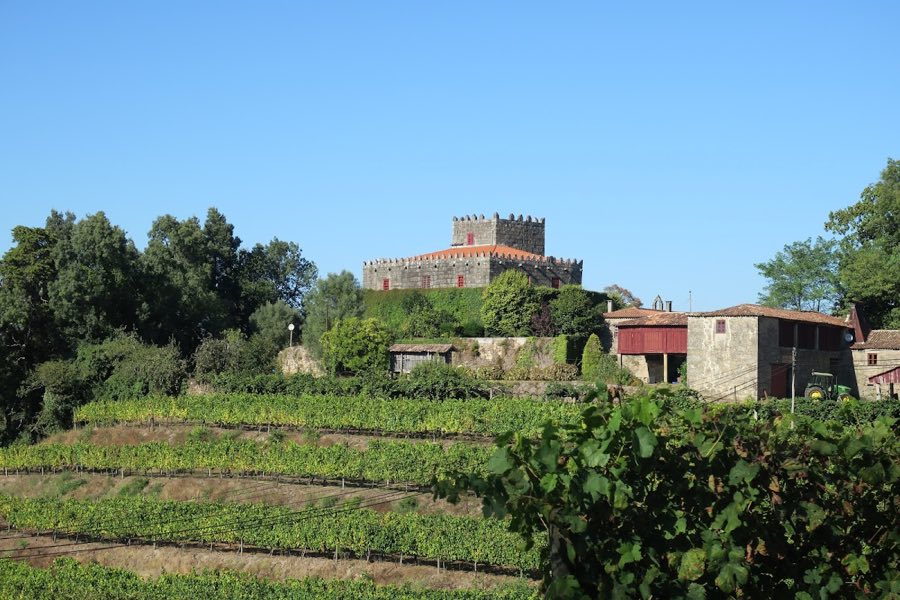
Castelo de Curutelo
Portugal
CastleIntact8th century
No. 85223
Castle · Portugal
No. 85223 · 41.497 N, 8.647 W
Quick summary
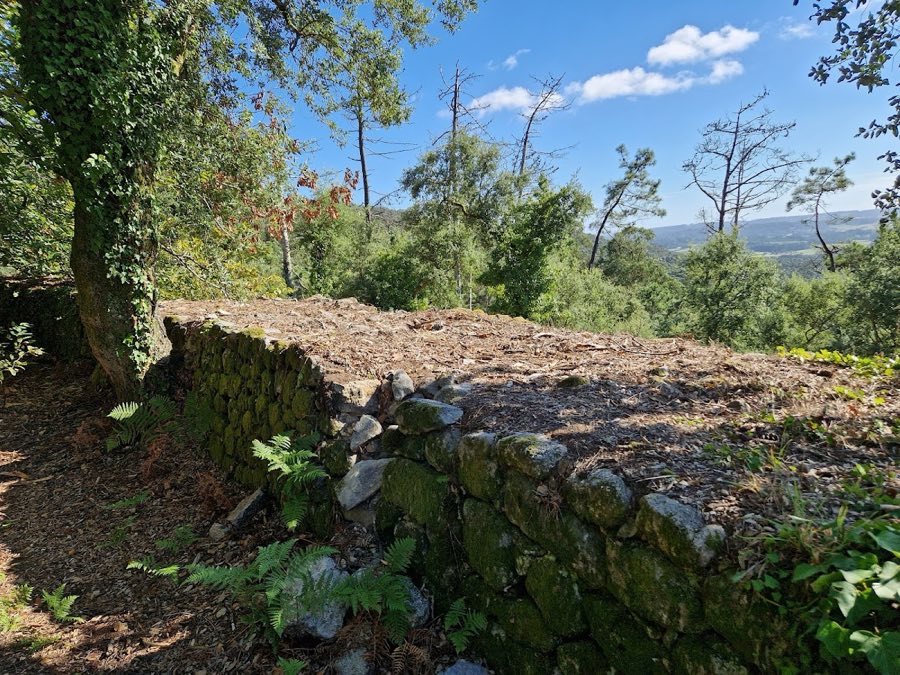
Castle of Faria is a castle in Portugal with origins associated with the 7th century.
See all castles in PortugalThe Castle of Faria stands in the municipality of Gilmonde, Portugal, and began as a settlement of the Iron Age castro community.
Human occupation at the hilltop dates back to the third or second millennium BCE, with remains from a late Bronze Age settlement that persisted into the late Roman period. By around 700 BCE the site had been fortified as a castro, with multiple lines of defence and a wooden palisade. Objects found at the site show trade connections with Mediterranean cultures during the fifth and fourth centuries BCE.
The form of the stronghold evolved over many centuries and came to resemble a medieval castle by the ninth or tenth century, a phase associated with the Christian Reconquest of territory. The fortress appears in a written record of 1099, when it was granted to Soeiro Mendes da Maia. During the twelfth century the castle was linked to several nobles named in documents as Ermígio Riba Douro, Mem de Riba Vizela, and Garcia de Sousa. In 1128 Infante Afonso Henriques seized the place during his revolt against Theresa, Countess of Portugal.
In 1373 a Castilian episode is recorded in which Nuno Gonçalves da Faria was taken prisoner by forces from Castile and killed in front of the castle, while his son refused to surrender; a related legend about a Castilian attack and the castle’s defence is also associated with that year. In 1400 King John I donated the fortress to D. Gonçalo Telles de Meneses, who placed his fleur-de-lis coat of arms there; that emblem later became associated with the Counts of Faria. With the rise of the Avis dynasty in the fifteenth century the castle lost much of its administrative and military importance. In the sixteenth century stones from the fortress were reused in building the Convent of Bom Jesus do Monte at the foot of the hill in Franqueira.
Archaeological and conservation work at the ruins began in the twentieth century. Local excavations started in 1929 by the group Alcaides de Faria and continued through the 1930s, followed by rebuilding of sections of wall and the keep from 1939 and tower repairs later in the middle decades of the century. Cleaning work by the archaeological section of the University of Braga began in 1978, and further excavations were carried out in the early 1980s by researchers associated with the University of Porto. Investigations into the so-called Tomb of Faria took place in 1990 and again in 2001–2002. Finds recovered during these campaigns include metal items such as belt buckles, helmet pieces, swords, chain mail and other armaments, together with coins struck during the reign of King Ferdinand. The ruins received formal protection as a national monument on 13 July 1956.
Perched on a steep rocky slope on the northwestern flank of Monte da Franqueira, the site commands views over the Cávado River and the road between Franqueira and Milhazes. The settlement is arranged as a sequence of defensive rings, the visible result of an Iron Age hillfort that was later adapted in medieval times. Much of the surviving fabric is fragmentary, but excavations have revealed the plan of successive occupation phases and exposed the stonework of the fortified terraces.
The outer line of defence faces east and was accompanied by an extensive trench excavated before the road opening that links Franqueira with Milhazes. That outer wall and its ditch functioned as the first barrier for the castro community, and the trench remains evident in the landscape. Portions of the wall were rebuilt in the twentieth century, while the trench survives as an earthwork feature that marks the approach to the hill.
Between the outer wall and the next inner wall on the eastern side archaeologists uncovered the foundations of ten living structures from the castro period. These dwellings vary in plan, some circular and others oval, and a number include clear domestic features such as small entrance vestibules and fireplaces. The stone bases exposed in situ show the simple building techniques of the hillfort phase and retain the footprint of that settlement layer.
On either side of the second eastern wall there are further vestiges of both circular and rectangular buildings, indicating alterations of plan over time and the introduction of more rectilinear architecture in later phases. These structures illustrate the transition from purely castro-style houses to forms used in subsequent centuries. The remains stand as low walls and foundations in place, in a condition described as fragmentary but archaeologically informative.
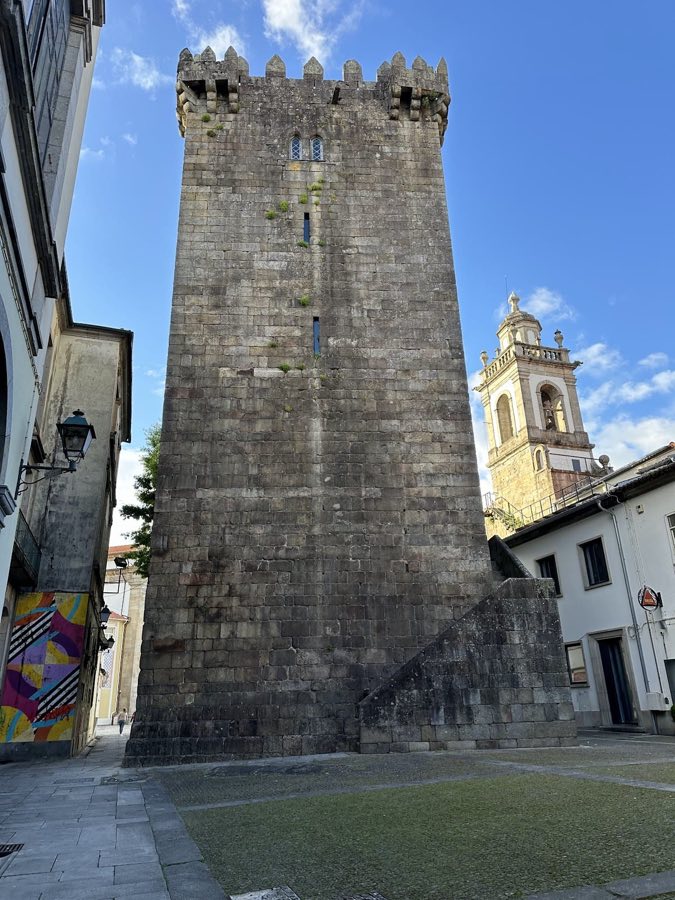
Within the upper courtyard stands the medieval tower keep laid out on a rectangular plan, accompanied by the ruined walls of what is called the palace of the alcalde. Between that building and a lower lateral wall a sloping terrace supports the upper level of the castle. Defensive features recorded in the medieval plan include a barbican guarding an entrance and a battlemented curtain wall surrounding the enclosure. One description of the medieval phase emphasizes a Romanesque character, with a roughly quadrangular layout around an internal courtyard.
Archaeological work has exposed the Iron Age fortification system beneath the medieval fabric and has revealed a range of movable finds. Excavations yielded metalwork such as buckles, helmet fragments, swords, sections of chain mail and other military gear, alongside coins from the period of King Ferdinand. Many of the finds recovered during early twentieth-century digs were retained by the local excavation group. Partial reconstruction of walls and towers was carried out in the twentieth century, leaving the site today as a mixture of conserved ruins, restored masonry, and visible archaeological levels.
No. 10469
No. 17002
No. 16406
No. 49361
Comments
Comments for Castle of Faria will require a verified account before posting.
We'll send a verification link before your first comment is published.