No. 77558
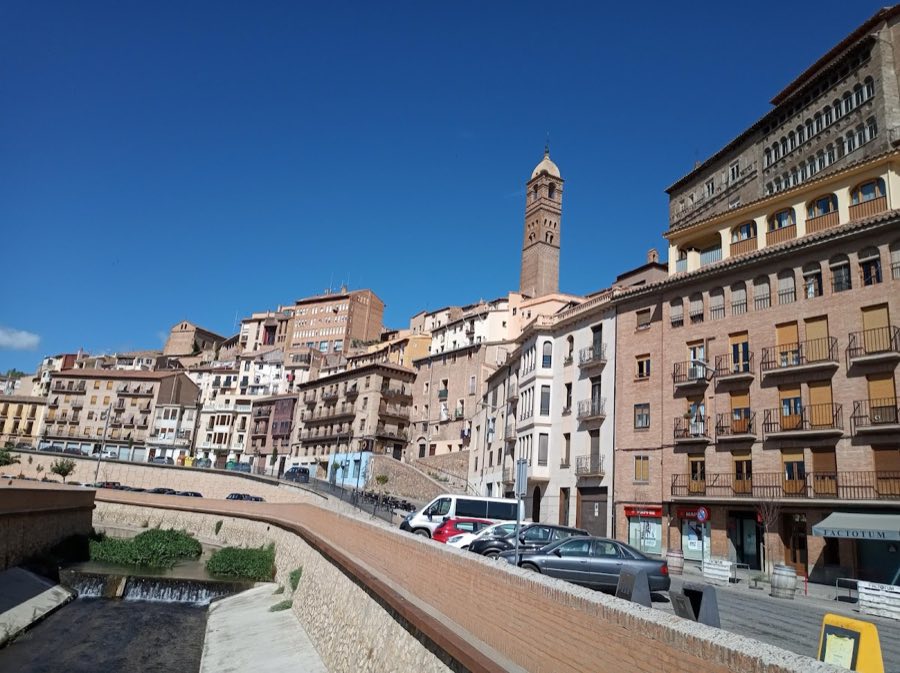
Episcopal Palace, Tarazona
Tarazona, Spain
PalaceRestored16th century
No. 35133
No. 35133 · 41.728 N, 1.725 W
Quick summary
Castle of Ferrellón is a castle in Spain with origins associated with the 11th century.
See all castles in SpainThe Castle of Ferrellón in Añón de Moncayo, Spain, is a medieval fortress.
Archaeological finds of 10th–11th-century pottery have led to a suggestion that the site may have an earlier Andalusi phase, but that possibility has not been explored. In the medieval period the fortress functioned as a frontline defensive post on the border between the kingdoms of Aragón and Castilla and appears repeatedly in documents from about 1200 until 1367.
Around the early 1200s the castle entered the records as an asset of regional rulers. King Pedro II placed the stronghold under the ownership of the Monastery of Veruela. King Jaime I later used Ferrellón as security for a loan, handing it over to Sancho VII with other fortresses; when the loan was not repaid the castle became a life grant. After hostilities and negotiations it returned to Castilian control in 1281 under the terms of the treaty of Campillo.
During the 1260s the fortress figures in criminal litigation. In 1267 a contemporary chronicle describes a counterfeit-coin operation that named individuals involved, including Pedro Pérez of Trasmoz, Blasco Pérez the sacristan of Tarazona, Elfa Jordán and her children with Pedro Jordán, and Pedro Ramírez; the case resulted in executions and exiles. Records from this decade and later also report thefts and the slaughter of stolen animals to be sold at market.
In the early fourteenth century the castle was governed through tenencias. Gonzalo (Gonzaivo/Gonzaivo Egidio) Gil de Vera held the tenencia by grant of Jaime II, a grant renewed in February 1326 and confirmed by King Alfonso IV, who kept this arrangement until 1331. In that year control passed to Gil de Rada, who received a payment of 600 sueldos jaqueses for his tenure.
The fortress was active during the War of the Two Peters. On 26 June 1361 King Pedro IV appointed Pedro Jiménez de Astorga as tenente and assigned him a stipend of 1,000 sueldos jaqueses. An inspection of the stronghold was ordered on 8 December 1361. By 5 February 1363 the castle lay in the hands of Pedro de Sos, and officials issued commands to ensure the place was well supplied. In mid-1363 Castilian forces captured and destroyed Ferrellón in the course of the war. After its destruction the nearby stronghold of Ferrera assumed Ferrellón’s former monetary allocation and became the principal fortification in the immediate area.
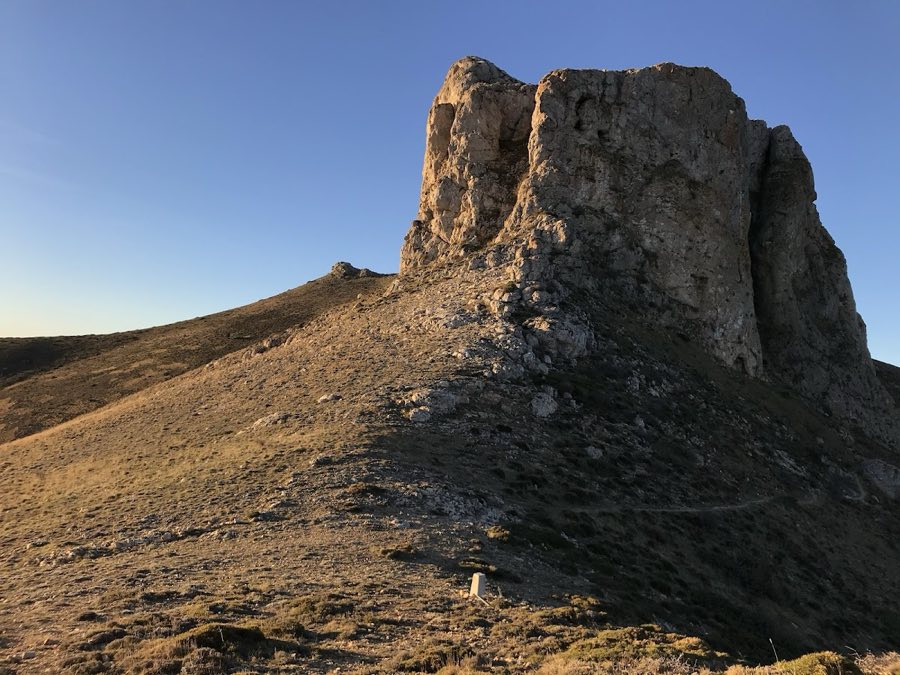
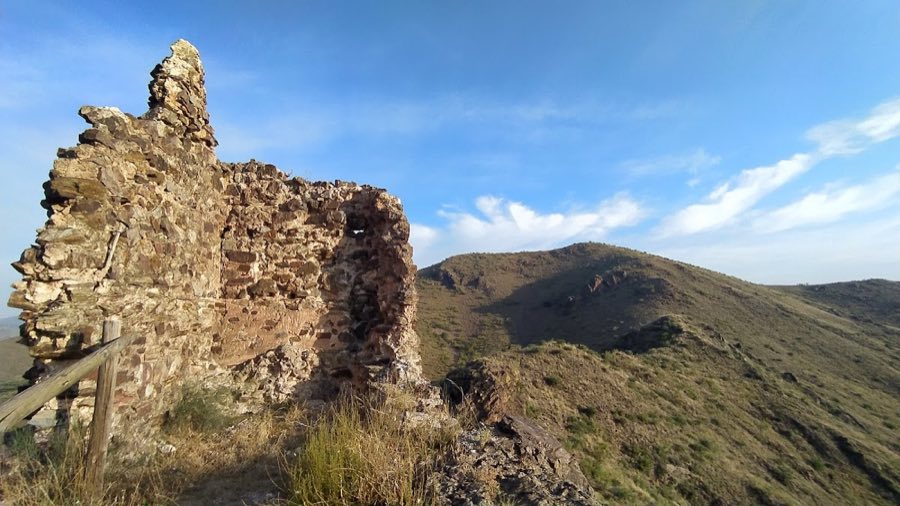
The castle sits on a flat-topped rocky peak known as Del Camino, part of a group of steep escarpments called the Peñas. The site occupies a high, exposed position at about 1,463 metres above sea level and commands an extensive visual field over the surrounding landscape. Surviving fabric is cut directly into the living rock, giving the ruined plan a strong bond with the natural summit rather than separate built walls rising above the outcrop.
Access arrangements are visible in the rock. A narrow vertical chimney provides the only described route to the top today, and it opens onto an artificial cave at its base. The entrance to that cave is set through a rock cut at roughly a right angle and shows the remains of jambs where a doorway would have stood. A series of drilled or carved holes in the rock beside this approach are interpreted as sockets that once supported a small bridge or a ladder leading from the cave up to the summit.
On the level of the summit there are several rock-cut features that indicate occupation and utility. A distinct hollow that appears to be a cistern stores water directly in the bedrock, and multiple other hollows and sockets have been excavated to form rooms or to receive fittings. Many constructions consist of carved rock and cuttings shaped to serve as structural elements rather than masonry laid above ground. The overall condition of these elements is fragmentary and they survive as vestiges on a difficult-to-access top, with the original bridge or stairway no longer extant.
Archaeological surveys have also identified remains on an adjacent Peñas that are associated with the nearby castle of Ferrera, showing how fortifications in this rocky group functioned as a linked defensive system. The position of Ferrellón on its high, vertical peña reinforces its role as a lookout and frontier post in the medieval period.
No. 77558
No. 72998
No. 17125
No. 96355
Comments
Comments for Castle of Ferrellón will require a verified account before posting.
We'll send a verification link before your first comment is published.