No. 74269
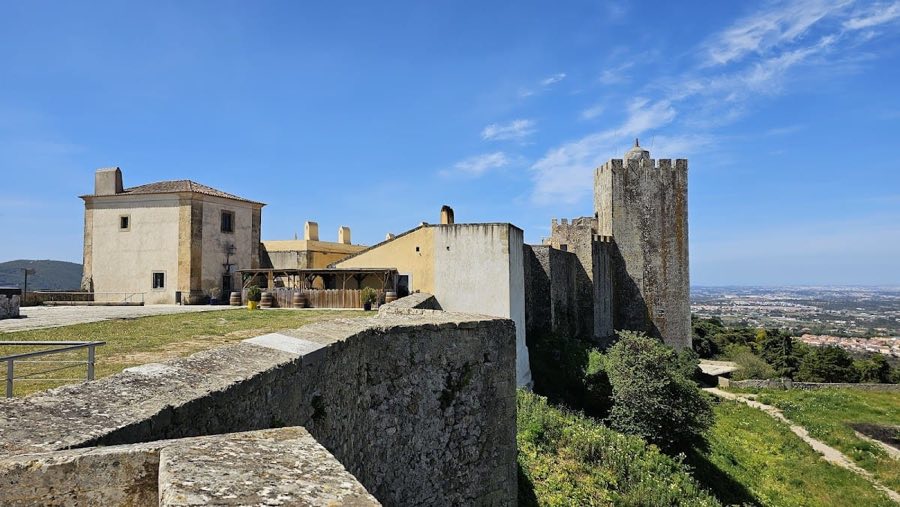
Castelo de Palmela
Portugal
CastleRestored20th century
No. 31662
Castle · Portugal
No. 31662 · 38.453 N, 9.107 W
Quick summary
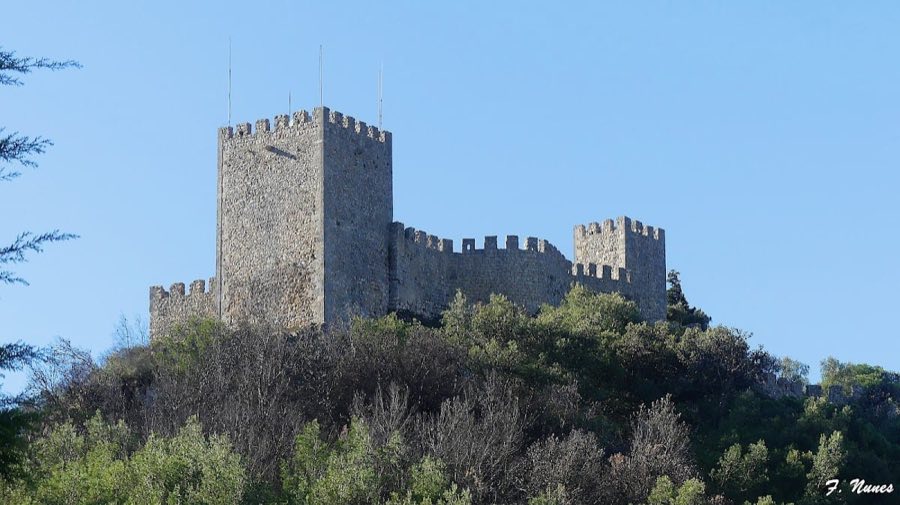
Castle of Sesimbra is a castle in Portugal with origins associated with the 9th century.
See all castles in PortugalThe Castle of Sesimbra, located in the municipality of Sesimbra in Portugal, originated as a Muslim stronghold during the 9th century under the name Alcáçova. This fortress was part of the network established during the Muslim occupation of the Iberian Peninsula. It passed into Christian hands when King Afonso Henriques captured it on February 21, 1165, subsequently undertaking repairs and strengthening its defensive structures.
In 1191, the castle fell to the Almohad caliph Abu Yusuf Yaqub al-Mansur, who occupied and largely destroyed the fortification. Around 1199, King Sancho I reconquered the site with the assistance of Frankish Crusaders. To formalize its recovery and encourage rebuilding, he issued a charter on August 15, 1201, ordering the castle to be reconstructed from its foundations. This directive was upheld by his successors over the following decades, including Alfonso II, Sancho II, Alfonso III, Denis I, Alfonso IV, and Ferdinand I, highlighting the castle’s continuing importance in the region.
In 1236, the castle and its surrounding lands were granted to the Order of Santiago, a military and religious order. The Grand Master Paio Peres Correia played a significant role in repopulating the area, especially promoting benefits for local fishermen. This transfer was confirmed in 1255 by King Alfonso III, affirming the Order’s control and influence.
From the 14th century onwards, the strategic role of the castle declined, as the nearby port settlement grew in importance, largely due to the era of Portuguese maritime exploration. In 1514, King Manuel I granted a new charter to the settlement and commissioned the construction of the nearby Forte de São Valentim, equipped for artillery defense. During the 17th century, under the Portuguese Restoration War, the castle was updated with triangular bastions designed to support artillery, adapting its medieval walls to newer military needs. However, the devastating 1755 earthquake severely damaged the castle, further reducing its military relevance.
In the 20th century, the Castle of Sesimbra was recognized as a National Monument in 1910. Restoration and preservation efforts took place between the 1930s and 1940s, managed by the Directorate-General for National Buildings and Monuments (DGEMN). A further phase of restoration occurred in 1998, ensuring the castle’s structures were consolidated and maintained. Today, the castle remains under the care of the municipality of Sesimbra, preserved as an important historical site.
The Castle of Sesimbra is perched 240 meters above sea level on a cliff that overlooks a natural harbor on the Setúbal peninsula. It follows an irregular, elongated shape aligned roughly from northeast to southwest. The earliest part of the fortress is the medieval alcazaba—the term for a walled fortress section—located at the northern tip. This area has an approximately quadrangular outline dominated by two prominent towers: a square keep with an upper floor covered by a decorated coffered vault, and a quadrangular watchtower positioned at the opposite end.
The castle’s defensive walls are crenellated, featuring battlements that provided protection to soldiers during defense. Four bastions were later added in the 17th century, two on the northern side and two on the southern side, to support artillery installations. Two principal gates allow entry: the Porta do Sol on the northeast side and the Porta da Azóia on the northwest.
Within the castle’s walls lie several important structures. The Church of Nossa Senhora do Castelo, first constructed in 1160, stands restored to its early 18th-century form following work in 1721. Adjacent to one of three cisterns—deep, waterproof chambers for collecting and storing rainwater—are the ruins of the old town hall, reflecting the site’s administrative role in earlier centuries.
A 1516 visitation report offers a glimpse into the castle’s layout at that time. It describes the main stone gate as flanked by two robust towers. Nearby was the mayor’s house, which included a hall, three bedrooms, and a kitchen above ground-floor storerooms divided into a cistern, cellar, hayloft, and stables. Notably, the keep was already partly in ruins by the early 16th century.
Recent conservation efforts have stabilized and restored many of the castle’s walls and buildings, allowing them to remain accessible and largely intact. The preservation work maintains the visible layers of its long history, from its Islamic origins through medieval Christian reconstruction to later military adaptations.
No. 74269
No. 57799

No. 48745
No. 96565
Comments
Comments for Castle of Sesimbra will require a verified account before posting.
We'll send a verification link before your first comment is published.