No. 66781
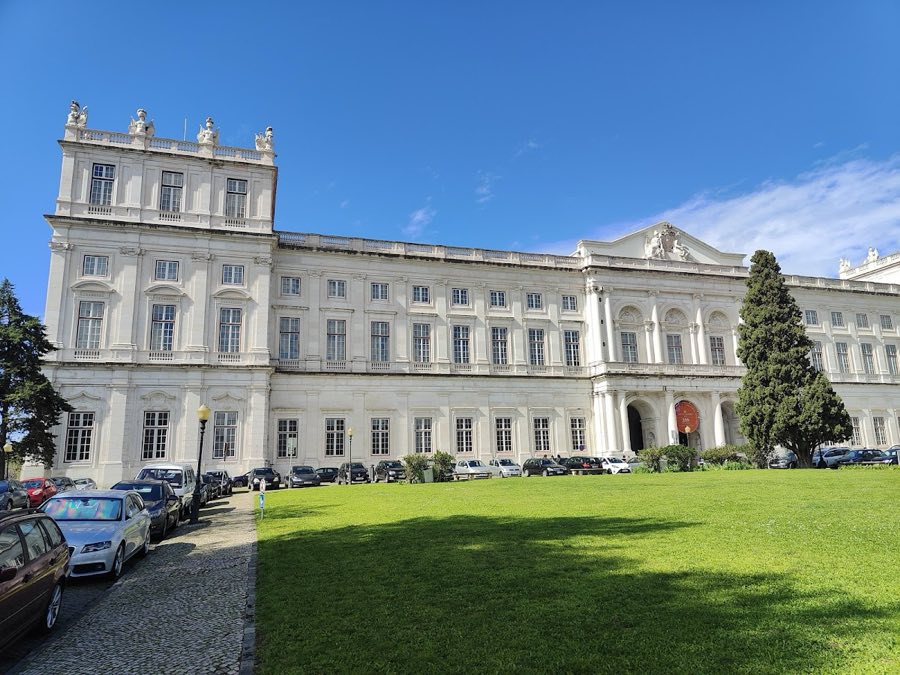
Palace of Ajuda, Lisbon
Lisbon, Portugal
PalaceRestored18th century
No. 57799
Palace · Portugal
No. 57799 · 38.698 N, 9.201 W
Quick summary
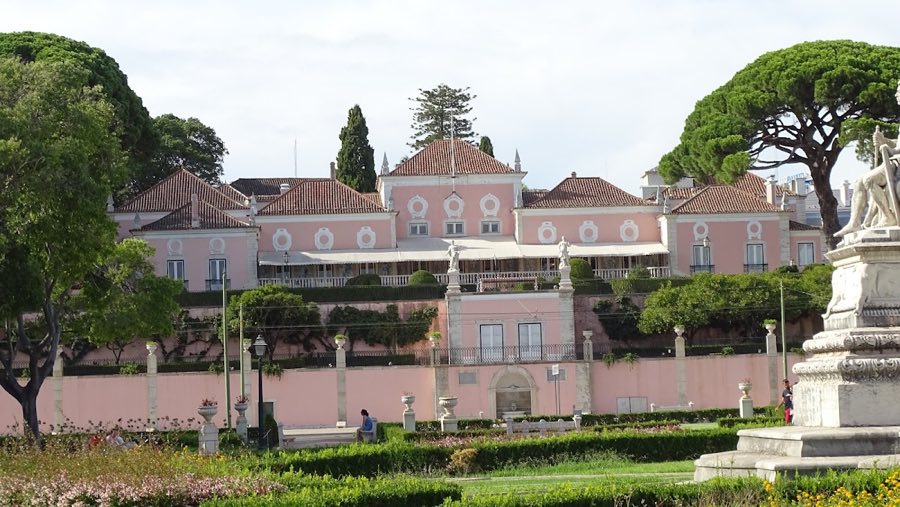
Belém Palace is a palace in Portugal with origins associated with the 16th century.
See all castles in PortugalBelém Palace in Lisbon, Portugal, was created by the Portuguese royal household, with its origins in the 16th century and major remodelling in the 18th century that reflects Baroque and Mannerist influences; it later became the official residence of the President of Portugal and has long served for royal and state ceremonies. The estate began as agricultural land known as Outeiro das Vinhas and was acquired in 1559, when the site was called Quinta de Belém and a residence with several reception rooms and inner courtyards was established. Over the next century the property passed through noble hands and was at one point occupied by a convent before returning to royal ownership.
In 1726 the crown bought contiguous parcels and converted the estate into a summer palace for the king, initiating an extended programme of rebuilding and embellishment during the 18th century. Queen Maria Anna of Austria died at the palace by 1754. The 1755 Lisbon earthquake caused only minor damage to the building, which was repaired immediately and then remodelled again around 1770, with further decorative works completed in the late 1770s and early 1780s. Small-scale additions and ornamental projects continued through that century, keeping the palace in use as a royal retreat.
The royal household removed furnishings and abandoned the palace in 1807 when the court left for Brazil; the building remained unused until after the Liberal Wars of the 1820s and 1830s. During the nineteenth century the palace resumed a ceremonial and residential role: a Neoclassical horse training arena began construction in 1828 and the complex hosted royal balls and visiting dignitaries by the 1830s. Members of the royal family again lived there at times in the 1840s while other palaces were being repaired, and Infanta Antónia was born at the palace in 1845. A series of royal deaths around 1861 reduced its role as a regular royal home and it became primarily a reception site for foreign visitors; gas lighting and other modern conveniences were introduced in that period.
From the late nineteenth century into the early twentieth century the palace underwent further interior remodelling and some additions to accommodate state visits. It was the birthplace of two royal heirs in the 1880s. Soon after the turn of the century a visitors’ house was added and the palace hosted foreign monarchs. By royal decree the home later passed to the Treasury to provide lodgings for visiting heads of state and foreign missions. After the revolution that ended the monarchy in October 1910, the palace became an administrative centre for the new republic: the presidential secretariat moved in August 1911, and an annex was rented in 1912 to house the first president. In 1918 the body of the assassinated President Sidónio Pais lay in state in a principal reception room.
A law of 1928 allowed the president and family to live in a national palace, but the incumbent chose another residence and continued to use Belém principally for official ceremonies. Modifications to the internal circulation and staircases were carried out in the 1930s, and a presidential apartment was arranged in the Arrábida wing in the early 1950s to serve family needs. The state recognised the palace’s heritage value in 1967, and the site later received formal national monument status in the 2000s. Repairs followed an earthquake in 1969.
The palace played a role in twentieth-century political upheavals. After the Carnation Revolution of 25 April 1974 it served as the headquarters of the National Salvation Junta and figured in subsequent struggles during the transition to democracy, including counter-revolutionary episodes. In the 1980s and later the palace housed displays of state gifts, development of a documentation and information centre began in 1998, a major commission of chapel paintings was completed in 2002, and the Presidential Museum opened on 5 October 2004. A contemporary account also records that Queen Maria II planned a coup attempt known as the “Belenzada” while at the palace, and that during the Estado Novo period the building’s political role declined because the president held little political power.
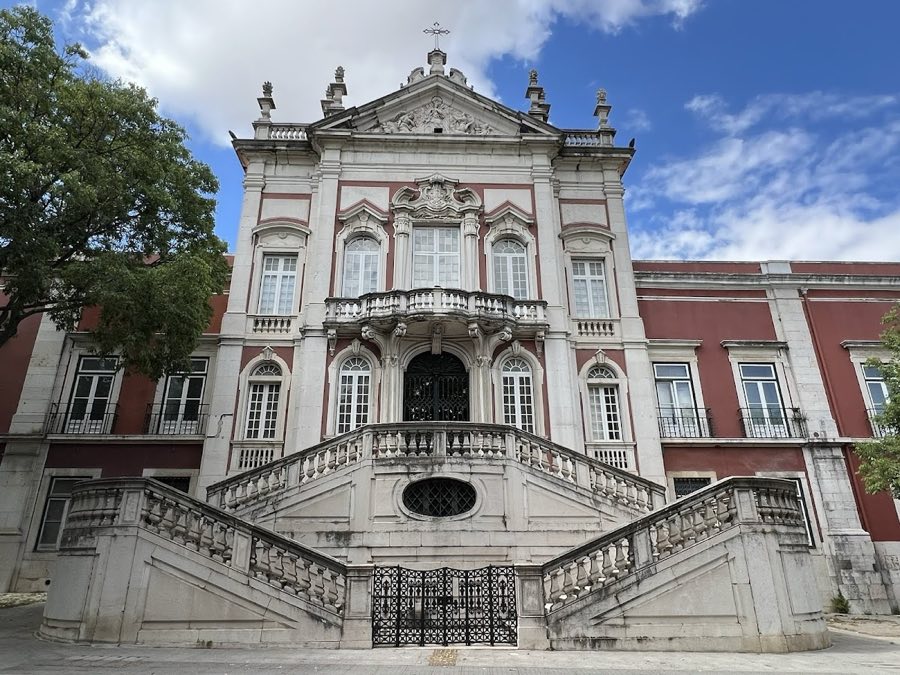
The palace stands in an L-shaped plan, its primary volume running along the south side and arranged as a three-part rectangular block. The main front presents a rhythm of five linked sections, with projecting end blocks that create a raised terrace reached by side staircases. The south façade blends Mannerist and Baroque vocabulary, with ground-level arcades beneath a colonnade gallery and a triangular pediment finished in stucco.
Decorative glazed tile (azulejo) panels appear prominently on the exterior. Twelve monochrome panels line the tops of the lateral walls beside the terrace, while the southern veranda displays fourteen large narrative panels executed in tile, many showing mythological subjects and scenes drawn from the Labours of Hercules. These tiles are set alongside two bands of geometric and acanthus-leaf motifs and remain visible on the veranda.
The grounds immediately in front of the palace retain an eighteenth-century formal layout, with a terrace bounded by a balustrade and statuary, and a box-hedge pattern arranged around three circular ponds. In the northwest corner the Falls Garden contains three small pavilion greenhouses built of dressed stone, each topped by a decorative railing with vases and figures, and a waterfall set within a rounded arch that features a statuary group of Hercules. The central pavilion houses six figural azulejo panels in a nineteenth-century composition, the central image rendered in black and white with polychrome trim, and scenes showing outdoor social activities and musical leisure.
A later Neoclassical riding arena, begun in 1828, and adjoining stables once served equestrian training and support functions. Those service buildings were separated from the palace in the early twentieth century and now accommodate the National Coach Museum. The paved courtyard known as the Animals’ Patio was resurfaced with stone in the early twenty-first century.
Interior circulation follows a line of state rooms along the south façade, dominated by the Sala das Bicas (Room of the Spouts), a marble-floored entrance vestibule whose paneled ceiling carries carved vegetal allegory and whose walls are faced with late eighteenth-century polychrome azulejo slabs. Along one internal wall sit two round marble fountains with lion-head spouts and eight jasper portrait busts on plinths representing Roman emperors. The large ballroom, known as the Sala Dourada or Salão de Baile, presents a decorated panel ceiling with a central allegory referencing the Roman world, mural painting and neo-Pompeian ornament in the cornice medallions. The Sala Luís XV is a wood-panelled reception room hung with paintings and surmounted by heraldic shields of the Braganza and Orléans houses.
The palace chapel occupies a narrow rectangular space with smooth plaster walls and wood panelling. Its neoclassical, gold-leafed wooden retable frames a painting of the Adoration of the Shepherds, and the vaulted ceiling is filled with pierced-metal ornament similar in style to the decorative work in the ballroom. The chapel walls display a modern cycle of paintings portraying the life of the Virgin and the Passion of Christ. Materials seen throughout the complex include glazed ceramic tile panels, extensive marble paving and fountains, jasper stone busts, stucco pedimental decoration, and refined carved woodwork gilded with gold leaf.
Overall, the ensemble preserves its historic sequence of ceremonial rooms, ornamental gardens, tiled decorations and ancillary service ranges, with several later adaptations converting former stables and training spaces into museum functions while many of the palace’s principal interiors keep their traditional finishes and fittings.
No. 66781
No. 48745
No. 96565
No. 89727
Comments
Comments for Belém Palace will require a verified account before posting.
We'll send a verification link before your first comment is published.