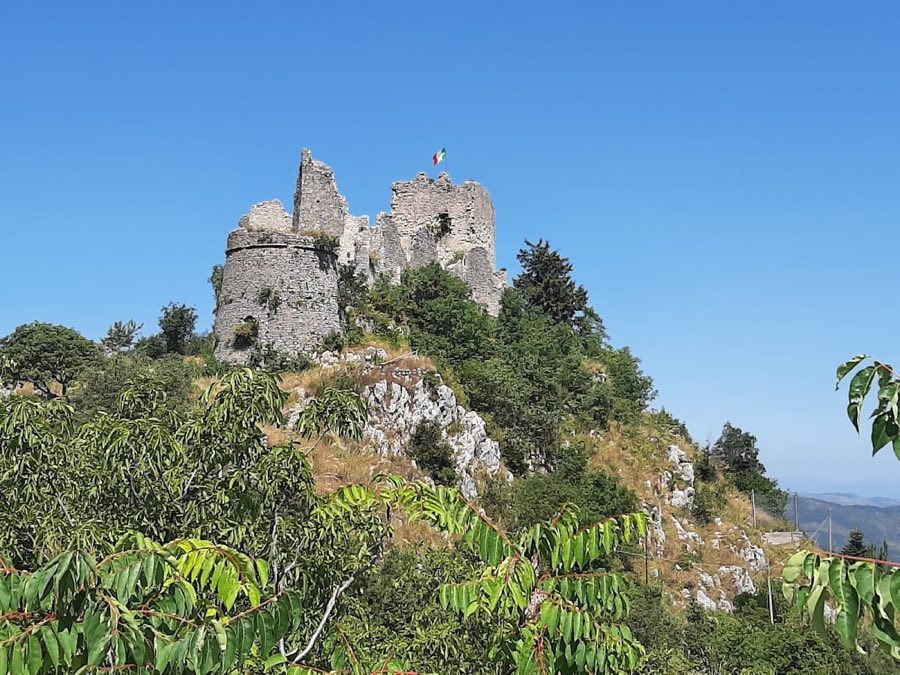
No. 94021
Roccaguglielma
Italy
CastleRuin12th century
No. 12952
Castle · Italy
No. 12952 · 41.238 N, 13.933 E
Quick summary
Castle of Sessa Aurunca is a castle in Italy with origins associated with the 9th century.
See all castles in ItalyThe Castle of Sessa Aurunca is located in the town of Sessa Aurunca, Italy. It was originally constructed by the Lombards at the end of the 9th century, taking advantage of the ancient acropolis that once hosted the settlement. Its foundation is attributed to Landone, the Lombard gastald (a local governor) of Sessa, who initiated the building after losing control of nearby Capua. The castle’s completion around 963 is confirmed by the drafting of the legal documents known as the Placito Sessano, which took place within its walls.
During the Norman period, the castle was rebuilt and enhanced, serving a dual purpose as both a military fortress (castrum) and the lord’s residence (palatinum). This phase marked the beginning of the castle’s role as a center strategic for regional control and defense. Under the reign of Emperor Frederick II of the Swabian dynasty in the 13th century, the castle underwent significant expansion, including the addition of new towers, further strengthening its military capabilities within the Kingdom of Naples.
From the 15th century onward, changes focused more on comfort and administrative functions. The castle was adapted to suit courtly life and housed various rulers and noble families. It became a residence for governors and viceroys, as well as the property of the Marzano dukes until the death of Marino Marzano in 1466. Later, the Carafa family of Stigliano owned the castle from 1522 until 1664. Important historical figures such as Emperor Frederick III and Emperor Charles V stayed at the castle, an event commemorated by a painting now preserved in the city hall’s “Salone dei quadri.”
The castle suffered serious damage during the earthquake of 1688. Repairs were overseen by Don Andrea Guerriero D. Torres, whose efforts are recorded in a fresco inside the castle depicting the restoration work. Subsequently, the castle passed into the hands of the Dukes of Paternò. In 1806, it became municipal property and was repurposed as a prison before later housing a school.
In recent years, from 2007 to 2014, the castle underwent restoration to remove alterations from the 20th century and adapt it for cultural use, including hosting the Civic Museum and the “Caio Lucilio” Municipal Library. More recently, since 2024, it has served as the National Archaeological Museum of Sessa Aurunca. This modern role was established through an agreement with the Regional Directorate of National Museums of Campania and supported by the National Recovery and Resilience Plan (PNRR). The museum incorporates finds from the nearby Roman theater and cooperates with the National Archaeological Museum of Naples and local universities.
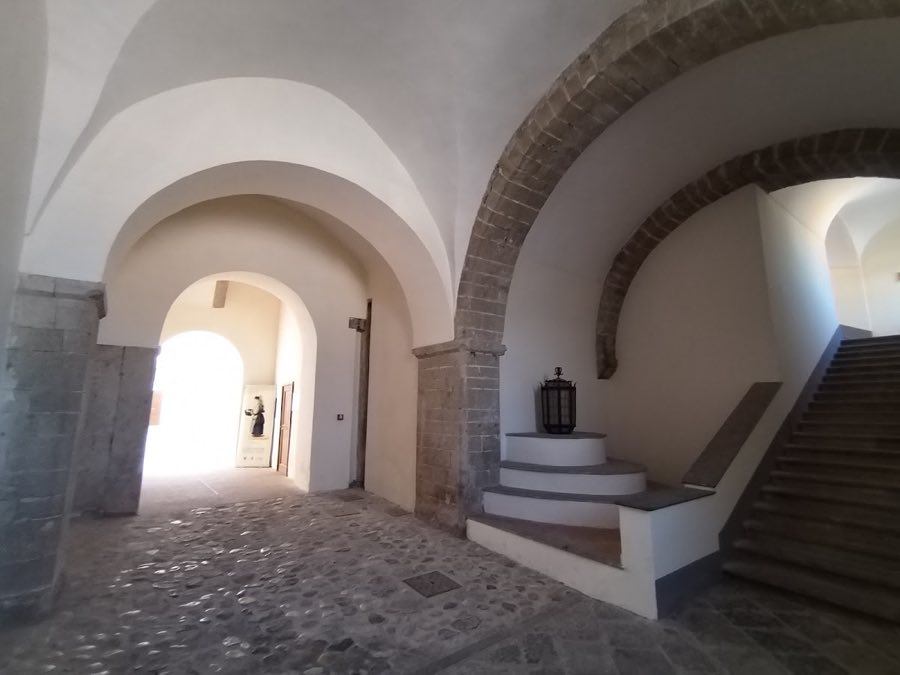
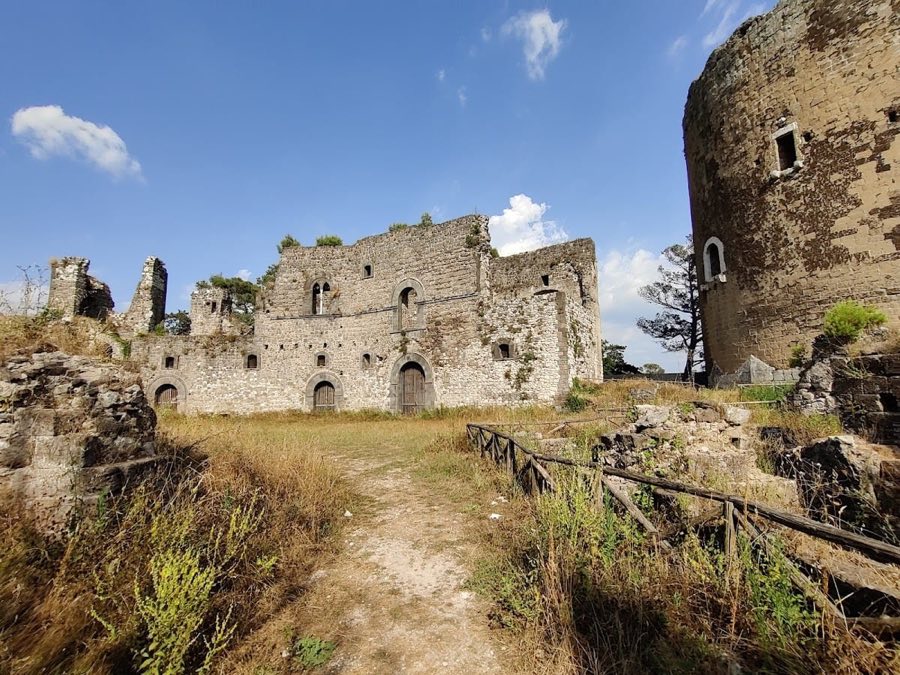
The Castle of Sessa Aurunca is built on an irregular quadrangular plan that follows the contours of the ancient acropolis beneath it. Its construction reflects a combination of military and residential purposes, shaped by centuries of alterations. Among its most distinctive architectural elements are the bifora windows, which feature two arched openings divided by a slender column; these date back to around the 13th century, although some have been replaced by regular windows over time, reflecting changing aesthetic and practical needs.
Though much of the castle’s medieval interior appearance has been altered or lost due to numerous renovations, recent restoration efforts have focused on recovering the monumental character of the complex by removing modern additions from the previous century. Inside, the castle now houses several cultural spaces, including a well-equipped library, event halls, and museum galleries.
One of the museum’s highlights is its collection of archaeological artifacts drawn from excavations at the nearby Roman theater and the submerged ancient city of Sinuessa. Among the underwater discoveries is the remarkable statue of Vivia Matidia, also known as Matidia Minor, which provides insight into the funerary practices and artistic styles of the Roman period. The museum spaces blend these finds with exhibits and interpretative materials to offer a comprehensive view of the area’s history.
An internal fresco within the castle documents the post-earthquake restoration led by Don Andrea Guerriero D. Torres after the 1688 disaster. This artwork serves as a historical record of the resilience and ongoing care taken to preserve the castle across generations. The castle’s structure, with its strong walls, towers, and residential quarters, reveals the way in which its role shifted from primarily military defense to noble residence and administrative center, mirroring broader historical changes in the region.
No. 94021
No. 72875
No. 12673
No. 44433
Comments
Comments for Castle of Sessa Aurunca will require a verified account before posting.
We'll send a verification link before your first comment is published.