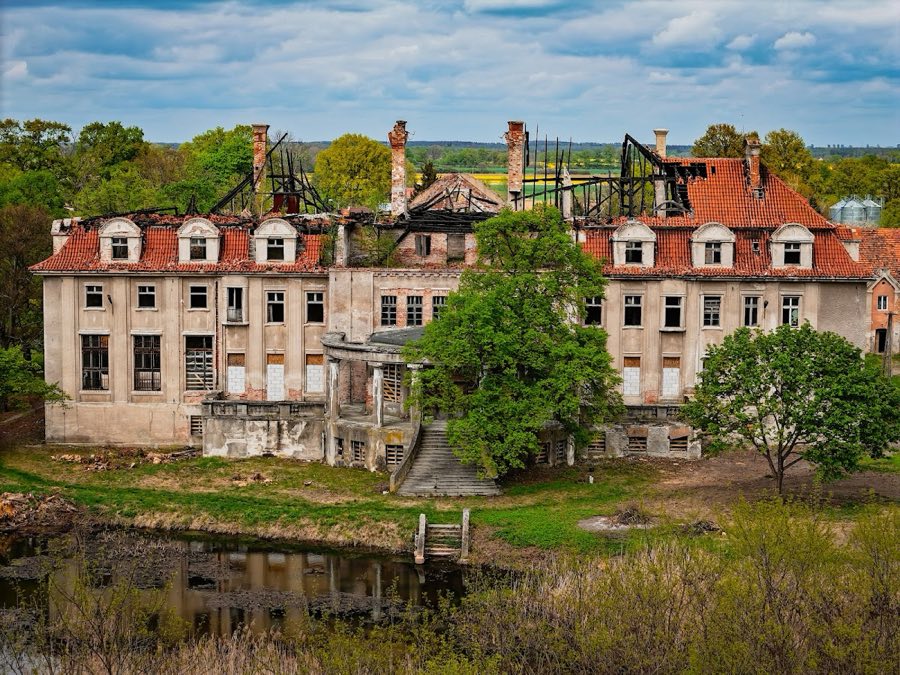
No. 38685
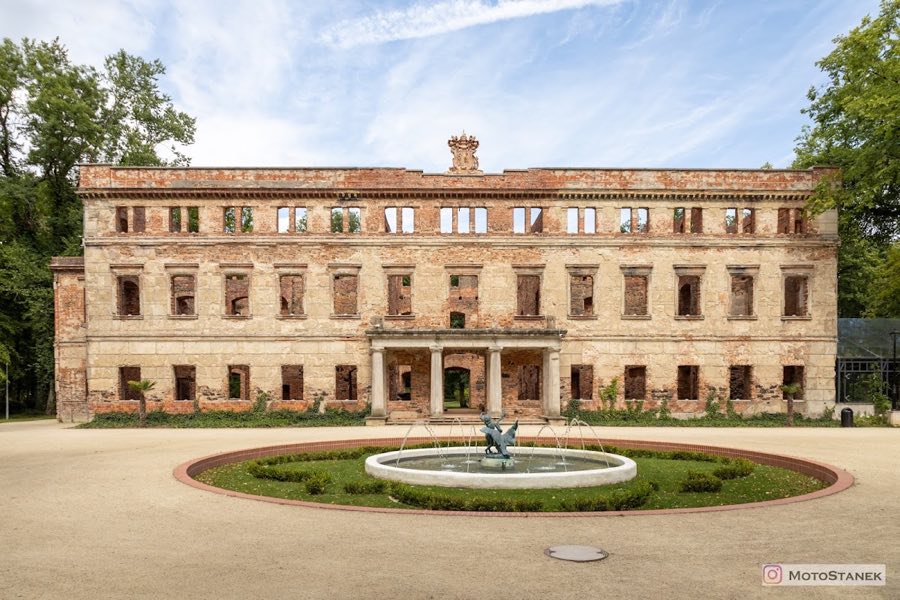
Palace in Bełcz Wielki
Poland
Manor houseIntact5th century
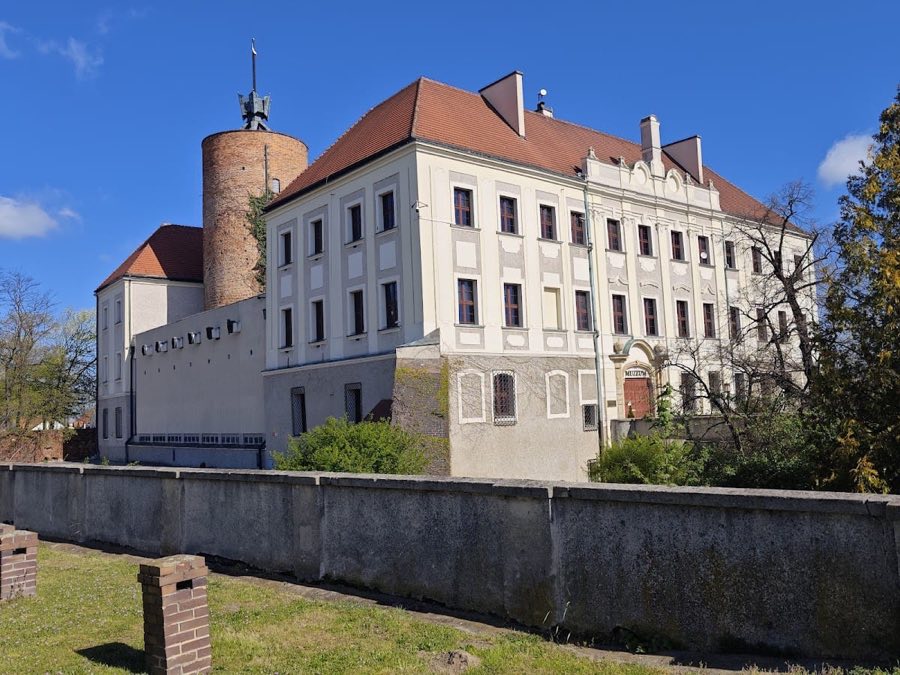
No. 41067
Castle · Poland
No. 41067 · 51.667 N, 16.091 E
Quick summary
Castle of the Dukes of Głogów is a castle in Poland with origins associated with the 13th century.
See all castles in PolandThe Castle of the Dukes of Głogów is located in the town of Głogów in present-day Poland. It was originally established by the medieval Piast dukes who ruled the region, forming a central seat of power during a turbulent era in Silesian history.
The castle began in the mid-13th century as a wooden fortress constructed under Duke Konrad I. This early stronghold featured a stone tower set apart from other wooden and earth fortifications, all encircled by a protective moat. A significant fire in 1291 led to a rebuilding phase at the turn of the 13th and 14th centuries, when the complex was reconstructed using stone. The layout established during this period presented a fortified residence fitting for the rulers of the independent Duchy of Głogów.
Throughout the later Middle Ages, the castle changed hands, first coming under the control of the Czech kings and subsequently the Dukes of Cieszyn until 1480. This transition reflected the shifting political landscape of Central Europe. Notably, in 1462, Polish King Casimir IV Jagiellon stayed at the castle during his reign, signaling its ongoing strategic importance. Between 1498 and 1506, the future Polish King Sigismund I the Old resided here. During this time, he restored the castle after it had sustained damage in a protracted conflict with Hungarian King Matthias Corvinus, whose warfare had affected the region deeply.
The castle endured further challenges in the 16th and 17th centuries, including a partial collapse in 1574 and a fire in 1615. Later, between 1652 and 1669, it underwent extensive reconstruction in the Baroque style under Johann Bernhard von Herberstein. This renovation transformed the fortress into a more residential palace-like complex, reflecting changing architectural tastes and uses.
Following the annexation of Silesia by the Kingdom of Prussia, the castle served as the residence for Prussian royal administrators. During the Napoleonic Wars in the early 19th century, the castle hosted Napoleon Bonaparte himself. Later, in the late 19th century, the structure was remodeled once again to function as a royal court, indicating its continuing administrative role.
The castle was severely damaged during combat between German and Soviet troops in 1945 near the end of World War II. After a period of deliberation, a decision to rebuild was made in 1967. Restoration work began in 1971 and was completed in 1983, reviving the castle’s presence as a historical monument. Since then, it has housed the Archaeological-Historical Museum and the Society of the Głogów Land, institutions dedicated to preserving the region’s rich heritage.
The castle’s layout, as established after its late 13th-century reconstruction, forms a rectangular plan surrounded by a moat and linked directly to Głogów’s city defensive walls. The fortress included three stone buildings positioned along the shorter sides of this enclosure. The main entrance is believed to have faced east, a feature consistent with the castle’s current access point.
A prominent element of the castle is its cylindrical brick tower, known as the Hunger Tower. Built in the Gothic style during the 13th century, the tower rises approximately 24 meters tall and measures around 8.9 meters in diameter. The walls at its base are thick, nearly 2.75 meters, demonstrating its defensive purpose. Constructed with bricks laid in a traditional Wendish bond—a pattern characteristic of the region—the tower originally had an entrance elevated above the courtyard floor level, a typical medieval design intended to improve security. The entrance visible today was created in the 19th century during modernization efforts. Inside, the tower’s ground floor contains two barrel-vaulted rooms, and the basement preserves Gothic wall fragments with barrel vaulting as well. Historically, the tower earned its name from a prison located in the basement, where captives were held under harsh conditions.
The layout expanded in the 15th century with the addition of a Gothic building on the northern side, augmenting the residential and defensive capacity of the complex. In the 17th century, the castle saw significant Baroque modifications under the guidance of Johann Bernhard von Herberstein. A new southern wing was constructed, designed externally to resemble defensive walls, yet inside it housed a spacious exhibition hall—a shift towards more representational and administrative functions. The eastern wing was also redesigned in Baroque style, featuring arcades opening onto the courtyard and an ornamental staircase, adding architectural elegance to the fortress.
During the 18th century, further changes to the castle’s facades were undertaken, particularly on the eastern and southern fronts as well as the stairwell in the eastern wing. The tower itself was altered in the early 19th century when it was plastered and heightened, reflecting contemporary aesthetic preferences. In the era of the Polish People’s Republic, the tower was fitted with a new staircase, and an artistic installation symbolizing the Piast crown—referencing the castle’s original ruling dynasty—was placed atop its summit.
Following the destruction wrought in 1945, careful reconstruction efforts restored the castle’s wings entirely by 1983, with the southern wing rebuilt on the site of a building lost during World War II. While the tower’s external appearance was modified during restoration, its pre-war form was largely maintained. Proposals made around the turn of the 20th and 21st centuries to return the tower to its original 13th-century shape were ultimately not approved by heritage authorities.
Nearby the castle are additional commemorative and cultural elements. These include a castle amphitheater and the Monument to the Głogów Children, which honors the city’s famous 1109 defense. Another local landmark, the Pink Bridge of Tolerance, lies in the immediate vicinity, further enriching the historic setting.
No. 38685
No. 70653
No. 76117
No. 74923
Comments
Comments for Castle of the Dukes of Głogów will require a verified account before posting.
We'll send a verification link before your first comment is published.