No. 35566
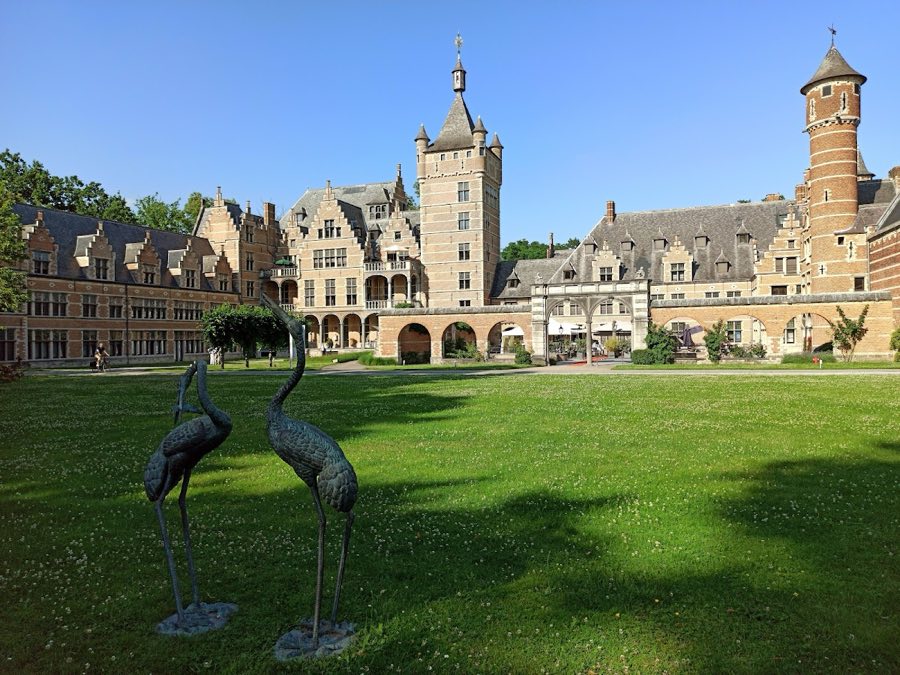
Cantecroy Castle
Belgium
CastleRestored13th century
No. 34683
Castle · Belgium
No. 34683 · 51.033 N, 4.538 E
Quick summary
Castle of Zellaer is a castle in Belgium with origins associated with the 13th century.
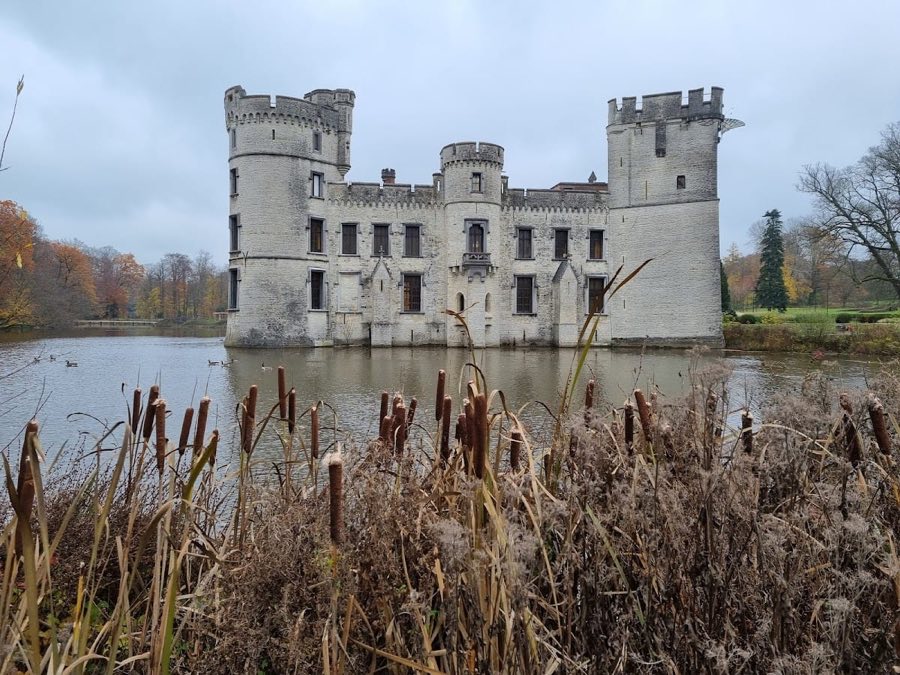
See all castles in BelgiumCastle of Zellaer in Bonheiden, Belgium, stands on a site occupied since the Middle Ages and first belonged to the medieval lords of the region; the place shows evidence of activity from the 13th century, while the present residence is a neo‑Gothic rebuilding completed in the late 1800s. The plot has long been important as a fortified estate beside standing water, and its layers of construction and reuse trace local noble ownership, later aristocratic investment, wartime damage, and mid‑20th century religious renewal.
The earliest known association of the estate links it with Wouter Berthout, lord of Mechelen, and later with Arnold van Zellaer, a church canon whose name came to be attached to the property. A public sale notice from 20 October 1836 preserves a description of the older stronghold as a quadrangular Gothic castle set in water, flanked by four towers and topped by a central belvedere. When the nineteenth‑century owner cleared the site to build anew, only portions of the older foundations remained.
Between 1888 and 1892 the present neo‑Gothic residence was raised for Baron Gustavius Eugenius de Vrière, and a landscaped park was laid out around the house. Builders incorporated large blocks of white sandstone taken from the demolished Vilvoorde forts, and local tenant farmers were obliged to haul those stones by horse and cart at their own cost. After the baron died the house fell into neglect, and the fabric suffered serious harm during the First World War.
In the late 1950s the priest Vincent d’Heu, formerly a Franciscan monk, took an interest in the derelict complex with the intention of creating a retreat for members of the Foyer de Charité movement. He negotiated with local authorities, gained backing from a nearby evangelical community, and raised funds through donations to repair and restore the buildings. The property opened as a Foyer de Charité community in 1962 and has continued in religious retreat use since then. It is often claimed that Zellaer imitates a Loire Valley château, and one Dutch account points to similarities with the Château de Sully‑sur‑Loire, though no definitive proof links it to a single French model. Since 2017 the castle and its park have been managed by the Stichting Kempens Landschap (Kempens Landscape Foundation).
The complex occupies a purposefully waterbound setting, with the house placed on an artificial island within a large pond and broad moats extending into the surrounding park. The building follows a rectangular footprint. On three sides high, projecting round corner towers mark the plan, while the north‑west corner is anchored by a large rectangular tower that functions as a decorative bergfried (tall show tower). A stone bridge spans the eastern moat and provides the main approach to the interior. The late nineteenth‑century construction employed salvaged white sandstone blocks recovered from the demolished forts at Vilvoorde; those blocks were transported overland by local tenants using horse‑drawn carts during construction.
Fragments of an earlier fortification survive beneath and around the later house. When the present residence was erected much of the older structure was taken down, leaving sections of the original foundation exposed; wooden piles driven into the ground under those foundation fragments were identified and dated to the thirteenth century. These foundation remains and the submerged defensive ditches preserve the site’s medieval footprint, while the later neo‑Gothic fabric and the park ponds show the nineteenth‑ and twentieth‑century phases of reuse and repair. Today the principal building remains in active use as a religious retreat and the surrounding moats and parkland are maintained under foundation management.
No. 35566
No. 14019
No. 95948
No. 58598
Comments
Comments for Castle of Zellaer will require a verified account before posting.
We'll send a verification link before your first comment is published.