No. 57763
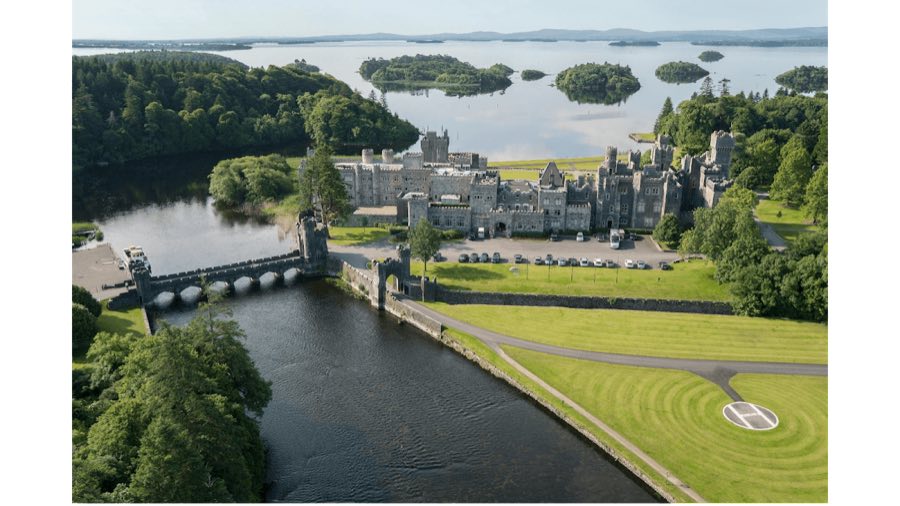
Ashford Castle
Ireland
CastleIntactFor rent17th century
No. 48381
No. 48381 · 53.493 N, 9.513 W
Quick summary
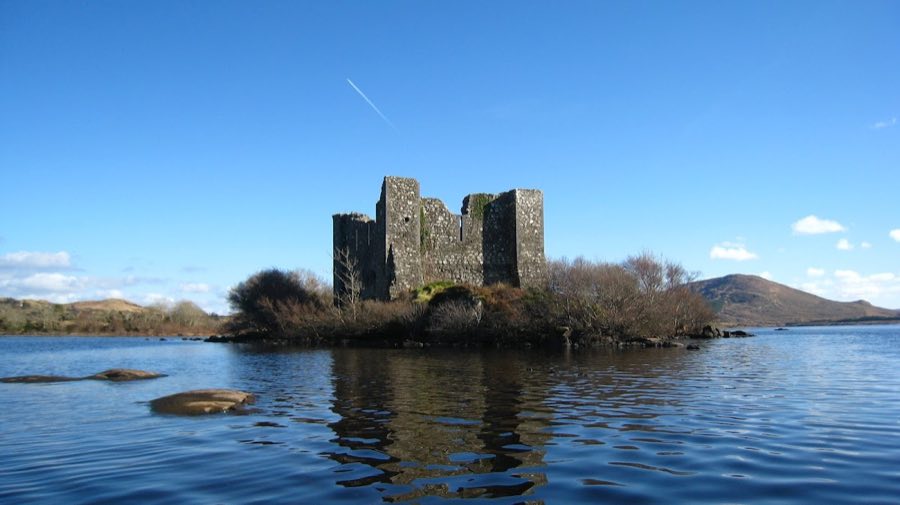
Castlekirk (Hen's Castle) is a castle in Ireland with origins associated with the 11th century.
See all castles in IrelandCastlekirk stands in Illaunnaheltia, Co. Galway, Ireland; historical records say it was erected by the sons of Ruaidrí na Saide Buide with assistance from William FitzAldelm. Some accounts place the building earlier, in the 11th century, and describe it as possibly sited on an older stronghold. Another account attributes the 12th-century construction to the sons of Roderic O’Connor, known as Ruairí Ua Conchobair.
In 1225 the Lord Justice Sir Edmond Butler compelled Odo O’Flatherty to hand Castlekirk to Aedh Ua Conchobair, King of Connacht, as a pledge of loyalty. Ten years later, in 1233, the castle was recorded as being pulled down by Fedlimid, son of Cathal Crobhdearg Ua Conchobair. Despite that demolition, the site continued in use as a fortified place in later centuries.
The castle passed into the possession of Gráinne Ní Mháille, also known as Grace O’Malley, after the murder of her husband Dónal an-Chogaidh O’Flaherty. Gráinne defended the stronghold, and through that episode it acquired the popular name Hen’s Castle, anglicizing the Irish Caislean na Circe. The island fortress remained occupied until 1654, when Cromwellian soldiers captured it. The ruined structure stood through the 18th and into the 19th century, but it was vandalised in the 1800s and stones were taken for local building; today only poor, overgrown ruins survive. Local tradition preserves several legends about the place, including tales that a cock and a hen made the castle overnight, that a witch left a magical hen to guard the island, and that the eating of that hen during a siege led to the castle’s fall.
The castle sits on a very small island of about 0.18 hectares (half an acre) in the northwest corner of Lough Corrib, on the approach to Maum; the island is often called Chicken Island or Hen’s Island. The standing work is described as a tower house, sited so the surrounding rock plunges steeply into the lake on every side. Contemporary descriptions emphasise robust walling and tall towers that once gave the place a strongly defended silhouette.
The building fabric is recorded as mortared masonry with areas of reinforced or armoured plaster, a combination that places Castlekirk among Ireland’s earliest examples of mortared castle construction. These construction techniques are noted alongside the tower-house form, linking the masonry and plaster finish to the defensive towers and compact plan described in the records. Later repair or occupation phases are indicated by the castle’s continued use after it was partly demolished in 1233 and by its presence through to the mid-17th century.
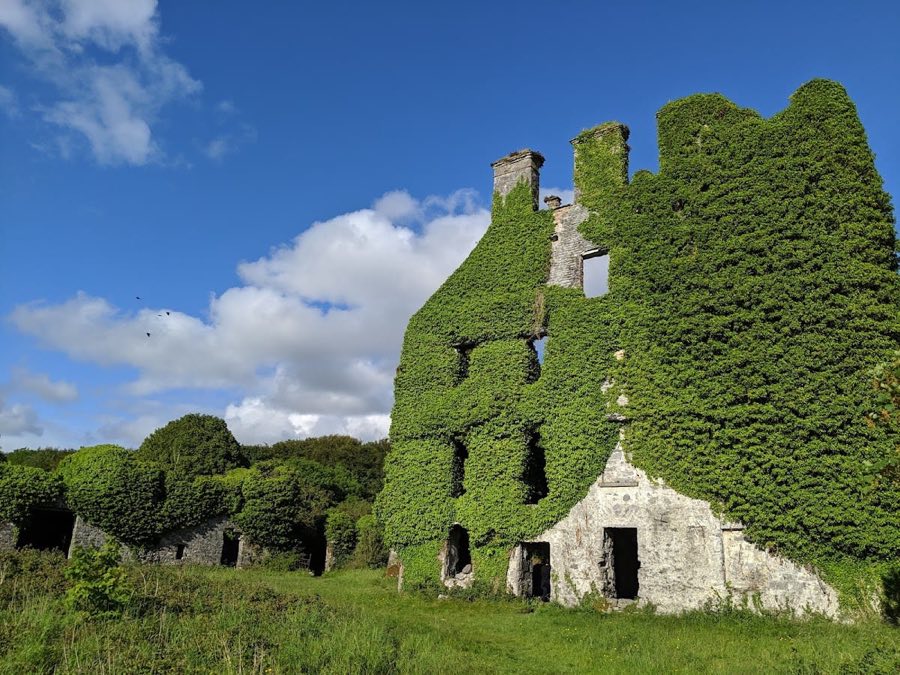
Today the remains are ruinous and overgrown, having been further degraded in the 19th century when masonry was removed for local buildings. The recorded sequence of destruction and reuse—partial demolition in 1233, later occupation until 1654, and 19th-century removal of stone—explains the fragmentary condition that survives in situ. The site is also listed as a National Monument, and local oral tradition still links specific features of the island fortress to the hen legends that explain its popular name.
No. 57763
No. 86671
No. 97130
No. 58533
Comments
Comments for Castlekirk (Hen's Castle) will require a verified account before posting.
We'll send a verification link before your first comment is published.