No. 26784
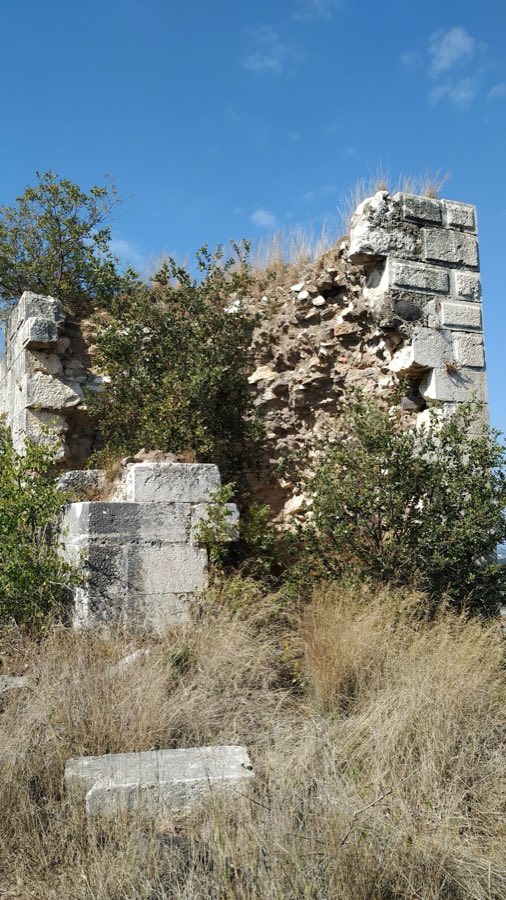
Areimeh Castle
Syria
CastleRuinFor events12th century
No. 64140
No. 64140 · 34.821 N, 36.117 E
Quick summary
Chastel Blanc is a castle in Syria with origins associated with the 20th century.
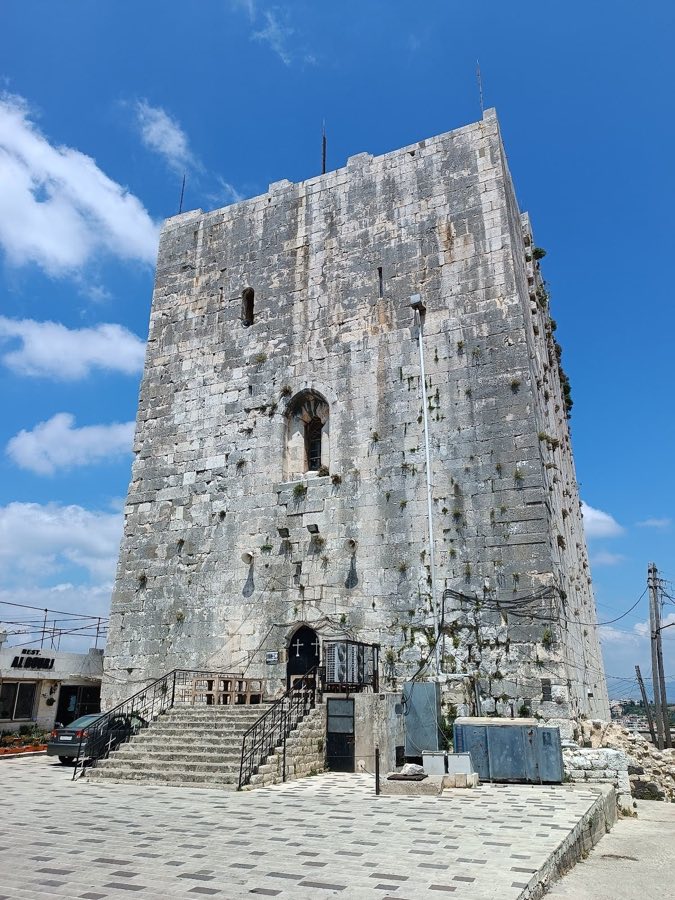
See all castles in SyriaChastel Blanc is a medieval fortress situated in the town of Safita in modern-day Syria. It was constructed by the Knights Templar during the Crusades, built atop much older foundations originally laid by the Phoenicians.
The region came under Crusader control around 1110, and the tower itself was first mentioned in an Arabic chronicle dating to 1112. After 1117, the Knights Templar established a dungeon within the tower, and by 1152 they had full control of the fortress. The tower’s strategic importance made it a target during conflicts; in 1167, it was attacked by Nur ad-Din, a notable Muslim leader of the time. Although the tower was temporarily lost, the Templars quickly recaptured it within the same year.
Throughout its history, Chastel Blanc endured several damaging earthquakes, notably in 1170 and 1202, requiring significant rebuilding efforts. Following Saladin’s invasion in 1188, the tower underwent further repair and reinforcement. Its final Crusader chapter ended in 1271 when the citadel was seized and destroyed by the Mamluk leader Baibars.
During the French Mandate in the 20th century, the tower saw restoration attempts, which caused some unease among the local population. In 1946, architect Pierre Coupel initiated an intensive repair program to stabilize the keep, which was then at risk of collapsing. Historically, the tower functioned both as a chapel and a fortress. It formed an integral part of a network of Crusader fortifications across the region, communicating with nearby castles and watchtowers through fire and smoke signals. These included Tartus, Ruad Island, Chastel Rouge, Akkar, and the famed Krak des Chevaliers, helping coordinate defense and surveillance along the coast.
Chastel Blanc stands prominently on the central of three hills in Safita, at an altitude of 419 meters above sea level, overlooking the Mediterranean coast and nearby fortifications. The tower measures roughly 28 meters tall, 18 meters wide, and 31 meters long. It is constructed from large, carefully hewn blocks of white limestone, a material that lends the fortress its nickname, “White Castle.”
The walls are about three meters thick, providing substantial defensive strength. Today, the entrance is located on the eastern side; originally a two-story gatehouse, only parts of the western wall with stone arches remain from this structure. The tower’s layout includes four main sections reflecting its long history. Near the base, the nearly submerged foundations are Phoenician, visibly exposed along the east and north sides.
The ground floor features vaulted cellars alongside rock-cut cisterns that once stored water, crucial for surviving sieges. The first floor houses a chapel dedicated to St. Michael, which continues to serve the local Greek Orthodox community. Above this is the second floor, known as the great hall, an open space defended by deep arrow slits in the walls. This hall is supported by three large columns with intersecting arches, a testament to the engineering techniques of the time.
Access to the roof is gained by stairs ascending from the great hall. The rooftop includes balconies made from finely carved stone blocks arranged with openings that offer wide views of the surrounding landscape, from the sea to distant mountain ranges. Below the main structure are rock-cut cisterns and former storage areas for weapons, highlighting the tower’s role in military defense. A large bell mounted on the western wall can be heard for up to five kilometers.
Of the original castle surrounding the tower, only the eastern gate remains visible today, situated approximately 45 meters away from the tower itself. The tower exhibits clear evidence of rebuilding after the 1170 and 1202 earthquakes, including work on the upper floors and parts of the western corner, revealing layers of restoration over the centuries.
No. 26784
No. 26560
No. 27511
No. 36312
Comments
Comments for Chastel Blanc will require a verified account before posting.
We'll send a verification link before your first comment is published.