No. 26560
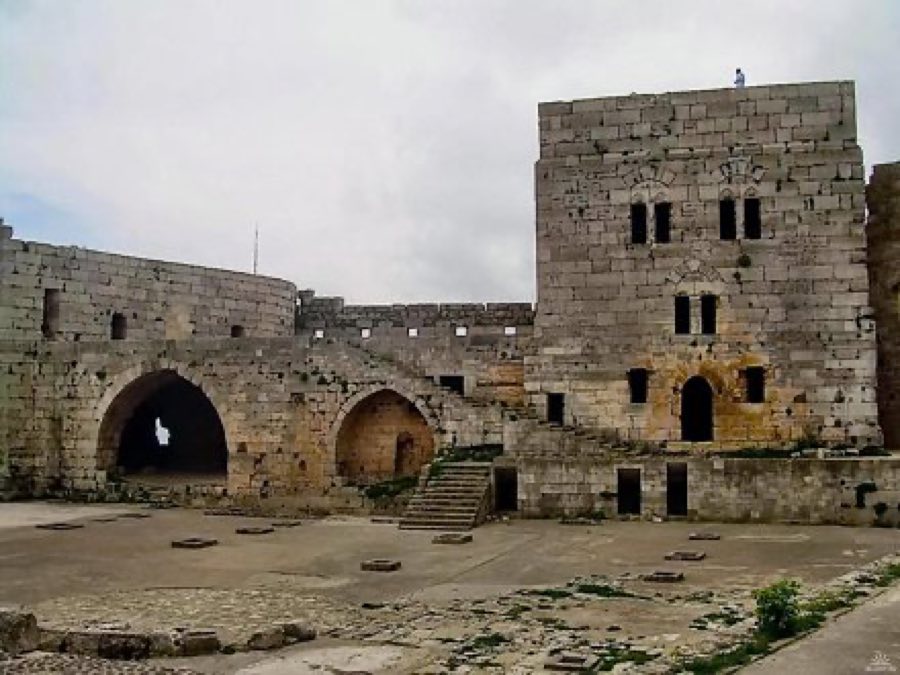
Chastel Rouge (Qal'at Yahmur)
Syria
CastleRuin12th century
No. 26784
No. 26784 · 34.745 N, 36.042 E
For events
Areimeh Castle is marked as a château or castle venue lead. Capacity, indoor/outdoor spaces, catering rules, and accommodation options are published only after public verification.
Event types: Private events, Cultural gatherings, Filming and photography
Quick summary
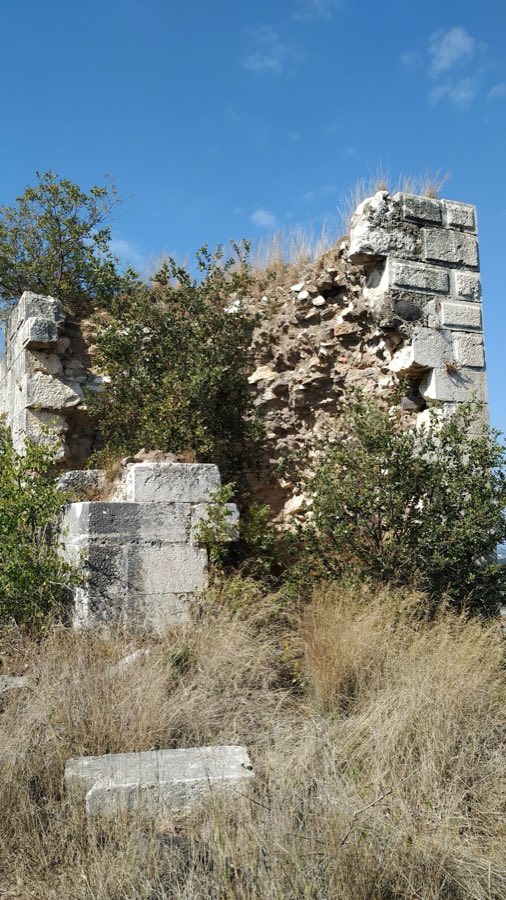
Areimeh Castle is a castle in Syria with origins associated with the 12th century.
See all castles in SyriaAreimeh Castle is first recorded in the Crusader period when Raymond II, Count of Tripoli, established a fortress on the ridge in the early 1100s. After the death of Alfonso Jordan, his son Bertrand of Toulouse took refuge there. In autumn 1148 Nur ad‑Din Zengi besieged and captured the stronghold; Bertrand was held prisoner for about eleven years before the Byzantine emperor Manuel Komnenos secured his release.
Following the 1148 capture the site did not return to the Count of Tripoli and at one point was reported to have been deliberately dismantled by its occupiers. Control later reverted to Crusader hands but Nur ad‑Din is recorded taking Areimeh again in 1167. By the late twelfth century the castle is associated with the Knights Templar, a transfer dated to the late twelfth or possibly the early thirteenth century.
The fortification was badly damaged by an earthquake in 1170 and was sacked in 1171 while apparently held by Christian forces. During the later twelfth century Saladin is reported either to have bypassed Areimeh or occupied it temporarily. Repairs continued into the period when Louis IX was present in the Crusader realm. Later medieval testimony links the site’s loss and abandonment to Mamluk campaigns comparable to Baybars’s operations around 1271 or Qalawun’s in 1284; after these events the castle is recorded as abandoned.
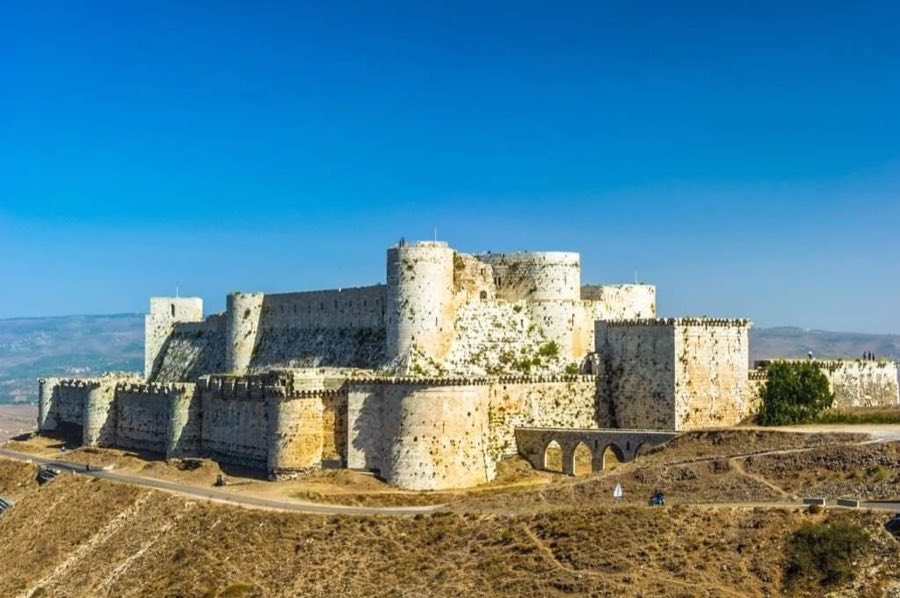
The castle crowns an isolated rocky ridge roughly 300 metres long and up to about 80 metres across. The defended complex runs along the plateau’s spine and is divided into three contiguous enclosures aligned west to east, each separated by ditches cut into the bedrock. Two construction phases are visible: an earlier phase in darker volcanic stone dated to the early twelfth century and a later phase in white limestone from the late twelfth or early thirteenth century.
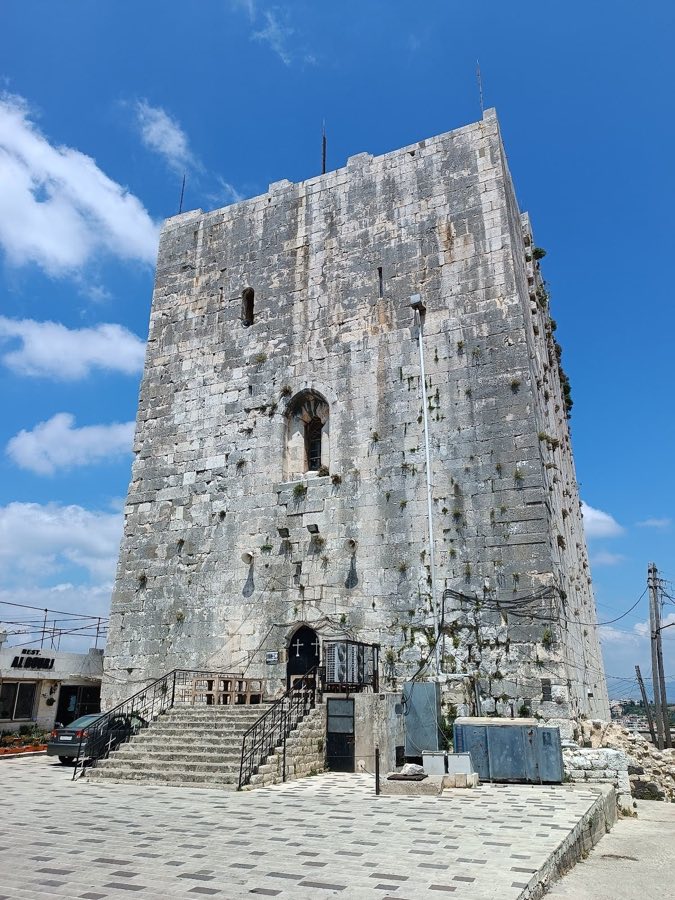
The western and central enclosures appear to have served as open courtyards where only traces of enclosing walls survive; a rectangular or square tower stands in the north‑west corner of the central zone. The principal defensive work is the eastern castrum, roughly 76 metres long and 45 metres deep, ringed by curtain walls and punctuated by projecting towers, including corner towers. The main entrance faced west and was flanked by a large gate tower at the centre of that façade, while several square towers project along the curtain walls.
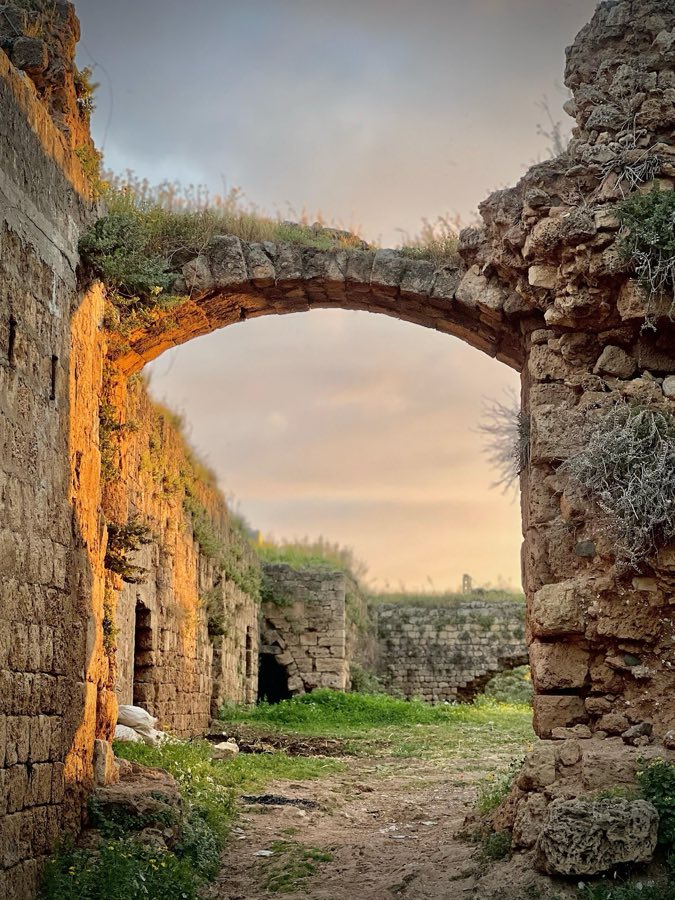
Two major solid towers rise from the fortification: a south‑west tower recorded at about thirty metres in height and ruined on its north side, and a second principal tower; both are reported to be filled internally and were used for observation and signalling. Interior spaces include underground chambers and broad vaulted halls, with barrel vaulting beside the northern wall, and extensive subterranean galleries and cellars linked by tunnels of uncertain extent. A prison is also mentioned within the complex.
Architectural openings are functional and defensive in character, with narrow arrow slits and arched doorways; walls and window‑slits are described without carved decoration or column bases. The site rises to roughly 171–178 metres above sea level and overlooks the mouth of the Nahr al‑Abrash valley and the approaches from Akkar and the Beqaa. Lines of sight connect Areimeh with neighbouring coastal and inland fortresses including Safita (Chastel Blanc), Arwad, Tartus, Chastel Rouge and Krak des Chevaliers. No systematic archaeological excavations have been carried out; modern descriptions variously record the castle as standing without conservation measures or as ruined with recent collapses of wall sections.
No. 26560
No. 64140
No. 85588
No. 27511
Comments
Comments for Areimeh Castle will require a verified account before posting.
We'll send a verification link before your first comment is published.