
No. 26331
Château de la Piscine
France
ChâteauIntact18th century
No. 30441
No. 30441 · 43.553 N, 3.485 E
Quick summary
Château de Bélarga is a château in France with origins associated with the 14th century.
See all castles in FranceChâteau de Bélarga stands in the commune of Bélarga, France, and it was built during the medieval period by feudal lords.
A fortified site at Bélarga is recorded before 1281, connected with the establishment of a settlement beside the Hérault River. An enclosing fortification was added around the turn of the 14th century, controlling a river crossing. The castle occupied a position on the left bank and overlooked a ford that was levied with a toll, linking the place directly to movement and local revenue.
The place belonged to the Guilhem family in the early 1300s. In 1310 Bérenger IV de Guilhem is cited by name as lord of the site under the medieval form Belesgario. That same year Pierre de Clermont, who held the title seigneur de Bélarga, was condemned by the sénéchal of Carcassonne for crimes committed at Bélarga. The Parlement of Paris confirmed the sentence on 29 January 1311, recounting that Pierre detained and brutally mistreated a young woman from Puilacher (named Fize), inflicting physical torture. The Parlement ordered the seigneurie confiscated and imposed fines of five hundred livres payable to the king and one hundred livres to the victim.
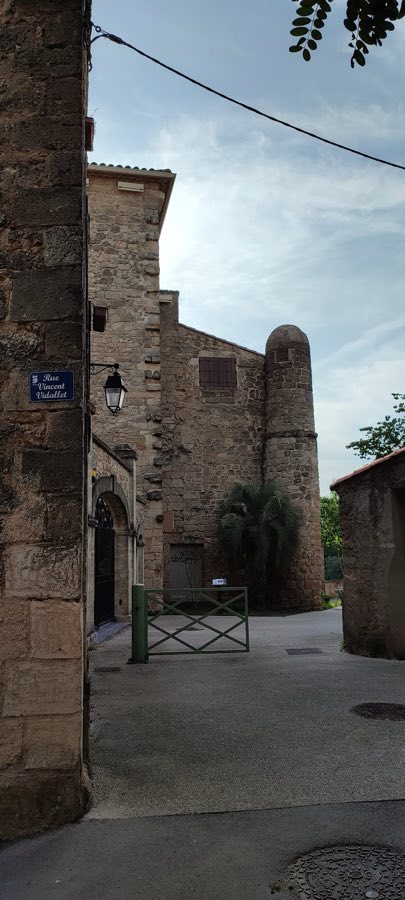
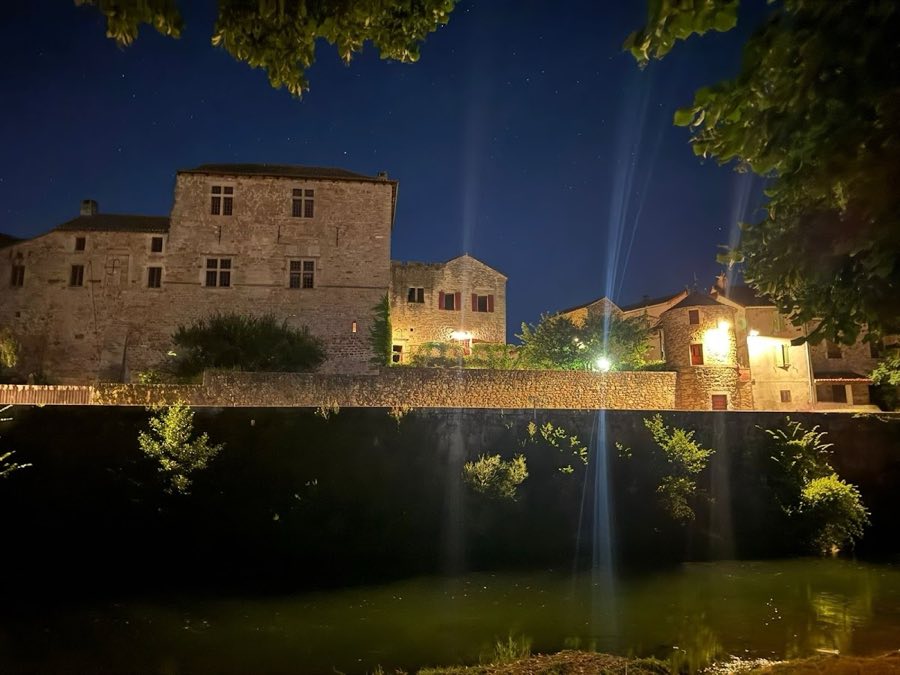
Parts of the medieval fortress were retained and altered in later centuries. A north wing of the present complex probably dates from the 14th century and shows changes made in the 15th century. Further construction took place in the 17th century, when a new chateau was built adjoining the older wing. By the mid-1600s the estate belonged to the Mirman family, members of the administrative and judicial nobility known as the Nobles of the Robe; in 1654 François de Mirman carried the titles baron of Florac and seigneur of Bélarga. The Mirman family remodelled and embellished the house during the 17th century, giving it the appearance largely seen today. The château remains private property, inhabited by its owners, and it was the subject of a cultural heritage inventory study in 1976.
The present site is a composite of medieval and early modern building phases. The standing château dates mainly from the 17th century but incorporates masonry from an earlier fortress that belonged to the 14th and 15th centuries. The complex occupies the riverbank and was sited to command a ford over the Hérault, a feature that shaped the castle’s purpose and location.
An enclosing defensive circuit associated with the fortress was erected around the end of the 1200s or the beginning of the 1300s. This enceinte was contemporary with the castle’s role in overseeing the crossing and toll point. The record links that defensive ring directly to the medieval stronghold rather than to later alterations.
A north wing visible within the present ensemble likely originates in the 14th century and shows evidence of modification during the 15th century. To the north of this medieval element a larger residence was constructed in the 17th century, forming the main body of the modern château. The Mirman family’s 17th-century remodelling reshaped the earlier fabric and provided the building’s current external character.
Today the property is privately occupied by its owners. Elements of the medieval construction survive within the later house, and the site was examined for the national cultural heritage inventory in 1976. The historic name castrum de Belesgario appears in early documents and attests to the place’s medieval identity.
No. 26331
No. 27945
No. 28359
No. 43619
Comments
Comments for Château de Bélarga will require a verified account before posting.
We'll send a verification link before your first comment is published.