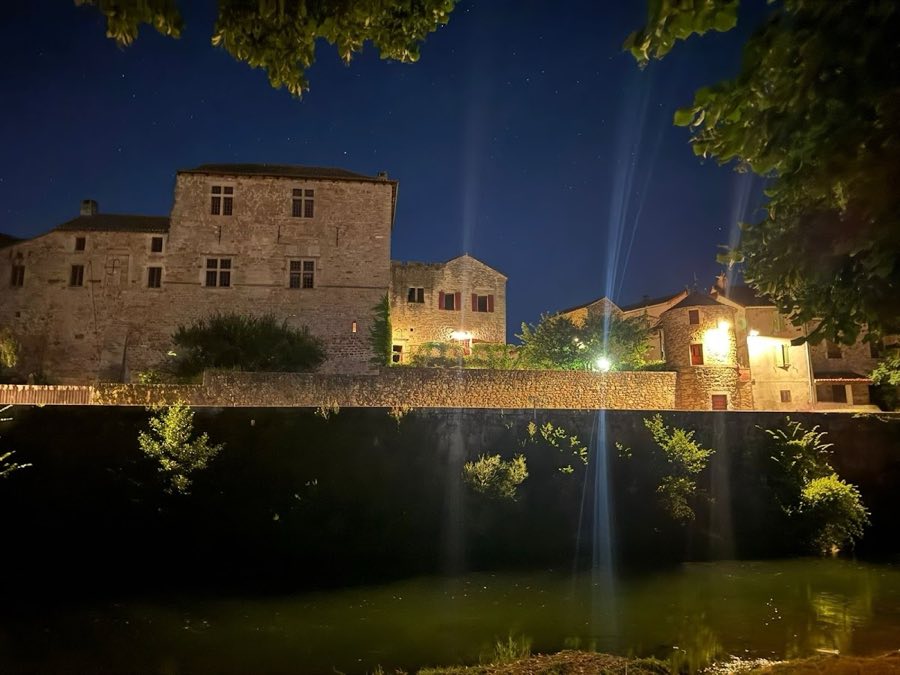
No. 43619
Château de Versols
France
ChâteauRuin11th century
No. 27945
Château · France
No. 27945 · 43.689 N, 2.909 E
For sale
Château de Boissezon in France is marked with a public sale signal. Asking price, tenure, land area, floor area, and room counts are shown only after public verification.
Status: Public sale signal
Price: Price on application or not publicly verified
Property type: Château / Chateau
Availability note: Submit an official public listing or register buying interest to complete the sale record.
Quick summary
Château de Boissezon is a château in France with origins associated with the 13th century.
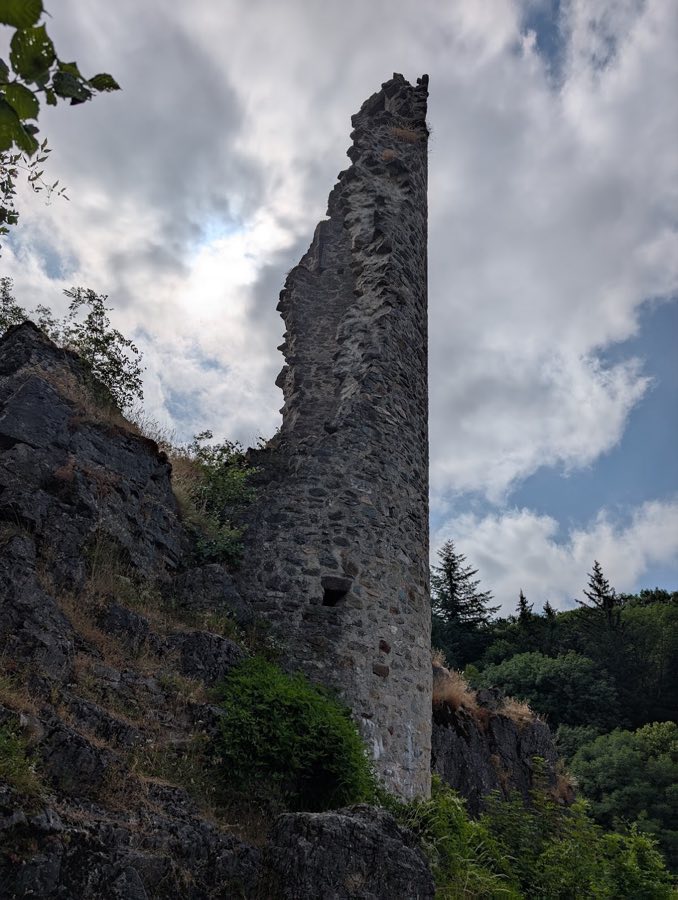
See all castles in FranceThe castle stands on a rocky promontory above the hamlet of Boissezon de Masviel in the commune of Murat-sur-Vèbre and was built by medieval seigneurs. The place-name Boissezon appears in a testament of 966, though that early reference may denote a nearby locale rather than the present site. By 1112 the seigneurie belonged to the vicomté of Albi, and after the 1229 Treaty of Paris former Trencavel lands in the diocese of Albi were granted in fief to Philippe de Montfort; in 1268 Philippe II de Montfort granted Boissezon to Jean de Manicort.
In 1356 the territory was raised to a county, its domain extending from Castres toward Lacaune and the hamlet. From the late 13th century through the 15th the lordship encompassed four parishes with seigneurial rights often divided among multiple holders. The L’Estendart family appear in records in the early 14th century and expanded their claims in 1326, while the Peyrusse family acquired part of the lordship by marriage in 1404 and consolidated further rights by 1418; for five generations the Peyrusses held most shares of the seigneurie, owned the castle and exercised its manorial justice.
From the mid 16th century some members of the Peyrusses adhered to the Reformed faith. In May 1570 Antoine de Peyrusse established a Reformed congregation at the castle to serve Boissezon and neighbouring villages, and the family took part in the Wars of Religion. Contemporary records recount local violence, including the capture and killing of a captain named Pierre and the fatal wounding of Pierre de Peyrusse at a nearby fort; he was buried near the castle. Excavations near the approach later exposed about thirty skeletons together with coins dated to the reigns of Philip IV, Philip VI, Louis XI and the late Valois kings, linking burial activity to the site.
After Pierre de Peyrusse died in 1586 the lordship passed to his sister Aldonce, who had married Guillaume de Génibrouse in 1575; the Génibrouse family thereafter retained control. Nicolas de Génibrouse lost and regained Boissezon between 1633 and 1637, and a small chapel was raised near the castle in the 17th century. By 1687 the estate passed by marriage into the Thésan-Poujol line; a sequence of Protestant lords ended when Jacques de Génibrouse died a Catholic in 1701.
Minor repairs are recorded in the early 18th century (four days of masons in 1708), with more substantial work around 1739 costing roughly one thousand livres to raise a wall, renew floors and doors, install a staircase, repair roofing and plaster walls. During the French Revolution remaining noble possessions were offered for sale. Gabriel-Maurice de Génibrouse died in 1797 and his succession was partitioned in January 1799 between heirs and the Republic, the government reserving the share of an émigré son. By 1807 municipal notes recorded the castle as partly collapsed and proposed sale of woodland. In the 19th century the promontory was quarried to supply a lime kiln, and dressed pink sandstone from the ruins was reused in a departmental road and in local houses. In 2005 the municipality carried out safeguarding work; a carved pink sandstone gargoyle was removed from the tower and conserved in the municipal archaeological collection, and the last lime kiln remains were restored and displayed.
The castle occupied a narrow rocky tongue formed by a large bend of the Rieu-Pourquié stream. Medieval descriptions and later plans show a defensive frontage of rounded towers linked by substantial masonry in a crescent along the outer edge of the rock. A southern tower from that defensive sweep survives as a ruin and has been preserved; its dressed pink sandstone masonry remains the principal in situ medieval element.
Access to the stronghold was controlled by an outer court and an inner approach with a vaulted portal, then a drawbridge and a second gate across the neck of the promontory. Close to the surviving tower an area of disturbed ground produced a mass of human bones recorded as an ossuary; excavations on the approach revealed about thirty skeletons accompanied by coins of Philip IV, Philip VI, Louis XI and the late Valois kings, providing a tangible connection between burial activity and the castle approach.
Fragments of carved stone have been conserved and a carved gargoyle of local pink sandstone was placed in the municipal archaeological collection. Documentary inventories from the 17th and early 18th centuries describe towers, an outer bailey, warrens, ditches and gardens, and a 1719 survey records measured grounds for the castle, stables and courtyard, confirming the former presence of entrenched domestic spaces.
Ancillary features survive in altered form. The ruins of a 19th-century lime kiln stand on the quarried slope below the castle; the kiln was fed by stone removed from the promontory and was later conserved and presented. Dressed stone from the castle was reused for door and window surrounds in hamlet houses, showing how the fortress continued to shape local building fabric after its collapse. Documentary notes from the 14th century and a 1377 census record a small hamlet of roughly ten to nineteen households clustered by the fortress, with gardens and a mill on the stream, underlining the castle’s role as the nucleus of a modest settlement.
No. 43619

No. 87906
No. 67166
No. 30441
Comments
Comments for Château de Boissezon will require a verified account before posting.
We'll send a verification link before your first comment is published.