No. 92035
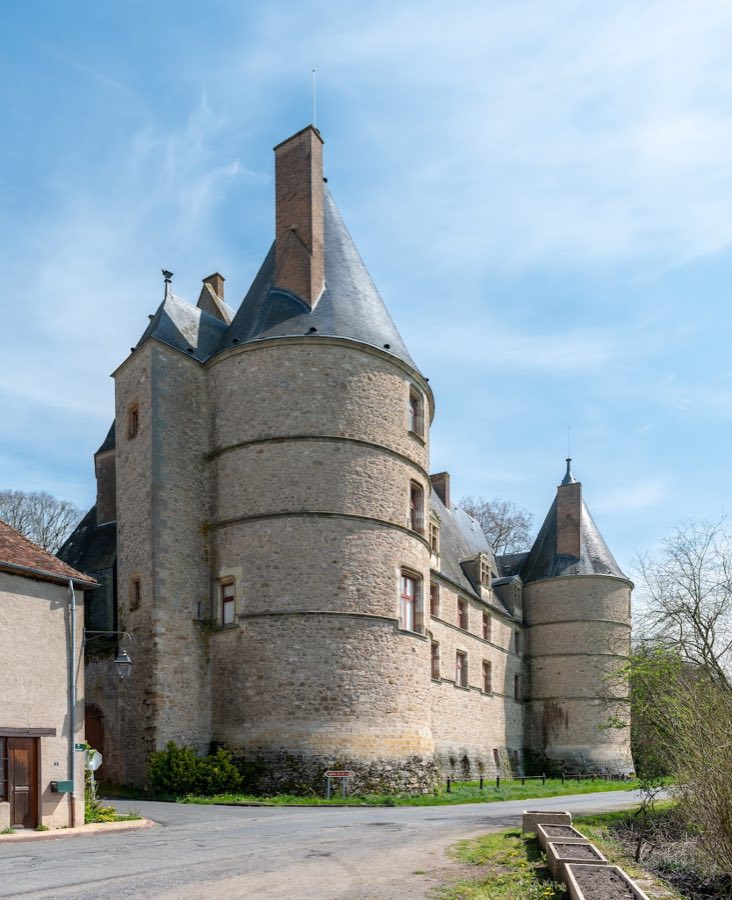
Château de Jaligny-sur-Besbre
France
ChâteauIntact12th century
No. 84490
Château · France
No. 84490 · 46.237 N, 3.429 E
Quick summary
Château de Billy is a château in France with origins associated with the 13th century.
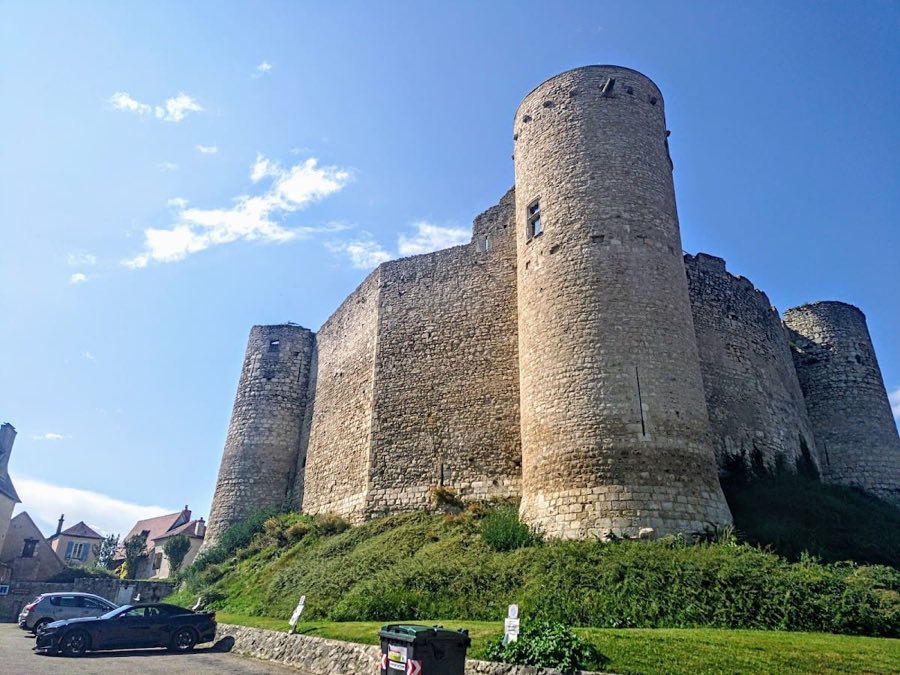
See all castles in FranceThe Château de Billy is located in the municipality of Billy, France. It was constructed during the medieval period by the French, with origins tracing back to the late 12th or early 13th century. Its founding likely coincides with the expansion of royal authority in the region following King Philip II of France’s conquest of Auvergne around 1213.
Initially, the castle belonged to Hugues de Colombie, who sold it in 1232 to Archambaud VIII of Bourbon. This transaction brought the château into the domain of the Bourbon family, an influential noble house in medieval France. The castle became an administrative center as the seat of a royal bailiwick and later a châtellenie, a type of lordship linked with the emerging Duchy of Bourbon. Château de Billy commanded a strategic position amid longstanding rivalries between the Bourbons and the Counts of Auvergne, the latter owing allegiance to English kings and the Dukes of Aquitaine.
Under Bourbon rule, the castle developed beyond a fortress into a fortified town, growing in political and economic importance. By the early 1500s, it ranked second among the seventeen châtellenies within the Bourbonnais territory, overseeing a large jurisdiction that included 62 parishes and three subordinate lordships. The castle reached its likely height of influence during the tenure of Pierre, the illegitimate son of Charles I, Duke of Bourbon, who administered the site from 1471 to 1488.
In 1527, ownership of Château de Billy shifted when the estates of the Constable of Bourbon were confiscated and absorbed into the French Crown. The castle’s military significance continued through the 16th century, notably during the French Wars of Religion. In 1576, forces aligned with the Protestant Prince de Condé and the German prince Johann Casimir besieged and temporarily occupied the castle. The conflict inflicted damage to the fortifications that the owners never fully restored.
Following this turbulent period, Château de Billy ceased to function as the châtellenie’s administrative hub. In 1596 King Henry IV pawned the castle to a group of creditors, among them Sébastien Zamet, a financier. Thereafter, the property passed through several private hands up until the French Revolution. During part of this later era, the castle served as a prison until 1790. Over the 19th century, the fortress fell into neglect, with stones being removed by local residents for construction uses.
The ruins of Château de Billy were purchased by the local municipality in 1963, marking the beginning of efforts to maintain the remnants of this historic site.
Château de Billy occupies a limestone promontory rising about 50 meters above the surrounding landscape, providing commanding views over the Allier River valley and the village below. The surrounding village is arranged in an almost circular pattern around this elevated position, highlighting the castle’s central role.
The upper courtyard, or “haute cour,” is enclosed by a polygonal defensive wall roughly 50 meters wide east to west and 40 meters from north to south. This wall is reinforced by six semi-circular towers positioned along the north, south, and west faces. A prominent châtelet — a fortified gatehouse featuring twin towers — guards the entrance on the western side. The châtelet’s pointed arch dates to the 14th century and includes a groove designed for a portcullis, a heavy sliding wooden gate used to secure entrances.
Dominating the eastern side of the enclosure stands a tall cylindrical donjon, or keep, constructed primarily in the 14th century and possibly heightened at that time. Attached to the donjon is a polygonal stair turret. Also notable is an octagonal watchtower known as “La Guette,” added under the rule of Duke Louis II of Bourbon. This tower would have served as an observation post overseeing the surrounding countryside.
Below the upper courtyard lies the outer bailey, or “basse-cour,” an oval-shaped enclosure extending over 120 meters in length and nearly 100 meters across. The curtain walls here adapt to the uneven terrain with a combination of straight, curved, and irregular sections. Arrow slits, specifically narrow vertical openings called “archères en rame,” characteristic of 13th-century royal fortifications, are distributed along these walls, providing defensive firing positions.
In the outer bailey, a captain’s residence and guardhouse were constructed during the 15th century. Prior to this addition, the captain responsible for the castle’s defense would have been housed within the donjon, particularly in a chamber named after Louis II of Bourbon. Archaeological surveys have uncovered foundations and remnants of various domestic buildings within both courtyards, including stables abutting the southern curtain wall and other service structures along the northern wall.
A chapel once stood adjoining the southern tower of the châtelet. Although it has since fallen into ruin, traces of painted vaults remain visible, indicating its previous decorative treatment. At the end of the 16th century, one of the northern semi-circular towers was converted into a prison cell, a function it maintained until the time of the French Revolution.
The castle’s walls and towers are primarily assembled from local limestone and sandstone, reflecting the region’s available materials. During the 20th century, partial restorations were undertaken to stabilize the fragile remains. The château’s ruins have been protected as a historic monument since 1921, with the outer enceinte recognized in 1929. Later, the entire village of Billy gained protection as a designated heritage site in 1975.
Today, visitors can observe the remains of this large medieval fortress, which clearly reveal the castle’s historical importance as both a defensive stronghold and a center of local power.
No. 92035
No. 50832
No. 56978
No. 33021
Comments
Comments for Château de Billy will require a verified account before posting.
We'll send a verification link before your first comment is published.