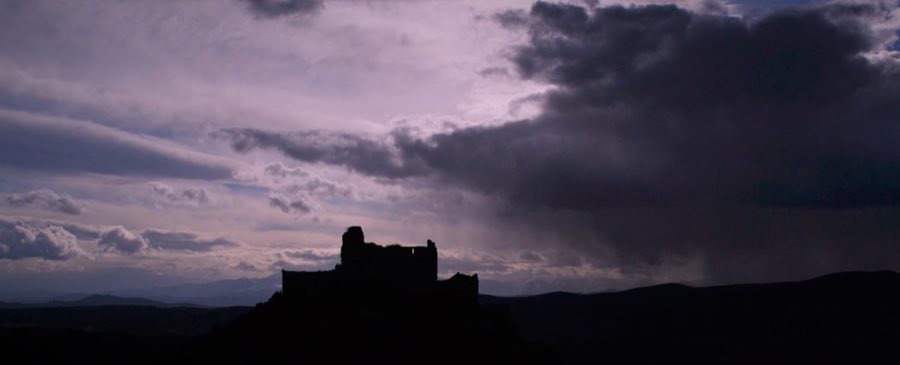
No. 43823
Château d'Aguilar
France
ChâteauRuin12th century
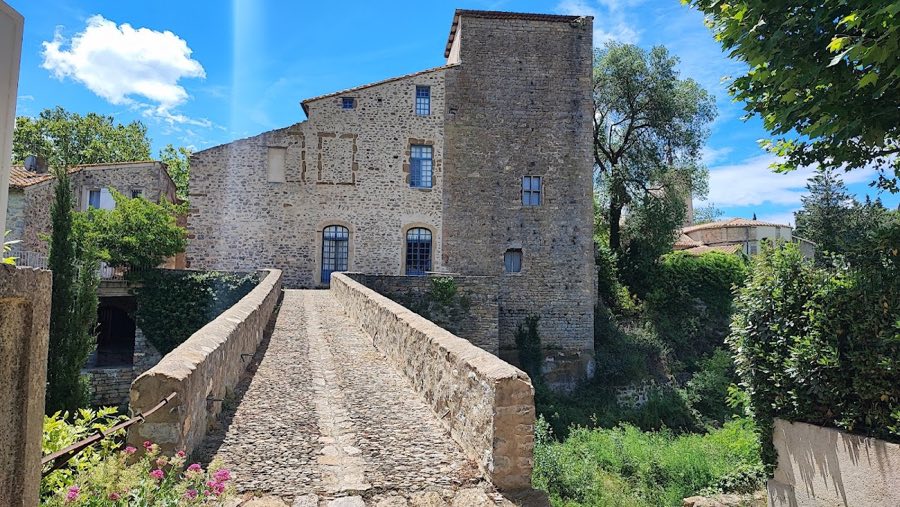
No. 68478
Château · France
No. 68478 · 42.986 N, 2.759 E
Quick summary
Château de Cascastel is a château in France with origins associated with the 12th century.
See all castles in FranceThe Château de Cascastel is situated in Cascastel-des-Corbières, France, and was constructed by medieval builders during the 12th century. It began as a fortified tower intended to serve as a watchpoint and defensive structure, asserting control by the local secular lords over this territory.
In the 13th century, control over Cascastel was shared between ecclesiastical and secular authorities. The Abbots of Lagrasse held part of the seigneurial rights alongside two secular co-lords, Raymond de Castel and Sicart de Cascastel, who jointly owned the tower itself. This tower not only offered protection but also safeguarded important community records such as leases and charters, stored in its vaulted cellar rooms.
By 1390, the château underwent significant rebuilding documented in a surviving charter. A new enclosure wall was erected, separating the tower and the lords’ castle from the surrounding fortifications. This division was part of an effort to strengthen the site’s defenses, following repeated attacks and damage caused by mercenary bands raiding from the neighboring kingdom of Aragon.
In the 18th century, ownership passed to Gaspard de Pailhoux and his wife Marie-Thérèse de Ros y Sorribes, who acquired the noble fief of Cascastel in 1734. After Gaspard’s death later that year, Marie-Thérèse began renovations, work which continued under their son Joseph Gaspard de Pailhoux de Cascastel. Joseph, the last lord of Cascastel, was a knight, held high judicial authority, and served as a councilor in Roussillon.
Joseph Gaspard expanded the estate’s economic activities, notably by developing mining operations on his lands. He collaborated with merchant Pelletier, engineer Jean Guillot-Duhamel, and chemist Jean-Antoine Chaptal in this enterprise. His son-in-law, General Luc Dagobert, also participated in these ventures. Following the upheavals of the French Revolution, Joseph Gaspard took on civic responsibilities and served as mayor of both Cascastel and nearby Villeneuve. He lived out his final years within the château, passing away there in 1808.
The château’s historical and cultural importance was recognized in the 20th century, leading to its official designation as a historic monument first in 1948 and again in 2001. The surrounding area, including a bridge and church, was protected as a natural site starting in 1943.
The Château de Cascastel is centered around a 12th-century tower constructed as a robust defensive structure. This tower is notable for its remarkably thick walls, measuring 2.5 meters wide, which support an interior vaulted hall with an impressive ceiling height of eight meters. A staircase is cleverly built into the thickness of the wall on the river-facing side, enabling a watchman to ascend discreetly to the platform above for surveillance purposes. Originally, the tower’s entrance was situated at the first-floor level and accessed by removable means that could be withdrawn to prevent enemy entry; this entrance now opens into the adjoining building added to the tower’s left side.
A well-preserved enclosure wall dating from 1390 separates the tower and the lords’ castle from the remainder of the fortifications. This wall was constructed to reinforce the site’s defenses in response to mercenary raids, isolating the core noble residences from the rest of the somewhat ruined fort that had suffered from these attacks.
Attached to the tower is a residential building from the 17th century, known as the corps de logis, which opens onto a terrace. Later developments connected this terrace across a stream to cultivated gardens and mills, which were acquired by Marie-Thérèse de Ros y Sorribes in 1737.
Inside the château, one finds a salon dating from the Louis XIII period, notable for its decorative plasterwork called gypseries. The ceiling of this room displays a classic French design, and later renovations introduced a fireplace and detailed moldings reflecting combined styles of Louis XIII and Louis XIV. The most elaborate plaster ornamentation belongs to the Louis XIV–Louis XV era, arranged in four distinct high-relief panels titled La Chasse (The Hunt), Le Jardin (The Garden), La Volière (The Aviary), and Les Champs (The Fields).
Particularly striking is the La Chasse panel which features a portrait of Marie-Thérèse de Ros represented as Diana, the Roman goddess of the hunt. She is shown with typical attributes such as a crescent moon, bow and arrows, a quiver, a horn, and hunting dogs. This depiction suggests she commissioned the intricate decoration, blending personal identity with classical symbolism.
No. 43823
No. 47604
No. 57702

No. 62958
Comments
Comments for Château de Cascastel will require a verified account before posting.
We'll send a verification link before your first comment is published.