No. 94151
Mayenne Castle
France
CastleRestored10th century
No. 66660
Château · France
No. 66660 · 48.439 N, 1.209 W
For rent
Château du Bois-Guy is marked for bookable castle accommodation. Nightly pricing, sleeps count, stay rules, and amenities are displayed only when public operator data is available.
Rental type: Hotel / bookable stay, Short-stay rental
Short-term availability: Bookable accommodation signal
Quick summary
Château du Bois-Guy is a château in France with origins associated with the 17th century.
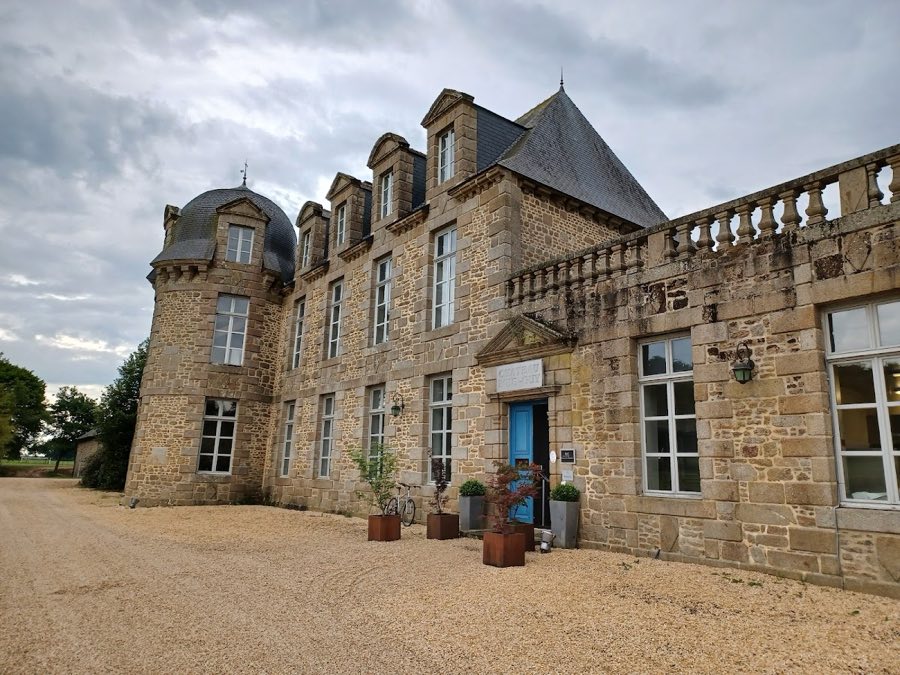
See all castles in FranceThe Château du Bois-Guy in Parigné, France is a seigneurial estate whose present main house dates from the 17th century and was erected in the early modern period by local French landowning families. Built on the footprint of an earlier medieval manor and set within a formal garden tradition, the site became notable through its long association with regional noble households and later for its role during political violence around the French Revolution.
Occupations of the site reach back to the mid-14th century, when the Pichot family held the manor. By marriage the property passed into the de Gaullaye family and remained with them into the 18th century, a tenure that placed the estate among the county’s landed households. Around 1703 Jean Picquet, who served as chief clerk at the Parliament of Brittany and held other local lordships, purchased the château and his descendants took the family name Picquet du Bois-Guy.
Under the Picquet du Bois-Guy family the house acquired direct links to the upheavals of the late 18th century. Aimé Picquet du Bois-Guy acted as a royalist and operated in concert with the Chouans, the royalist insurgents active in western France, using the château as a base for armed raids across the surrounding countryside during the Revolutionary period.
Ownership changed hands several times in the early 19th century. The property was sold in 1802 by Madame du Bois-Lebon and in 1804 passed to a Mr. Dubuat, who bequeathed it to his daughter, the wife of Henri-Charles d’Estanger. Later the estate was acquired by a notary from Fougères. During the 19th and early 20th centuries the buildings and land were managed as a large agricultural enterprise, a role that continued until just before the Second World War.
The estate suffered severe decline in the later 20th century. The small attached Saint Martin chapel was abandoned at the end of the 19th century and used as a storage shed. In 1984 a plaque recalling the military actions of the Picquet du Bois-Guy siblings was placed near the chapel by Breton Remembrance. In 1994 an industrialist from Fougères bought the ruined property and over more than six years carried out a programme of repair and rebuilding aimed at turning the house into a hotel and restaurant. In 2009 two young restaurateurs acquired the château, refitted it as a high-end establishment, adapted former outbuildings for meeting rooms and added a golf practice area, and the grounds have hosted temporary exhibitions. A football centre now occupies part of the site and a pitch dedicated to the Rennes international Eduardo Camavinga was inaugurated on 23 September 2020.
The château stands as a composition of a 17th-century main house built on the medieval manor’s site, arranged with towers at the corners and formal garden land around the house. The main façade is marked by two angled corner towers that frame the approach and by an array of later and earlier fabric reflecting the estate’s long use. Construction employed local stone, with a notable use of granite for internal circulation and key structural elements.
A square rear turret contains a granite stair that has long been admired for its craftsmanship and scale. The staircase rises within the turret and retains the hard-wearing stone steps and profiles typical of the region’s 17th-century work. The outbuildings that once served agricultural and service functions display characteristic bull’s-eye windows set into their elevations, and these dependencies were later adapted to meeting rooms and hospitality uses during the estate’s conversion in the 21st century.
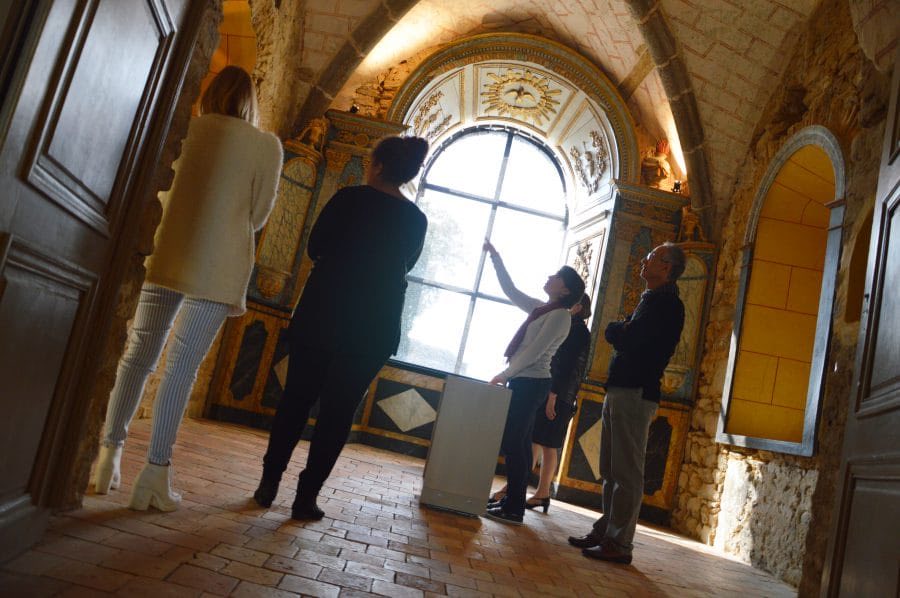
The small Saint Martin chapel dates to the 15th century and is attached to the château’s main block. Its entrance is fitted with an ogival, pointed Gothic door, and the chapel contains a trilobed window whose interior view is partly concealed by a 17th-century altarpiece that has been recovered and preserved in place. The chapel was traditionally used by parishioners during the Rogation procession, a three-day rural pilgrimage held Monday to Wednesday before Ascension that moved through fields to bless the crops and ask for their protection.
The fabric of the estate showed advanced decay by the late 20th century, with much masonry reduced to isolated wall sections and blanked openings, and by 1994 the remaining built fabric that required immediate attention consisted principally of the ground floor and one tower, both overgrown with vegetation. Repair work undertaken after that date restored the principal stair and tower elements and made the principal rooms usable for hospitality. The dependencies were repurposed, and the grounds now combine restored historic features with later additions such as the golf practice area and the football pitch inaugurated in 2020.
No. 94151

No. 45729
No. 11355
No. 39261
Comments
Comments for Château du Bois-Guy will require a verified account before posting.
We'll send a verification link before your first comment is published.