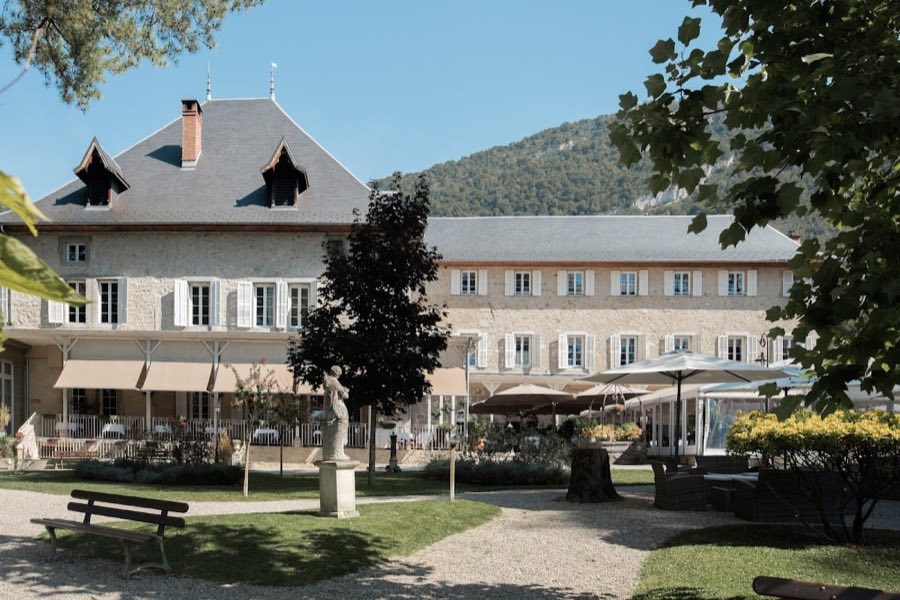
No. 56764
Château des Comtes de Challes
France
ChâteauIntactFor rent13th century
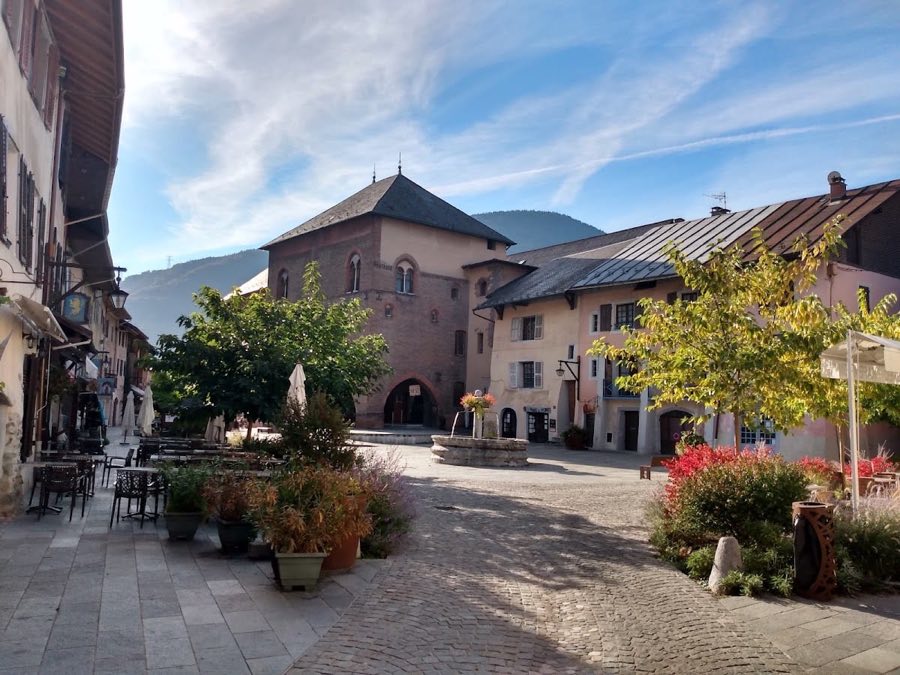
No. 67576
Château · France
No. 67576 · 45.670 N, 6.397 E
For events
Château fort de Conflans is marked as a château or castle venue lead. Capacity, indoor/outdoor spaces, catering rules, and accommodation options are published only after public verification.
Event types: Private events, Cultural gatherings, Filming and photography
Quick summary
Château fort de Conflans is a château in France with origins associated with the 11th century.
See all castles in FranceThe Château fort de Conflans is a medieval fortress constructed in the 11th century, located in the district of Conflans within the modern municipality of Albertville, France. Built by local lords during a period of heightened regional insecurity following the migration of Germanic peoples, it occupied a site of ancient strategic importance.
Before the castle’s erection, the location held significance in Antiquity, situated along a Roman secondary road called the Alpis Graia. This route linked Milan to Vienne and passed through key settlements in the Tarentaise valley. The fortified town of Conflans was initially under the jurisdiction of the archbishopric of Tarentaise. The earliest documented reference to Conflans, originally named Conflenz, appears in a charter from 1015 mentioning a donation to Queen Ermengarde.
Throughout the 12th century, the lords of Conflans served as vassals first to the archbishops before becoming subordinate to the Counts of Savoy by the mid-1100s. In 1142, the castle notably hosted a gathering of regional bishops, overseen by Pierre II, who held the combined role of Archbishop-Count of Tarentaise. Around this era, the Order of Saint John of Jerusalem established a hospital near the castle’s base, underscoring the site’s religious and social importance in the early medieval period.
The late 13th century saw a transition of ownership when, in 1289, the castle was granted by the archbishop to Rodolphe de Conflans of the Duin family. Over the following century, the Counts of Savoy progressively extended their influence over Conflans. By the mid-14th century, they had become the principal rulers of the town, reducing the Conflans family to lesser estates within the region.
The 15th and 16th centuries featured a series of local noble conflicts involving the castle and the surrounding lordship (châtellenie). Administrative control was exercised through appointed châtelains, officials charged with military defense, fiscal duties, and maintenance of the fortress, drawn from notable families including Chignin and La Chambre. The position’s occupants are recorded from the early 14th century into the early 1500s.
In 1600, during the Franco-Savoyard conflict, French forces captured the castle following a siege, marking one of the last major military events in its active history. Toward the late 19th century, the remaining structures of the château were dismantled between 1875 and 1876 to allow the installation of artillery batteries as part of the Séré de Rivières defensive system, alongside the construction of a water tower. This marked the end of the castle’s direct use as a medieval fortress.
The remains of Château fort de Conflans are situated on a rocky promontory overlooking the confluence of the Arly and Isère rivers, a location selected for its natural defensive advantages. The fortified town itself was accessible by just two roads, emphasizing its controlled entry points. Defensive walls enclosed the settlement, featuring several ramparts and two principal gates connected by the main street known as the Grande-Rue. One of these gates, the Porte de Savoie (also referred to as the Porte de France), regulated passage toward the Combe de Savoie and was a strategic checkpoint on the approach from the former County of Savoy.
A notable surviving element is the stone tower named the “tour sarrasine” or Saracen tower, part of a fortified residence called La Cour known from the 12th century. Despite its name, which suggests an association with Moorish influence, the tower’s construction shows no link to the Moors. The corners are reinforced by carefully shaped stone courses defining its edges, a technique that enhanced the structure’s stability. This tower occupies the original footprint of the early medieval castle, and its surrounding garden stands on what was once the castle’s core site.
Several artillery pieces remain positioned along the ramparts, including a cannon dated to 1834, reflecting the site’s continued military use into the 19th century before its partial dismantlement. These remnants serve as evidence of adaptations to evolving defensive technologies over the centuries.
The last substantial parts of the original fortress were removed during the late 19th-century modifications, which involved constructing modern artillery installations according to the Séré de Rivières system, a French military fortification program. A water tower was also erected on the site, replacing older structures and altering the historic landscape. Today, the remaining ruins provide critical insight into the castle’s medieval layout and its role in the broader defensive network protecting the Tarentaise valley.
No. 56764
No. 86342
No. 37753
No. 60748
Comments
Comments for Château fort de Conflans will require a verified account before posting.
We'll send a verification link before your first comment is published.