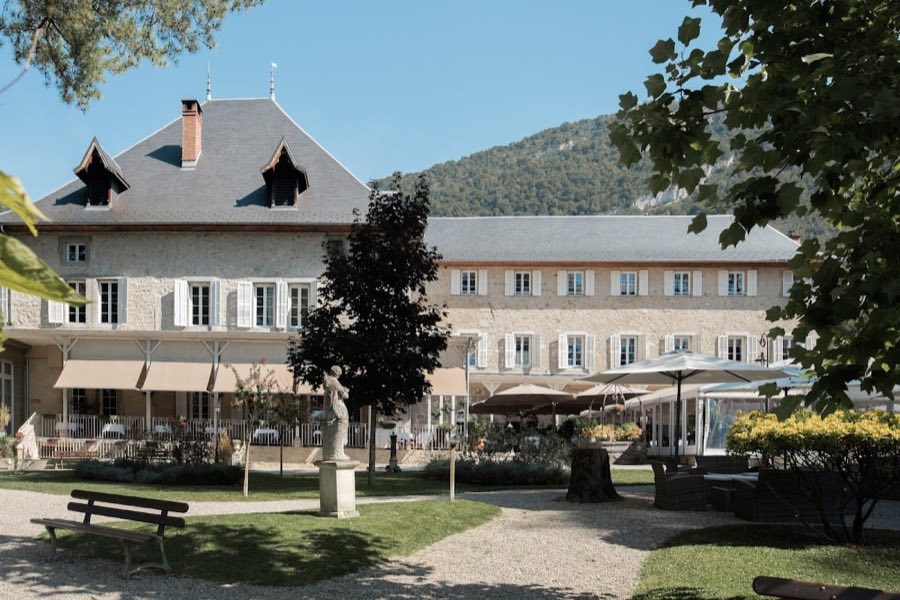
No. 56764
Château des Comtes de Challes
France
ChâteauIntactFor rent13th century
No. 37753
Château · France
No. 37753 · 45.671 N, 5.894 E
For rent
Château de Bonport (Château de Tresserve) is marked for bookable castle accommodation. Nightly pricing, sleeps count, stay rules, and amenities are displayed only when public operator data is available.
Rental type: Hotel / bookable stay, Short-stay rental
Short-term availability: Bookable accommodation signal
For events
Château de Bonport (Château de Tresserve) is marked as a château or castle venue lead. Capacity, indoor/outdoor spaces, catering rules, and accommodation options are published only after public verification.
Event types: Weddings, Private events, Cultural gatherings, Filming and photography
Ceremony spaces: Ceremony setting to verify
Accommodation: Accommodation signal present
Quick summary
Château de Bonport (Château de Tresserve) is a château in France with origins associated with the 16th century.
See all castles in FranceChâteau de Bonport in Tresserve, France, is a late 16th-century manor erected under the authority of the Duchy of Savoy. Built shortly after 1584 during the early modern period, it served as the administrative and residential center of the seigneury known as Bonport or the Grande Vigne and was raised to county status in the same decades, giving it a clear role in local governance under Savoyard rule.
The estate appears in records from 1344 as belonging to Humbert de Seyssel, but the standing house dates to the years immediately following 1584. In 1575 Emmanuel-Philibert of Savoy transferred rights over the Grande Vigne to Renée of Savoy, and in 1584 Charles-Emmanuel I of Savoy confirmed its jurisdictional elevation, creating the county tied to Renée. Within a few years the property changed hands repeatedly: in 1588 Renée’s heirs sold it to Charles Veillet, who in turn sold it in 1590 to Jean-François Berliet, the archbishop of Tarentaise. By 1603 Louis Bonnier, a lawyer, owned the estate and the duke formally established the land as the seigneury of Bonport.
Throughout the 17th and 18th centuries the château remained an aristocratic seat. By 1674 François Capré, seigneur of Megève and president of the Chamber of Accounts of Savoy, held the domain and on 19 February 1686 he declared his fealty to Duke Victor Amadeus II of Savoy. The Capré de Megève family kept ownership until 1734; their family motto, Non indigna cœlo, was placed above the entrance door and a chapel dedicated to the Virgin formed part of the property in 1729. In 1760 the Capré family sold the domain to Louis-François Berthier de Crempigny de Saint-Vincent.
The 19th century brought further changes of ownership and notable visitors. In 1806 the estate passed to a Mr. Mayen of Chambéry. In August 1812 Pauline Borghèse, accompanied by the actor Talma, was received at the château. Ownership continued to shift in later decades; by 1872 the property belonged to Baron Chollet du Bourget, then to Countess Hélène de Tollu, and in 1901 to the British Lord Joseph Charlton-Parr, before later passing to the Gauthier family. Over time the broader grounds were divided and developed.
In the late 20th century the château entered a leisure and hospitality phase. In 1968 Joseph Alexandre Claret-Tournier, a Courchevel hotelier, acquired the building. Private operators converted parts of the house into nightlife venues in successive forms, including the dance hall Le Bassamba, the discothèque Le 502, and later two night establishments named L’Étoile in the basement (capacity about 400) and Le Château on the ground floor (capacity about 200). The surrounding land became a housing subdivision called La colline du poète and the former lakeside port area became the present Lido beach.
A major fire struck the building in the early hours of 19 July 2008, causing the roof, the top-floor floor, and the left-hand tower to collapse. The château was auctioned on 20 December 2012 and bought for €275,000 by three hoteliers-restaurateurs from Viviers-du-Lac. In 2013 Nicolas Claret-Tournier repurchased the property and began a restoration that followed the previous layout. Structural repairs were finished by 2020, secondary work followed, and the site reopened in 2021 under the name Château de Tresserve for events such as corporate seminars and weddings.
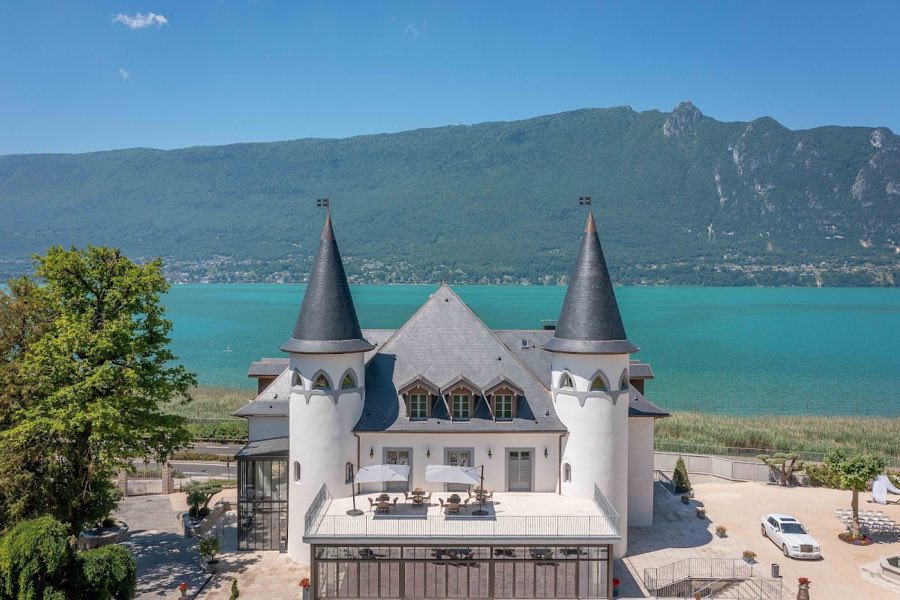
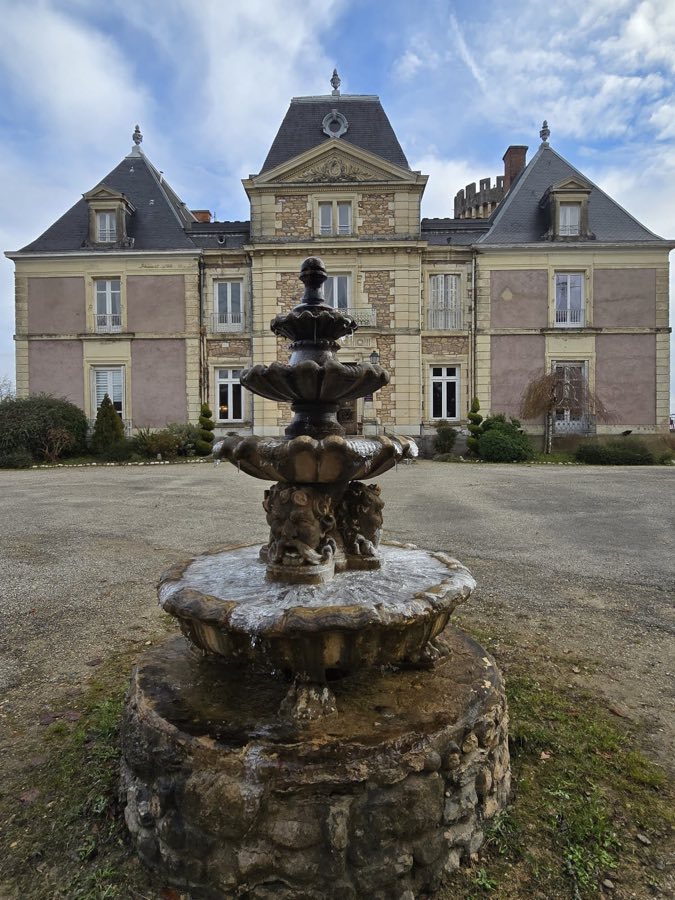
The building presents a cruciform main plan, with a ground-floor footprint of approximately 400 square metres and four storeys in height. This cross-shaped layout produced inner angles on each side where round turrets were attached to the west face; those turrets occupy the inner corners created by the plan. These features date to the house built around the end of the 16th century and reflect the vertical, multi-level arrangement of a late Renaissance or early modern country residence.
A private lakeside port once stood on the estate’s east shore of Lake Bourget, formed by a dyke that provided direct access to the water. The port remained in place until the later 19th century, disappearing around 1885 after the construction of the railway line between Aix (Choudy) and Saint-Jean-de-Maurienne and following road works begun circa 1860. The former port location now corresponds to the present Lido beach, showing how transport developments reshaped the shoreline and estate use.
The château’s fabric suffered severe structural loss in the 2008 fire, which brought down the roof, the top-floor floor, and the left tower. Following an auction sale in 2012 and subsequent private work, major structural reconstruction was completed by 2020 and repairs continued into secondary phases thereafter. As of 2021 the restored building was in use again for commercial events, with the surviving plan and turreted west façade reestablished after the restoration. The site occupies a position at the foot of Tresserve hill beside the national road RN201 on the land route between Tresserve and Aix-les-Bains, preserving its long-standing relationship with the lakeside approach.
No. 56764
No. 60748
No. 94164
No. 49768
Comments
Comments for Château de Bonport (Château de Tresserve) will require a verified account before posting.
We'll send a verification link before your first comment is published.