No. 49023
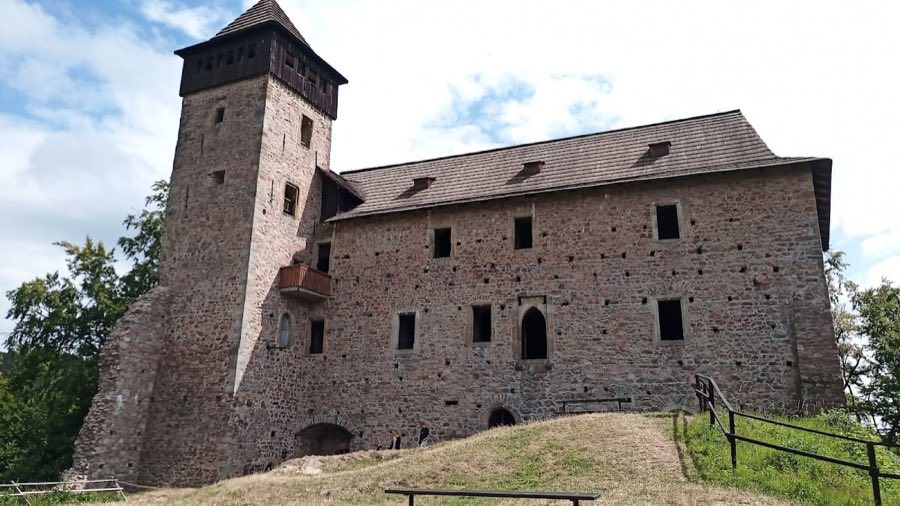
Zítkov Castle
Czechia
CastleIntactFor events14th century
No. 76050
Castle · Czechia
No. 76050 · 50.000 N, 16.226 E
For events
Choceň Castle is marked as a château or castle venue lead. Capacity, indoor/outdoor spaces, catering rules, and accommodation options are published only after public verification.
Event types: Private events, Cultural gatherings, Filming and photography
Quick summary
Choceň Castle is a castle in Czechia with origins associated with the 16th century.
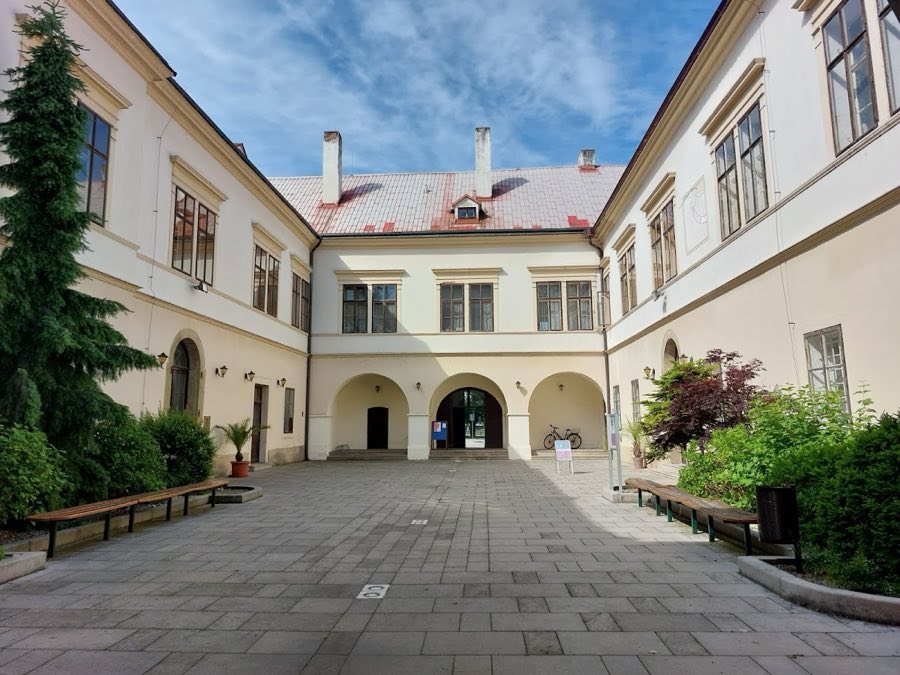
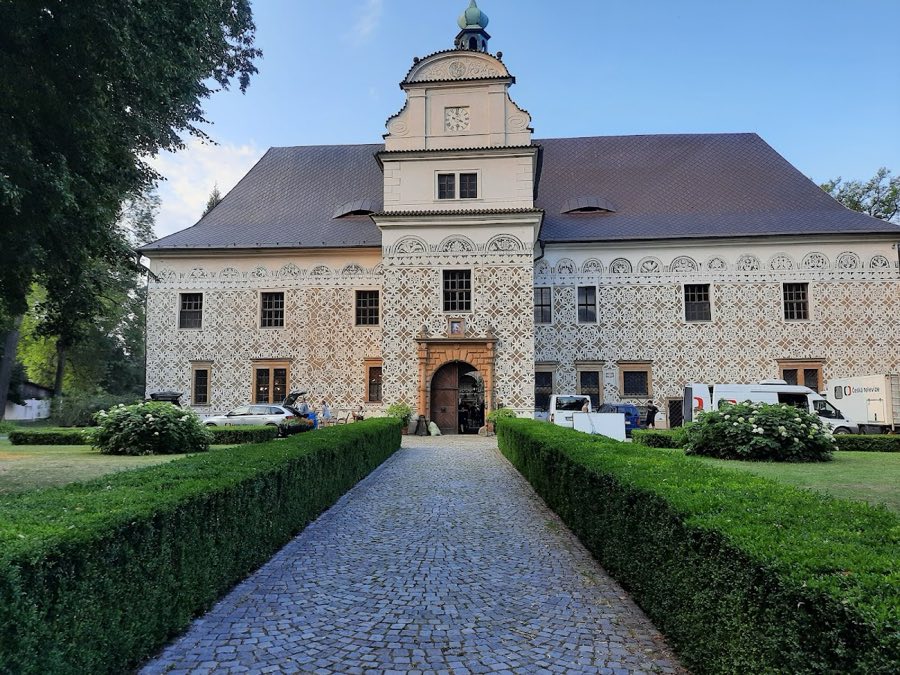
See all castles in CzechiaChoceň Castle in Choceň, Czechia, is a manor‑castle complex with Renaissance origins dating to the 16th century. Its historic core grew from an earlier manor and underwent successive remakings that tied it to regional noble families and to major events in Central European history. The site occupies a prominent position beside the Orlice River and developed into an estate that shaped the town landscape over many centuries.
A medieval stronghold is associated with the site, linked in the tradition to the robber knight Nikolaus of Pottenstein whose fortress was destroyed by Margrave Charles IV in 1339. By the mid‑16th century an inscription placed on the external portal recorded the presence of a standing manorial building; that inscription was later moved into a ground‑floor hall of the castle. The complex began as a single‑wing manor and expanded into a closed four‑wing plan in the late 1500s. Dates connected to that transformation include 1562 with an enlargement in 1574, and the period 1587–1602 for the acquisition of a four‑wing form.
The castle suffered looting by the Swedish army at the end of the Thirty Years’ War. Major rebuilding followed in the early 18th century, when Wenzel Norbert Octavian, Count Kinsky, carried out Baroque alterations between 1710 and 1720. Prince Štěpán Vilém Kinský created the surrounding park in 1719–1720; he was raised to princely rank in 1746. After a fire in 1829 Rudolf Kinsky ordered a complete reconstruction in the Neoclassical manner, carried out by architects from Vienna. Later 19th‑century works included completion of a family chapel in the Neo‑Gothic style dedicated to the Assumption of the Virgin Mary; that chapel is also recorded as having been commissioned by Wilhelmine von Kinsky in 1849–1850.
The Kinsky family converted a former French formal garden into a more natural landscape park after 1840 and expanded it to its present extent. The southern portion of the park was altered in 1845 to allow construction of the Olomouc–Prague railway line. After the creation of Czechoslovakia in 1918 the municipality of Choceň pursued judicial expropriation of the castle with the intention of founding a school. During the German occupation in World War II the building served first the Hitler Youth, then as a camp for French prisoners, and toward the war’s end as a dormitory for employees of the Hermann Göring Works. The estate was confiscated in 1945; following that event the south wing was allocated to a newly established music school and the north wing was set aside for a museum. The Castle of Choceň is listed as a protected cultural monument of the Czech Republic, catalogue number 1000136701.
The ensemble stands as a compact four‑wing castle complex that grew out of an original single‑wing manor. The closed four‑wing plan reached its present footprint during the late 16th century when the manor was enlarged into a Renaissance castle. Subsequent rebuilding left clear historical layers, including Baroque alterations executed in 1710–1720 and a later Neoclassical overhaul carried out after the 1829 fire.
The complex is arranged with distinct south and north wings flanking the central court; after 1945 the south wing housed a music school while the north wing accommodated a museum. A mid‑16th‑century inscription that once formed the architrave of the external portal now resides in a ground‑floor hall, preserving an early dated element of the site. A Neo‑Gothic family chapel dedicated to the Assumption of the Virgin Mary forms part of the castle grounds; its completion is associated with later 19th‑century works and the chapel is also recorded as having been commissioned in 1849–1850 by Wilhelmine von Kinsky.
The surrounding park lies behind the castle on the left bank of the Orlice River, with the building positioned at the northern edge of the grounds close to the bridge leading to the town centre. The landscape includes a lime avenue planted in 1733 that originally comprised more than eight hundred lime trees and that survives to the present. The Kinsky family reshaped the former formal garden into a natural landscape park after 1840 and extended it; the park’s southern sector was modified in 1845 to permit the routing of the Olomouc–Prague railway line.
Taken together, the castle, chapel, and park present a complex of features that reflect repeated functional changes and rebuilding from the medieval period through the 19th century. The site retains in situ elements such as the relocated 16th‑century architrave, the Neo‑Gothic chapel, the surviving lime avenue, and the articulated four‑wing plan that documents its long sequence of use and adaptation.
No. 49023
No. 81581
No. 54467
No. 38226
Comments
Comments for Choceň Castle will require a verified account before posting.
We'll send a verification link before your first comment is published.