No. 20012
Château de Cropières
France
ChâteauRuinFor events13th century
No. 57092
Château · France
No. 57092 · 44.970 N, 2.609 E
Quick summary
Comblat-le-Château is a château in France with origins associated with the 14th century.
See all castles in FranceComblat-le-Château, in Vic-sur-Cère, France, was constructed during the Middle Ages.
Evidence of human activity in the area reaches back to the Middle Paleolithic, with a site discovered at Comblat-le-Pont. The place-name appears in records as Comlat until the fifteenth century, after which it is written as Comblat. Permission to build a castle at the site of an older fort was granted in 1343 to Gaucelin, lord of Viescamp, and the present château was erected on the former fort of Vallayrane in the fifteenth century.
In 1513 Raymond de Vixouze received authorization from Louis de Joyeuse, bishop of Saint-Flour, to construct a chapel at Comblat. From 1586 until 1789 the building served as the residence of the commis and then of the vice-bailiffs charged with ensuring the pacification of Upper Auvergne. Jean I de Cabannes, acting under King Henri III to prepare a pacification plan for the region, is recorded as having the existing keep completed and as making his will there in 1588.
At the start of the eighteenth century the castle estate grew through additions and landscaping. In 1716 François de Comblat was granted the right to exploit the mineral springs at Vic, and that same year Françoise de Cabanes-Comblat brought the estate by marriage into the family of Lacarrière de Comblat when she married François-Joseph Lacarrière. A further commission to exploit the springs was given to Raymond Lacarrière in 1761.
The upheavals of the French Revolution affected the owners. Part of François-Louis Lacarrière de Comblat’s property was seized as national property, and he was executed in 1795 after the Quiberon landing. His relative Amélie de Lacarrière de Comblat repurchased the estate and in 1811 married Séraphin-François-Gabriel de la Baume Pluvinel. Their descendant Henry Gabriel de la Baume Pluvinel carried out irrigation works at Comblat and received a silver medal from the Ministry of Agriculture in 1884. The painter Paul Signac visited the estate in 1886 and again in 1888.
In 1949 Geneviève de la Baume Pluvinel transferred ownership of the castle to the département du Cantal so the buildings could house a home-economics school and later an agricultural college for girls; she also donated family portraits to the Hippolyte de Parieu museum in Aurillac. The château and its grounds have been officially recorded as a historic monument since 18 November 2002, and the park is noted for its particular quality.
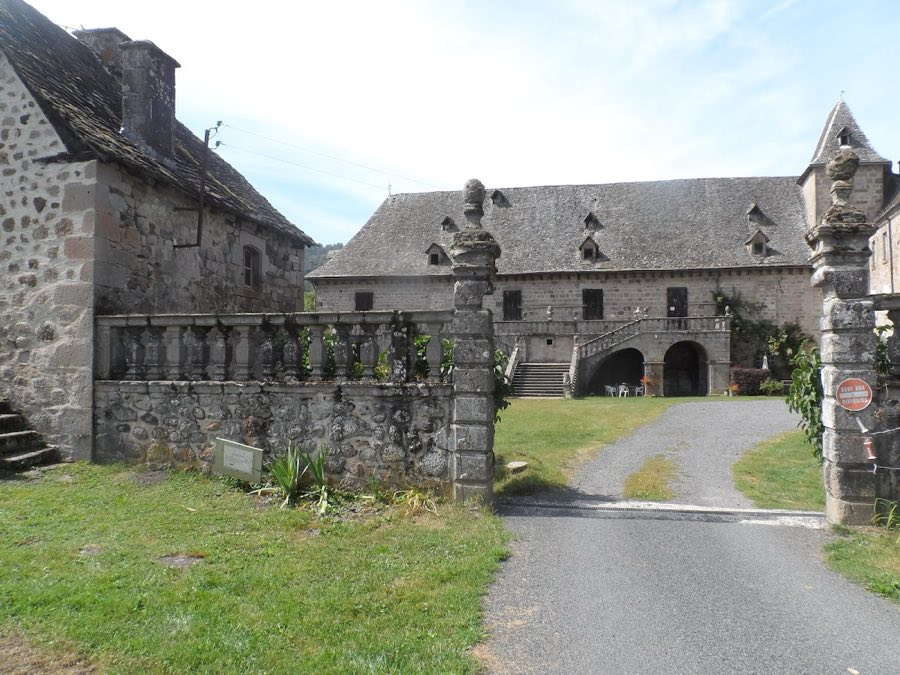
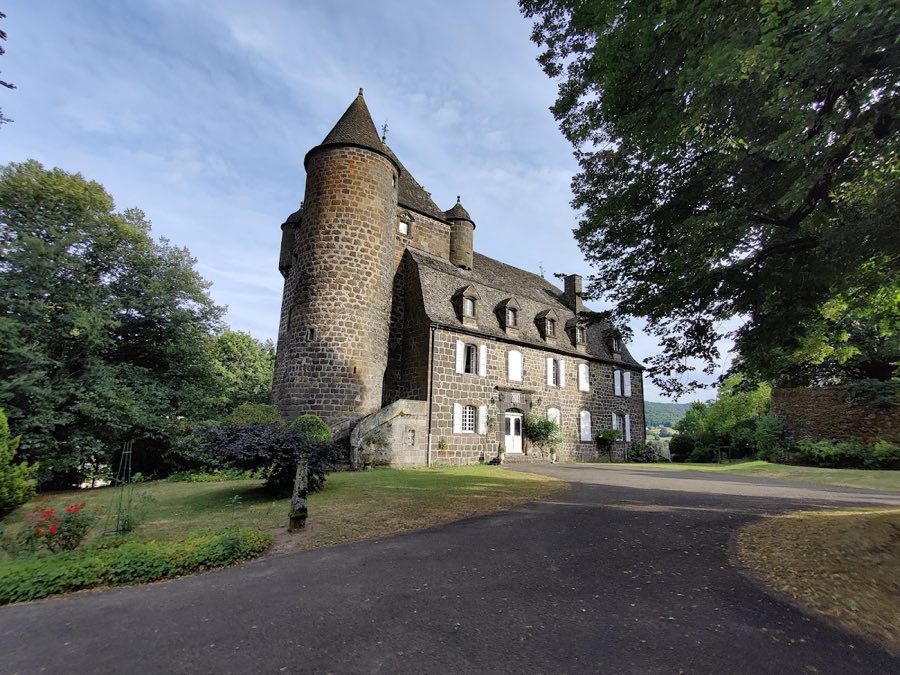
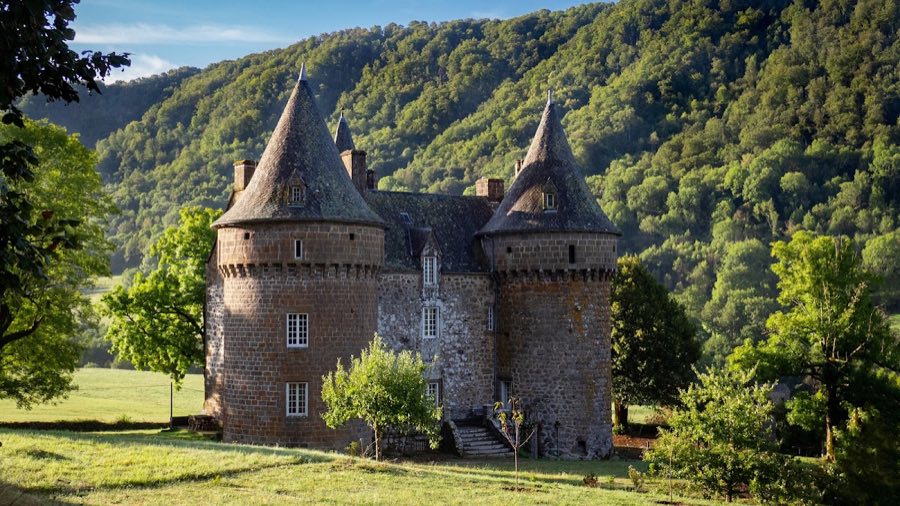
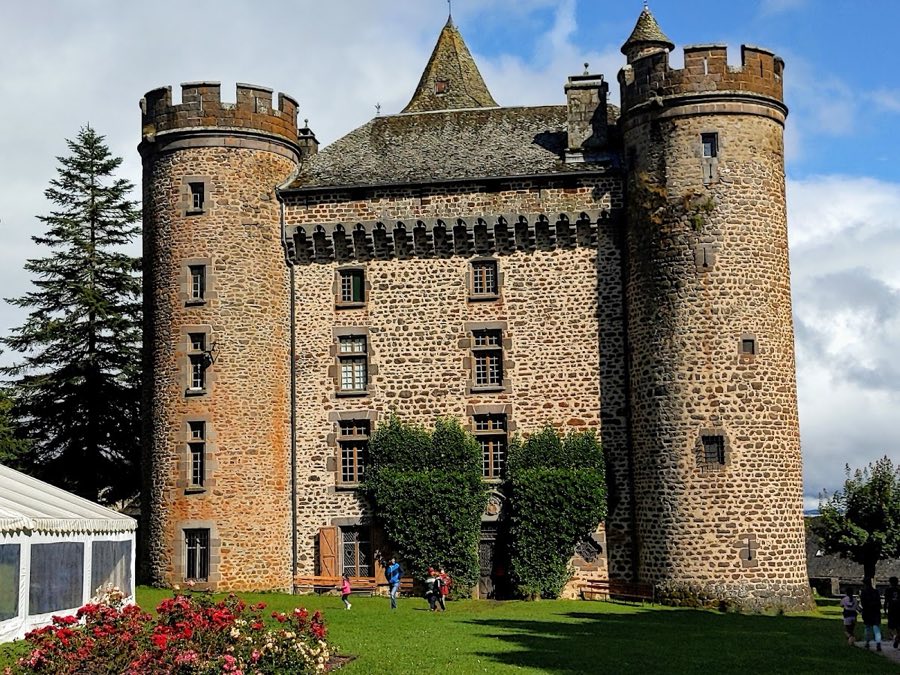
The site is organized around a medieval keep with later domestic wings and landscaped grounds. The core feature is a keep originating in the fifteenth century that underwent remodelling in the sixteenth century, work associated with Jean I de Cabannes and recorded in 1588. Attached to this medieval tower is a classical-style south wing added at the beginning of the eighteenth century, whose interiors display early eighteenth-century decorative work.
Around the same early-eighteenth-century phase it is considered probable that subsidiary buildings were erected, including a chapel, a garden pavilion, and various outbuildings, while terraces and a basin were laid out in the park. A chapel at Comblat had earlier authorization in 1513 from the bishop of Saint-Flour, and a later chapel is included among the estate dependencies.
The interior fittings of the ensemble are protected and include large fireplaces and extensive wood panelling. Eighteenth-century fireplaces with painted overmantels survive, together with the former kitchen located on the ground floor of the keep, an archive room on the top level of the north tower, the entrance vestibule and its staircase, and the principal chambers on the first floor. The garden pavilion is noted for painted decorative work and is part of the protected group alongside the outbuildings, the chapel, and the gardens with their terraces, basin and fountain.
The whole property, interiors and dependencies included, is under official protection and remains documented as an ensemble combining a medieval fortified core, later classical living quarters, and a landscaped park recognized for its qualities.
No. 20012
No. 46831
No. 60226
No. 38757
Comments
Comments for Comblat-le-Château will require a verified account before posting.
We'll send a verification link before your first comment is published.