No. 20012
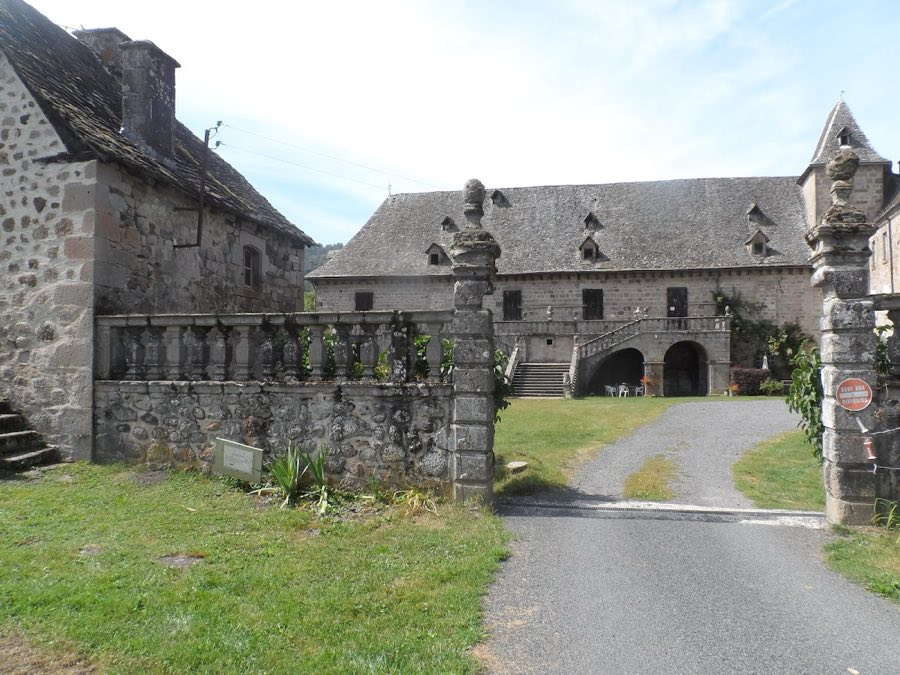
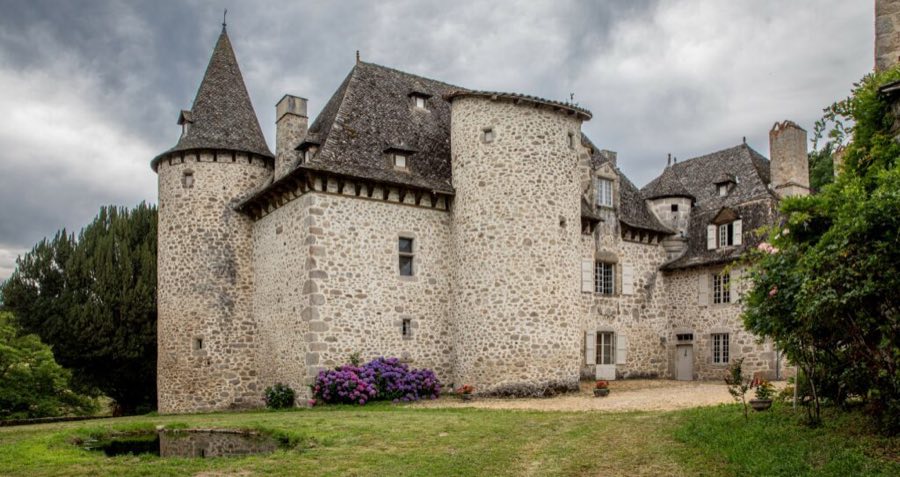
Château de Cropières
France
ChâteauRuinFor events13th century
No. 46831
No. 46831 · 44.889 N, 2.562 E
Quick summary
Carlat is a castle in France with origins associated with the 6th century.
See all castles in FranceThe Castel of Carlat in Carlat, France, was a medieval stronghold that served as the seat of the viscounty of Carladès from at least the tenth century, occupying a prominent place in regional power struggles during the Middle Ages. Built and used in the medieval period, the site repeatedly figured in campaigns that shaped control of Auvergne and neighboring territories, and it served both military and administrative functions for successive nobles and rulers.
Early medieval activity at the site is recorded as early as the sixth century when Thierry I, son of Clovis (c.485–534), captured the fortress in 508, a move that helped him establish control over Auvergne; about three years later he returned to put down revolts by local leaders Basolus and Arcadius. In the later eighth century the fortress played a role in campaigns by Pepin the Short against Waïfre, prince of Aquitaine. In 839 Louis the Pious, son of Charlemagne, laid siege there against the forces of his grandson Pepin II, king of Aquitaine.
Ownership and allegiance shifted through the high and late Middle Ages. In 1050 the stronghold passed by marriage to the viscount of Millau and Gévaudan, and thereafter came, by inheritance, into the hands of the King of Aragon; that crown ceded it before 1196 to the Count of Rodez. During the Hundred Years War period the site fell to the English in 1369. King Charles VI of France confiscated the place in 1386 and granted it to Duke Jean de Berry.
The castle again became the focus of royal action in the late fifteenth century. In 1476 King Louis XI laid siege to secure the arrest of Jacques d’Armagnac, Duke of Nemours and viscount of Carlat, accused of plotting against the king. The siege endured for eighteen months; after negotiated guarantees Jacques left the fortress, was taken in an iron cage to Paris, and was executed on 4 August 1477. In 1489 Pierre II of Bourbon acquired the viscounties of Carlat and Murat from Jean d’Armagnac, eldest son of the executed duke.
In 1585–1586 Marguerite de Valois, known as Queen Margot, sought refuge at Carlat after leaving Agen to avoid a force sent to bring her to Nérac. She held the place as a gift from her mother, Catherine de’ Medici, Countess of Auvergne. Marguerite fell ill in April 1586, was attended by physicians and a surgeon, recovered by May, celebrated in Vic-en-Carladez on 4 June, and departed the castle on 20 October 1586 for Ybois, partly because her funds were exhausted and because the governor Gilbert de Marzes had died and been replaced by his brother François Robert de Lignerac.
At the turn of the seventeenth century King Henry IV moved to secure Carlat. He had François du Pouget, lord of Mourèze and then governor of the fortress, arrested as a suspect in Marshal Biron’s conspiracy, a plot against the king. After negotiations the governor’s wife, Marie d’Olivier, defended the place until Carlat was handed to the crown on 19 June 1602 and François du Pouget was released. Henry IV ordered the dismantling of the fortress in 1603 and again in 1604, removing its military function.
Nineteenth-century excavations explored the site, and beginning in 1989 local residents undertook a detailed reconstruction project. Using archival records, the results of the earlier digs, and subsequent archaeological and historical information, they produced a one‑twenty‑fifth scale model showing the fortress as it stood in 1603.
The Castel occupied the crest of a basalt plateau and the approach to the stronghold was carved directly into the rock, where a stairway hewn into a fissure provided access. The position atop hard volcanic bedrock, with steep ravines surrounding the plateau, determined the layout and defensive character of the complex and shaped how buildings and fortifications were arranged.
Fortifications included a double enclosing wall (two concentric defensive walls) strengthened by substantial towers. These outer defenses defined the military perimeter of the fortress in the medieval period and were placed to take advantage of the natural drop of the surrounding ravines. The stair carved into the bedrock served as the principal controlled entry to the summit and linked the defended enclosure to the lower approaches.
Within the defended area a range of civic, military, and religious buildings stood by 1603. A church and a convent belonging to the Poor Clares occupied religious functions on site. Military and service structures included barracks and stables, and administrative and residential buildings comprised the governor’s hôtel and a palace known as Bridoré, the residence used by Marguerite de Valois. The complex also contained the commandery of the Knights of Malta, recorded as the principal commandery of the Auvergne branch, serving the order’s local functions.
The castle underwent deliberate destruction under royal orders in 1603–1604, after which archaeological investigation in the nineteenth century examined remains on the plateau. The community project begun in 1989 built a one‑twenty‑fifth scale reconstruction of the castle as it appeared in 1603. That model reproduces the buildings using fired, ceramicized modeled earth and represents the original village and separate farms with traditional materials such as stone, timber, lauze (stone) roofing, and straw, reflecting the documented layout and building types of the site at the moment of its dismantling.
No. 20012
No. 57092
No. 66276
No. 40141
Comments
Comments for Carlat will require a verified account before posting.
We'll send a verification link before your first comment is published.