No. 68599
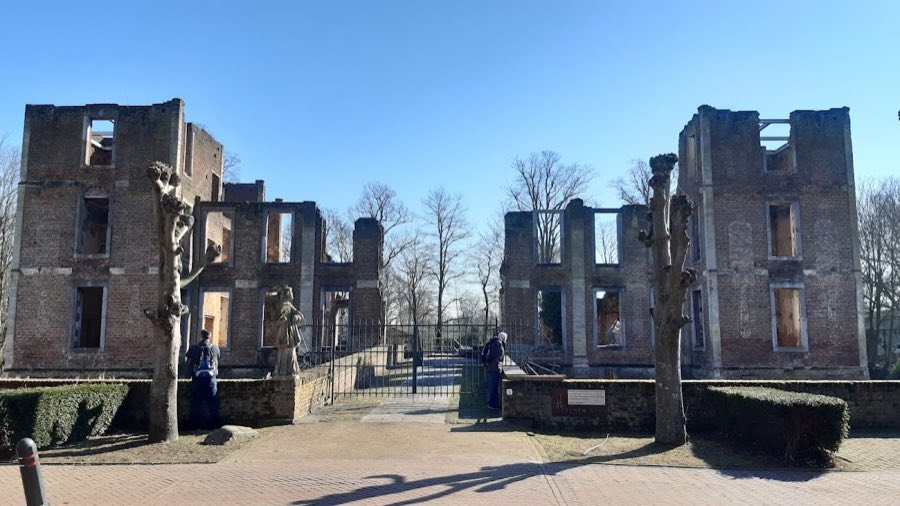
Castle Born
Netherlands
PalaceRuin14th century
No. 16215
Castle · Belgium
No. 16215 · 51.091 N, 5.593 E
Quick summary
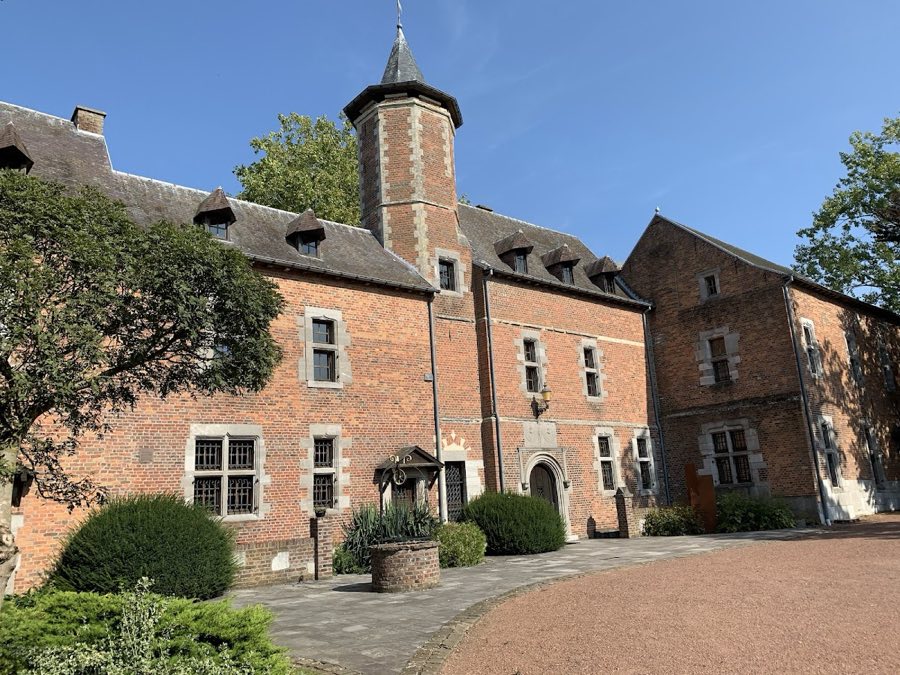
Commanderij van Gruitrode is a castle in Belgium with origins associated with the 16th century.
See all castles in BelgiumThe Commanderij van Gruitrode in Gruitrode, Belgium, is a medieval commandery strongly shaped by the Teutonic Order, with standing buildings dating from the late 15th to the mid-16th century in the Maasland Renaissance style. From the later Middle Ages onward the complex served an administrative and logistical role within the Order’s regional network, forming one of twelve commanderies in the bailiwick of Biesen and acting as a staged stop on the route toward the Imperial Lordship of Gemert and the vicinity of ‘s-Hertogenbosch. Its long occupation, economic activity and connections to higher command at Alden Biesen made it an important local institution.
A fortified residence stood here already in the period of the County of Loon, known as the Roeterhof. In 1346 Diederik of Heinsberg, Count of Loon, granted the house, court and village of Gruitrode as a fief to Walram of Jülich, bishop within the Archbishopric of Cologne. The site passed into the hands of the Teutonic Order in the early 15th century when the land commander of Alden Biesen acquired the estate in 1416; within a decade the commander commissioned the parish church at Gruitrode, completed in 1424, and feudal obligations on the domain were removed in 1432.
Fighting between local noble houses destroyed the buildings in 1485. Rebuilding followed, and the ensemble that largely survives today was erected in phases between 1485 and 1568 in the regional Renaissance manner known as Maasland Renaissance. In 1568 the Eighty Years’ War began; during the fighting of that wider conflict William of Orange attempted a crossing of the Meuse at Stokkem and failed, and princely forces subsequently withdrew along the Geuzenbaan, avoiding clash with the Teutonic Knights stationed at Gruitrode.
The Teutonic Order retained ownership through the early modern period, enlarging the estate and operating economic facilities on the grounds, including a mint and a brewery. Napoleonic reforms ended the Order’s privileges: in 1801 religious possessions were abolished and the commandery was sold into private hands. Article 4 of the Treaty of Schönbrunn in 1809 transferred former possessions of the Order to existing principalities and ended the Order’s exemption.
After 1801 the property passed through private ownership several times. It was sold that year to Robert de Selys-Fanson and soon after to the Starre-Pullinckx brewing family of Maastricht. Around 1850 the De Naveaux family acquired the estate and kept it until 1949. Following World War II the farm portion went to the Lipkens family while the castle itself changed owners several times: Jean Kristus, then in 1966 Dr. Berghs purchased the castle and carried out initial restorations. In 1988 ownership passed to a buyer from the Netherlands and later, until 1995, the property underwent a renovation that did not fully adhere to the historic whole. From 2003 the estate again changed hands, with the Van Megchelen family taking the castle portion and the Beckx family buying the quadrangular farm.
Conservation work on the protected quadrangular farm began in 2006 and the tithe barn was completely renewed in 2010. Local heritage authorities were involved in preparing restoration dossiers because the complex is a protected monument. In August 2012 the Van Megchelen family transferred the commandery to the municipality of Meeuwen-Gruitrode, which initially acquired the castle under a 100-year leasehold to use the site as a reception gateway to the Duinengordel nature area. At the end of June 2015 the municipality purchased the castle and grounds outright for €10,000, formalizing its role as an access point for the Duinengordel and as one of the gates to Hoge Kempen National Park. In February 2024 funding of roughly €12 million was announced for a comprehensive restoration and redevelopment plan that envisions a reception within the restored farm, multifunctional rooms and catering, a 350-person multipurpose hall with catering behind the farm, reworked garden and parkland, and a new access road with paths for cyclists and pedestrians.
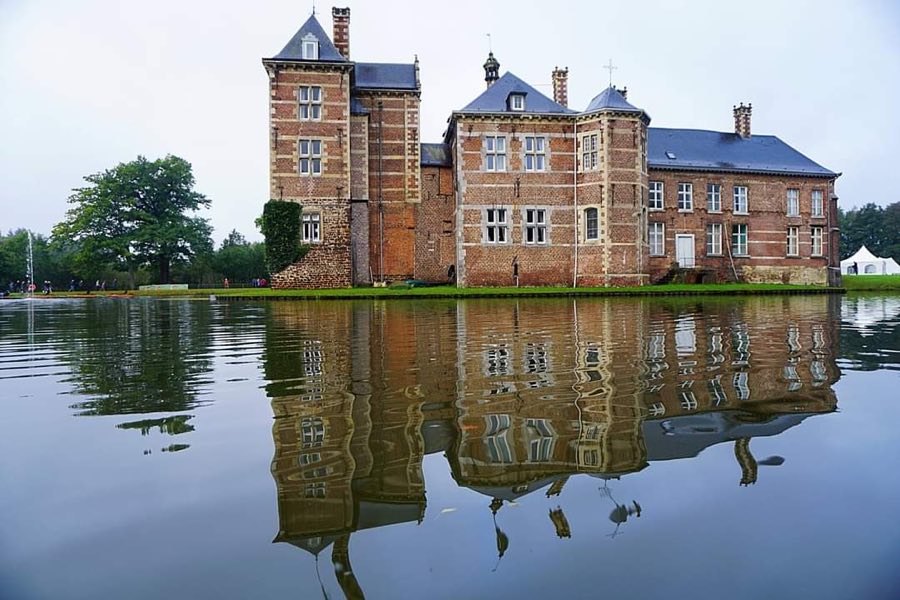
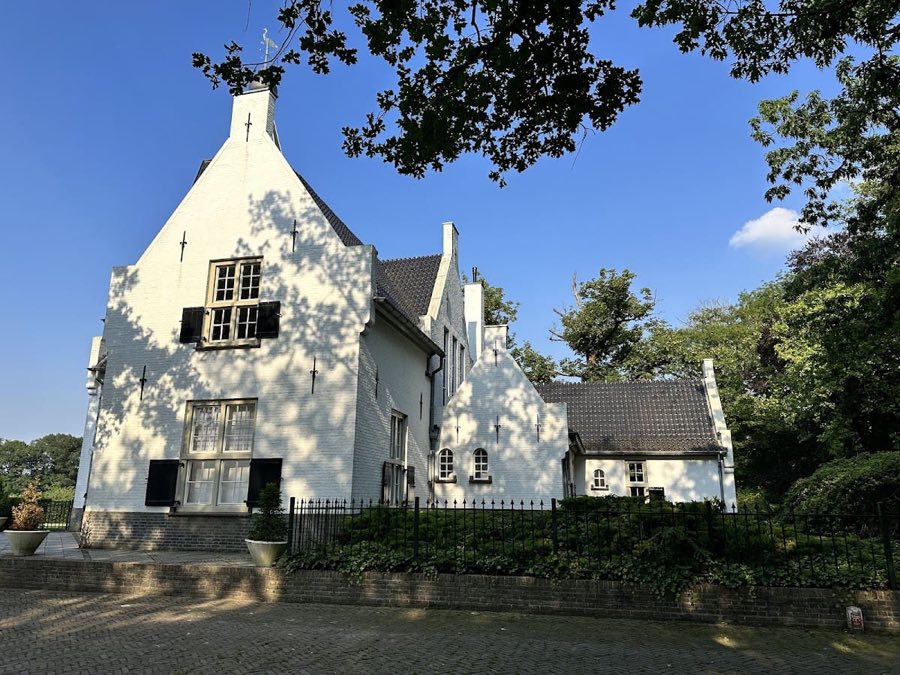
The complex is laid out as a moated castle with an adjoining square farm clustered around a central courtyard. The castle is a water castle (castle surrounded by water), its moats fed by the Itterbeek stream, and the farm is a quadrangular farm (square farm with buildings around a courtyard). The castle and farm stand as two distinct elements separated by water and terrain, reflecting the combined residential, agricultural and administrative functions of a medieval commandery.
Beneath the inner courtyard of the existing castle lie the soil traces of the earlier Roeterhof, the medieval house that preceded later construction. The present standing range dates from the rebuilding phase between 1485 and 1568 and exhibits the regional Maasland Renaissance character that was applied across the complex during that period. A parish church constructed in 1424 on the estate remains part of the historic ensemble and marks the commandery’s ecclesiastical function in the 15th century.
Economic and service buildings are clearly identified across the site. The estate historically contained a mint and a brewery located within the grounds; a brewery building, stables and the entrance gate are recorded as key components to be attended in conservation. Above the main portal a blazon (coat of arms) survives, and the southeast side of the complex is recorded as the old principal access. The tithe barn (barn for collecting church tithes in kind) was completely rebuilt in 2010 and stands as a renewed element adjacent to the square farm.
The protected quadrangular farm has been under maintenance since 2006 and is officially designated as a monument. The castle received restoration work beginning in the 1960s and later underwent a renovation campaign through the 1990s; those interventions altered parts of the historic fabric. Current planning envisions work to restore the farm for a reception function, to create multifunctional spaces and catering facilities, and to erect a 350-person multipurpose hall behind the farm, together with a redesigned garden and a new access road with pedestrian and bicycle paths. These planned interventions are intended to address the ensemble’s surviving buildings and their surrounding parkland.
No. 68599
No. 82017
No. 77697
No. 18189
Comments
Comments for Commanderij van Gruitrode will require a verified account before posting.
We'll send a verification link before your first comment is published.