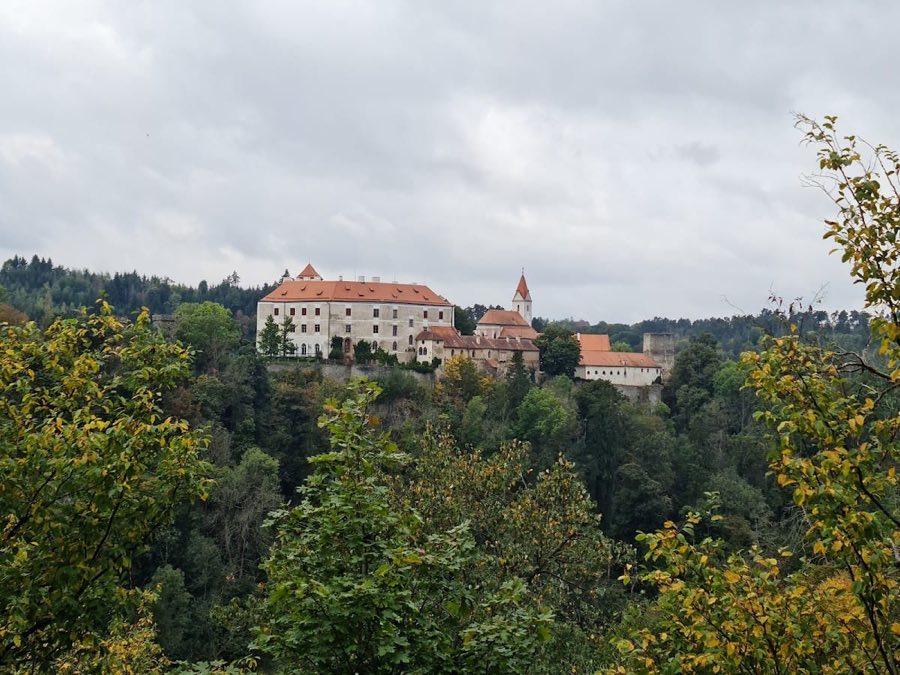
No. 26010
Bítov Castle
Czechia
CastleRestored11th century
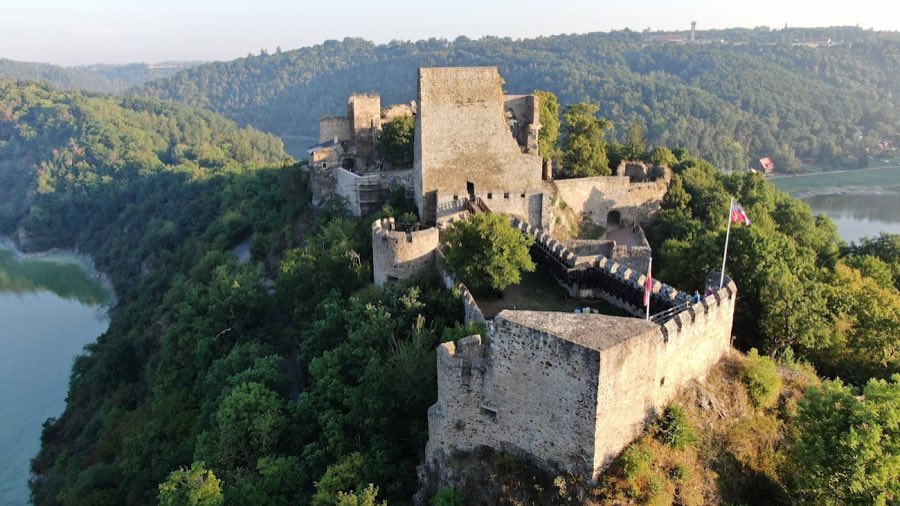
No. 86732
Castle · Czechia
No. 86732 · 48.934 N, 15.716 E
Quick summary
Cornštejn Castle is a castle in Czechia with origins associated with the 14th century.
See all castles in CzechiaCornštejn Castle stands near Bítov in the Czech Republic, and it was erected by the Lichtenburg noble family in the early fourteenth century.
The land on which the castle sits had been handled as royal demesne and was pawned or granted to the Lichtenburgs in 1308. Raimund of Lichtenburg built the fortification in the first half of the 1300s on land subordinate to Bítov Castle, and construction proceeded with the consent of King John of Luxembourg. The site first appears in a written instrument dated 31 May 1343, which records Raimund’s sons Smil and Czenek dividing their father’s holdings and names the place as Czornstein (later Zornstein, Cornštejn). By 1348 Heinrich of Lichtenburg is recorded in possession.
Through the later fourteenth and into the fifteenth century the castle’s role and size grew. In the last decades of the 1300s an outer forewall was added to create an upper bailey. In the first third of the fifteenth century a new palace was built and a lower ward was established to house barracks and support buildings; at that time a new ring of curtain walls, two gates and two bastions enclosed the expanded area. Cornštejn was attacked by Hussite forces in 1422; after that siege a detached outwork was constructed on the strategic hill to the south.
Political and military turmoil in the mid-fifteenth century brought decisive change. In 1463 Hynek refused to render allegiance and King George of Bohemia laid siege to the castle in 1464. The siege lasted eleven months, after which the king confiscated the property and granted it to Wolfgang (or Heinrich) Kraiger (Kraigk). Wolfgang repaired and modernised the fortress, and his sons added further fortifications suited to artillery warfare and built an advanced fort on a rocky platform south of the main site.
The castle returned to the Lichtenburg family after 1526. In 1542 the Moravian Estates ordered repairs and strengthening of the defenses and a tower was erected on a hill southwest of the castle to improve its outlook. The Lichtenburg male line ended in 1576 and the property passed to the Streuns of Schwarzenau, who abandoned it; thereafter Cornštejn fell into ruin during the late sixteenth century. Ownership later passed to Jankovský of Vlašim in 1617 and to the Counts von Daun in 1788, followed by several private owners in the early twentieth century, including members of the Haugwitz, Zamoyský and Radziwill families. Georg Haas von Hasenfels purchased the site in 1912. After 1945 the estate was confiscated under Edvard Beneš’ decree and nationalised.
During the twentieth century efforts were made to secure and partly rebuild the ruin. Stabilising work and partial reconstruction took place in the 1970s, and since 1987 the South Moravian Museum in Znojmo has been responsible for the site; the ruins were stabilised and made accessible in the late 1990s.
Cornštejn occupies a high rocky promontory above a large meander of the Dyje (Thaya) River, giving the complex a compact, vertical plan that centers on a courtyard and the main palace protected by a high enclosing wall and a tall shield-wall. The original configuration dates to the first half of the fourteenth century and was extended in later medieval phases to create multiple defensive rings and terraces following the line of the rock.
A forewall added in the later fourteenth century formed what is called the upper bailey, providing a first line of defense below the main residence. In the early fifteenth century a lower ward was laid out on a lower terrace to accommodate barracks and service buildings; this enlargement was encircled by a new circuit of curtain walls that incorporated two gates and two bastions. These elements are associated with the castle’s growth into a multi-ward stronghold during the medieval period.
The site includes several outworks built after episodes of siege warfare. Following the 1422 attack a detached fortification was raised on the hill to the south to cover approaches, and in the late fifteenth century the Kraiger family added an advanced fort on a rocky platform below the main enclosure that reflects adaptations for artillery. In 1542 a tower was erected on a hill to the southwest at the direction of the Moravian Estates as part of a campaign to reinforce the position.
Today the castle survives as a ruin with visible structural traces. Visitors can see remains of gateways, cellar rooms and two wells, all preserved in situ as fragmentary masonry. Conservation work in the 1970s stabilised large portions of the ruin and early-1970s reconstruction restored significant sections; subsequent securing and maintenance have kept the principal ruins in place. The arrangement of baileys, the palace footprint and the successive outerworks are still readable in the standing fabric and in the ruined terraces that follow the rocky site.
No. 26010
No. 11214
No. 64104
No. 28179
Comments
Comments for Cornštejn Castle will require a verified account before posting.
We'll send a verification link before your first comment is published.