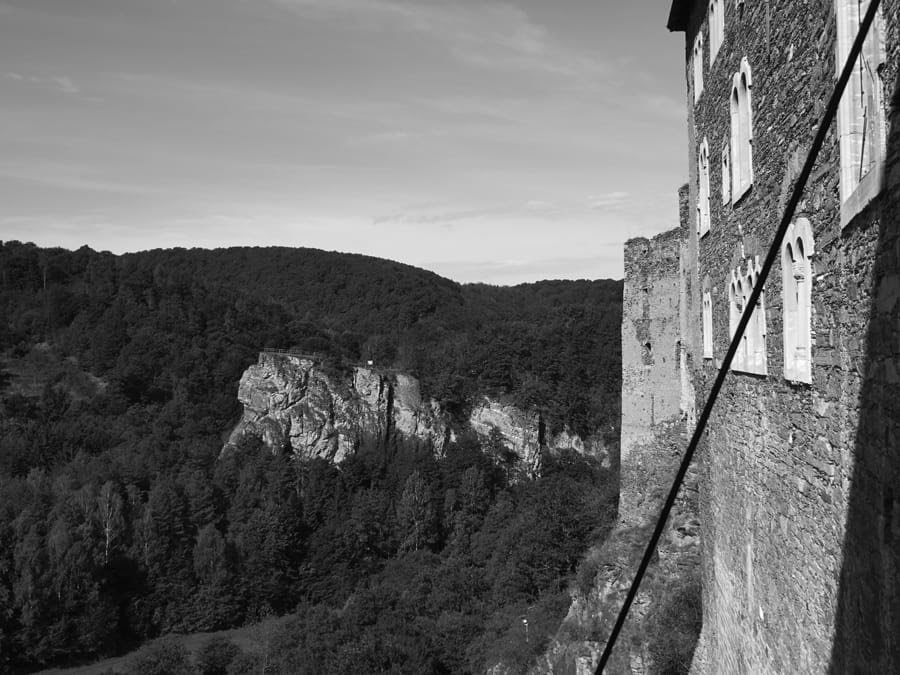
No. 19710
Hardegg Castle
Austria
CastleRuin13th century
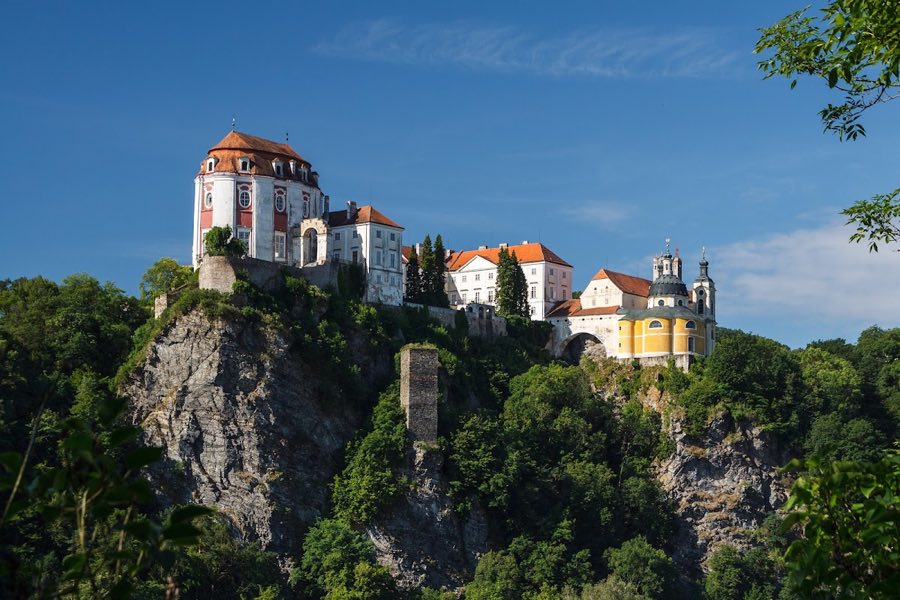
No. 64104
Castle · Czechia
No. 64104 · 48.893 N, 15.812 E
Quick summary
Vranov nad Dyjí Castle is a castle in Czechia with origins associated with the 19th century.
See all castles in CzechiaVranov nad Dyjí Castle in Vranov nad Dyjí, Czechia, was founded by the Dukes of Bohemia and first appears in the Chronica Boemorum by Cosmas of Prague in 1100 as a border guard fortress; it began as a medieval royal residence and was substantially remade in the Baroque period. Built to protect the southern edge of Moravia from raids across the neighbouring Austrian March, the site served both defensive and residential functions and became an important royal stronghold in the medieval frontier landscape.
From its first mention until 1323 the castle remained in royal possession; that year King John of Bohemia used the estate as collateral and handed it to his viceroy Jindřich (Heinrich) of Lipá. Control shifted again in 1421 when the Lichtenburg family took the place, and in 1499 King Vladislaus II of Bohemia and Hungary granted Vranov to them as hereditary property, a status they maintained until 1516. During the 1500s ownership changed frequently among regional noble houses, including the families of Boskovice, Pernštejn, Lomnice, the Kraigers of Krajk and the Dietrichstein line.
Wolf Dietrich of Althann acquired the estate in 1614, but his lands were confiscated after he joined the Estates’ uprising, the rebellion of the Bohemian Estates, and the castle passed into the hands of General Johann Ernst of Scherfenberg. Large-scale rebuilding began under Althann family patrons from the 1660s onward. Michael Johann II Althann regained the estate in 1680 and directed an ambitious Baroque programme that reshaped the old fortress into a princely residence.
Between 1687 and 1695 the family commissioned an oval ancestor hall, an elaborate dome and a sculptural scheme that celebrated the Althann lineage; the hall’s sculpture and cupola painting were produced by leading Baroque artists of the time. Fischer von Erlach, the noted architect, drew up designs for this ancestor hall and also the adjoining chapel of the Holy Trinity, which was built around 1699–1700 and incorporated a family vault. Further Baroque construction after 1722 produced a three-wing palace and a decorated honor court, carried out at the initiative of Maria Anna, née Pignatelli, and presented in the period of Emperor Charles VI.
In the late 1700s Michael Josef von Althann enriched interiors and added an elevated terrace with triumphal arches, but heavy debts led to bankruptcy in 1793 and sale of the estate. Johann Hilgartner von Lilienborn then transformed the grounds, installing a landscaped park with artificial grottos, statues, water features and purpose-built stables and coach houses. Around the turn of the 19th century Count Stanisław Mniszech owned the property, and it later passed by inheritance to the Stadnicki family. During the Protectorate of Bohemia and Moravia (the Nazi German administration) the estate of Adam Stadnicki was confiscated and sold to the German Baron Gebhard von der Wense; after World War II the baron’s ownership was ended and the castle became state property.
Following the war, state authorities began systematic research, conservation and restoration. Vranov was included among a group of South Moravian castles targeted for repair and underwent major campaigns, including a large project in the 1970s. The restored rooms display the cupola painting and large ancestor sculptures completed in the Baroque period, and later interior fittings from the 18th and 19th centuries remain in place.
The complex stands on a narrow rocky promontory above the Thaya/Dyje river, and the shape of the rock dictated the orientation and form of later palace additions. The main Baroque palace built in the late 17th and early 18th centuries occupies an elongated plot with a P-shaped arrangement so the honor court faces the town. This palace ensemble sits directly on bedrock and was integrated with the older castle fabric during remodelling; the courtyard retains Baroque sculptural decoration and interior rooms preserve fittings from the 18th and 19th centuries.
The Hall of the Ancestors (Ahnensaal) is an oval, domed chamber created between 1687 and 1695 as a commemorative space for the family. Large carved figures stand in wall niches and serve as ancestor portraits, and the dome carries an allegorical painted program. The hall survives as a restored showpiece of the Baroque transformation and displays those monumental sculptures and the cupola painting in situ.
The Chapel of the Holy Trinity occupies the summit of a separate rock reached by a narrow path from the approach. Constructed around 1699–1700, the chapel has a central dome and two lateral towers and contains the Althann family vault. Rich interior decoration characterizes the chapel, and it remains a distinct, elevated element of the site that projects above the palace mass.
Surviving elements of the earlier Gothic fortress are visible in the castle’s silhouette, including preserved towers and the main keep, also called the donjon (keep, main defensive tower). Conservation work has stabilized old defensive walls and the foundations of an additional tower near the access bridge, and restorations have rebuilt parts of the old corps of buildings to reconnect the medieval line with later Baroque additions. A three-wing palace added after 1722 stands beside a terrace with triumphal arches that are ornamented with busts of Socrates and Athena. In front of the entrance the late 18th and early 19th century park and forecourt feature artificial grottos, statuary, engineered watercourses and purpose-built stables and coach houses, all forming an ensemble of garden and service structures associated with the landscaped period of Johann Hilgartner von Lilienborn. The site today preserves a mix of restored and fragmentary fabric, with key rooms and sculptural programs accessible as part of the castle’s museum displays of fresco painting, major sculptures and a collection of nineteenth-century local ceramics.
No. 19710

No. 53963
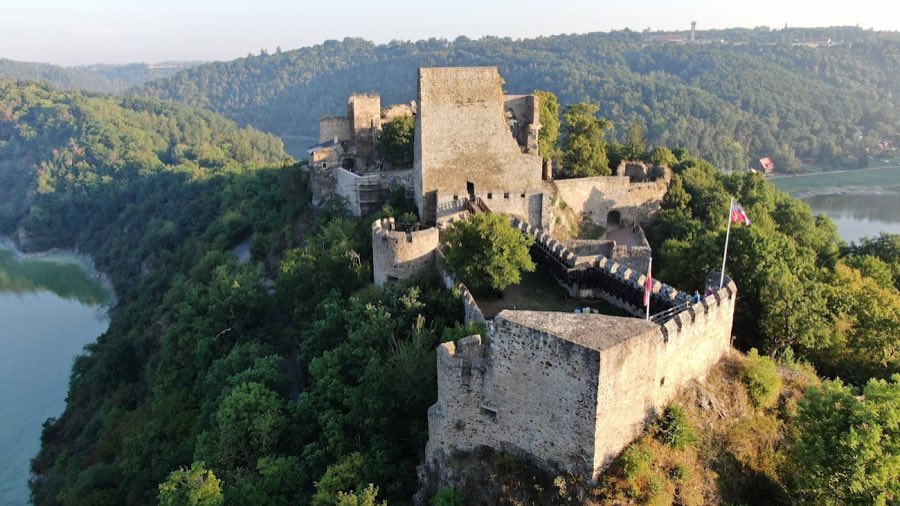
No. 86732
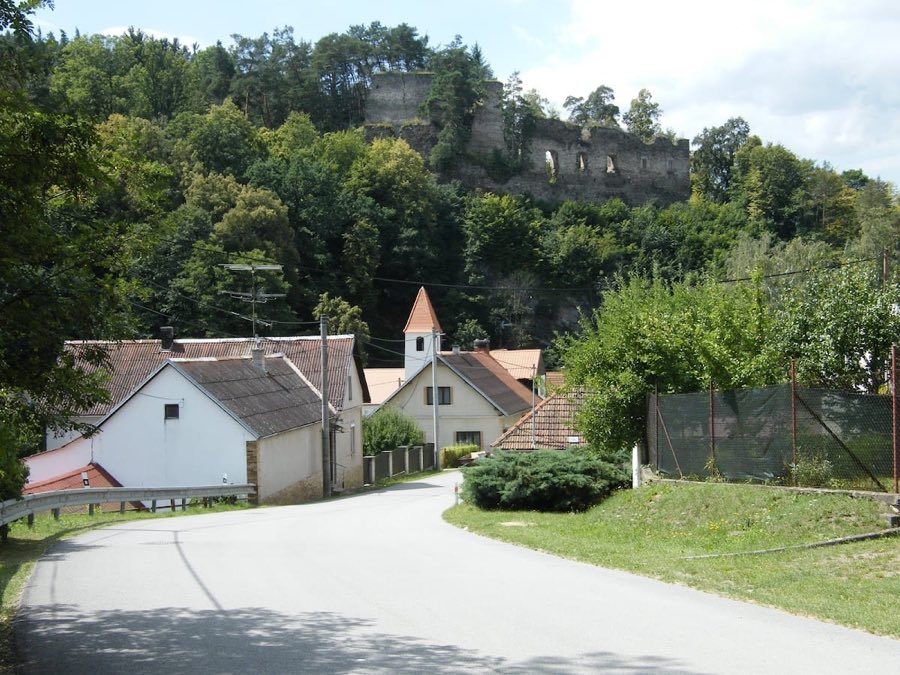
No. 11214
Comments
Comments for Vranov nad Dyjí Castle will require a verified account before posting.
We'll send a verification link before your first comment is published.