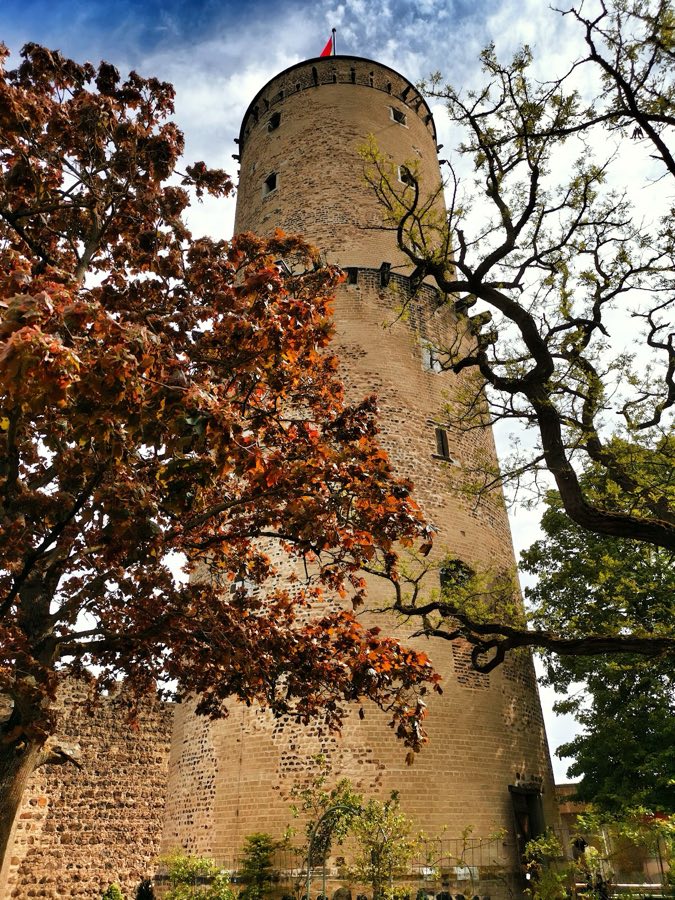
No. 18658
Godesburg
Germany
CastleRuinFor rent19th century
No. 35335
Castle · Germany
No. 35335 · 50.737 N, 7.049 E
Quick summary
Dransdorfer Burg is a castle in Germany with origins associated with the 12th century.
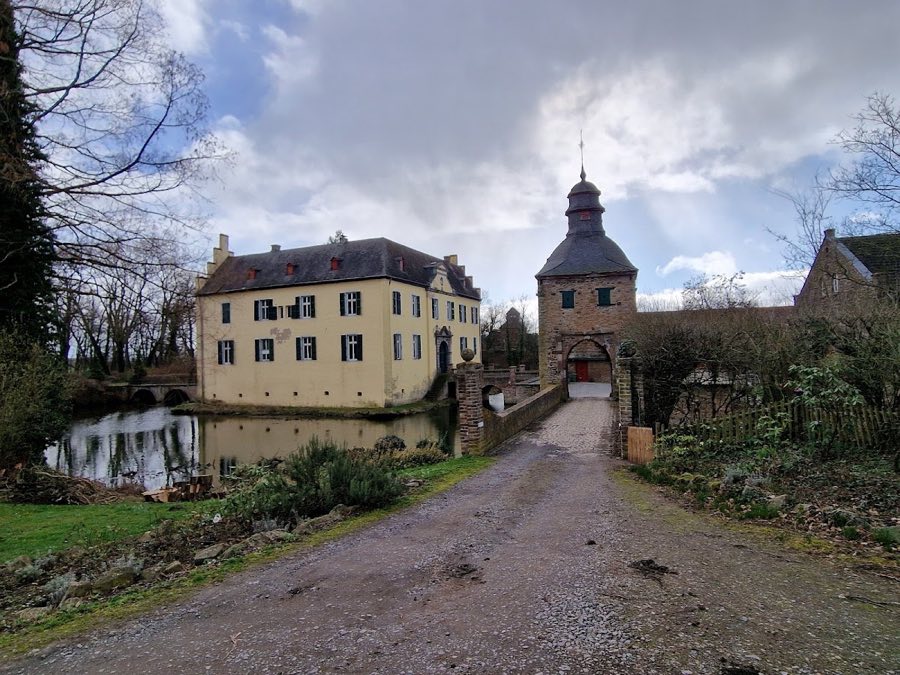
See all castles in GermanyDransdorfer Burg is a historic knight’s residence located in Bonn, Germany. The site’s origins trace back to the early 12th century and are connected to the medieval Holy Roman Empire’s local nobility.
The earliest known structure on this site likely dates to around 1139 and is associated with Cuno von Travinstorp, an official working for the Archbishopric of Cologne (known as Kurköln). This suggests the castle began as a fortified dwelling serving administrative or military functions under ecclesiastical authority. By 1224, records mention a knight named Lambertus de Draynstorp, confirming the location’s continued use as a noble residence and indicating the place name’s evolution into Dransdorf.
Ownership shifted several times in the following centuries. In 1482, Albrecht von Zweiffel, a nobleman, possessed the castle, and by 1664 the von Lyskirchen family had taken control. Alongside its role as a residence, the castle grounds included a small religious building, with the Antonius chapel first recorded in 1575. This chapel served spiritual needs related to the site and its inhabitants.
The late 17th century brought conflict when French troops burned the castle during the War of the Palatine Succession in 1695. Afterward, the structure was damaged again, likely by lightning, leading to a fire that necessitated rebuilding. In 1742, Franz von Groote oversaw a reconstruction of the castle using brick, giving it a new hipped roof design. The von Groote family retained ownership until 1860, after which the property passed to the Cologne Gymnasial- und Stiftungsfonds, an organization that leased the estate.
In the 20th century, the city of Bonn acquired the castle and its surrounding 400 acres in 1954. Following renovation efforts, the building found new use as a branch of the municipal music school starting on September 27, 1973. Both the castle and its Antonius chapel are officially protected monuments, reflecting their historical and cultural importance in the region.
The current Dransdorfer Burg building represents the third known construction on the site, rebuilt in the mid-18th century after earlier versions were destroyed by fire and war. Its main construction utilizes brick, a common durable material of the time, replacing earlier wooden or stone elements that were vulnerable to damage. The castle is distinguished by a hipped roof, characterized by slopes on all sides meeting at the roof’s peak, a feature added during the 1742 reconstruction.
Included within the property is a small chapel dedicated to Saint Antonius, referred to as the Antoniuskapelle. This chapel occupies about 30 square meters and was first documented in the late 16th century. Its humble size and proximity to the residence indicate its role as a private place of worship affiliated directly with the castle’s occupants.
The castle lies near the center of the Dransdorf district, situated just off Siemensstraße, close to notable neighbors such as the Kettelerschule and across from the St. Antonius church. Despite its age, the structure’s preservation has allowed it to continue in use, notably housing educational activities. The combined castle and chapel stand today as a protected heritage site, with maintenance ensuring their appearance and integrity are conserved while supporting functional adaptation.
No. 18658
No. 77821
No. 76371
No. 36556
Comments
Comments for Dransdorfer Burg will require a verified account before posting.
We'll send a verification link before your first comment is published.