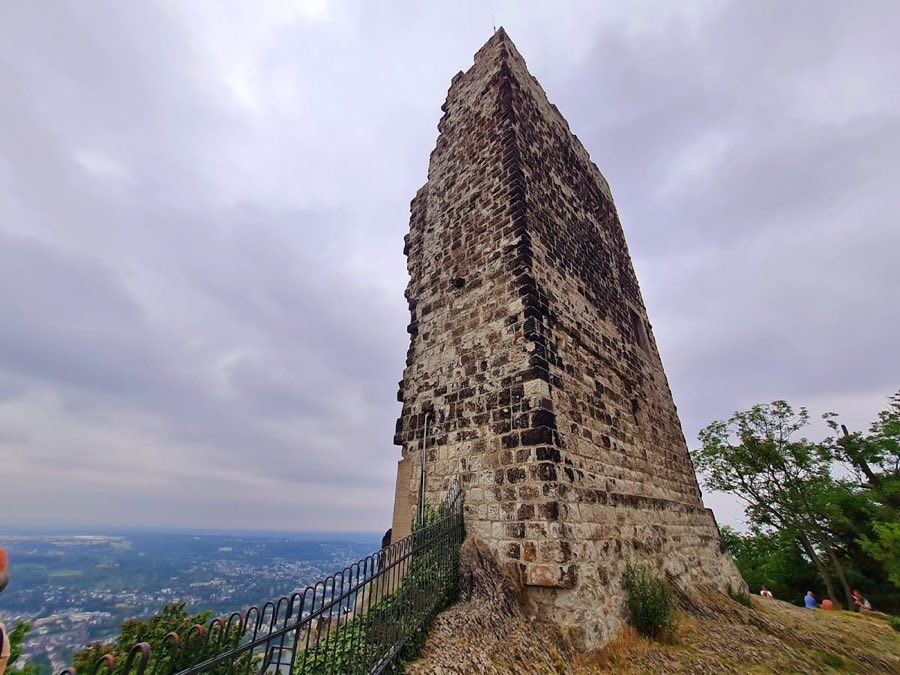
No. 76371
Burg Drachenfels
Germany
CastleRuin12th century
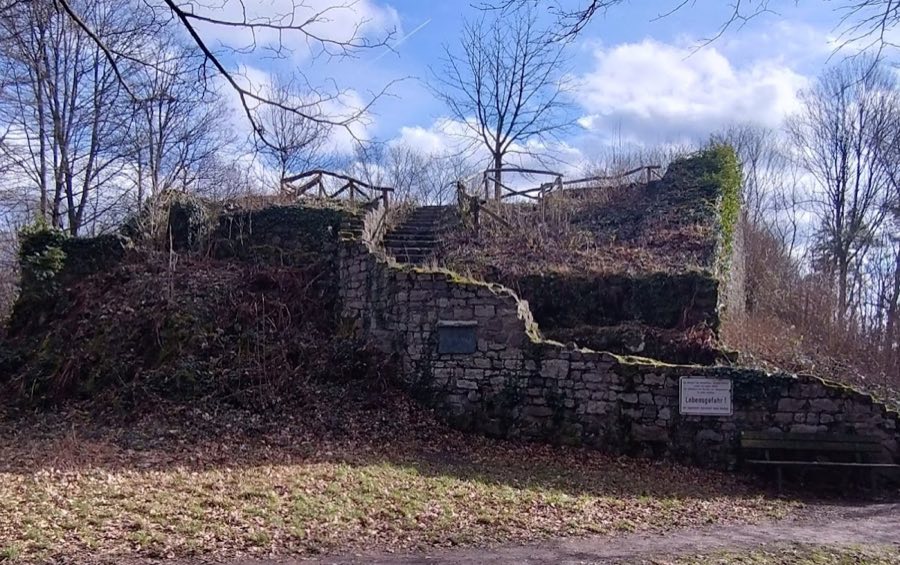
No. 36556
Castle · Germany
No. 36556 · 50.684 N, 7.230 E
For rent
Burgruine Rosenau is marked for bookable castle accommodation. Nightly pricing, sleeps count, stay rules, and amenities are displayed only when public operator data is available.
Rental type: Hotel / bookable stay, Short-stay rental
Short-term availability: Bookable accommodation signal
Quick summary
Burgruine Rosenau is a castle in Germany with origins associated with the 13th century.
See all castles in GermanyBurgruine Rosenau stands in Königswinter, Germany; the identity of its builders is unknown, although the site probably belonged to the Archbishopric of Cologne and fit within that territory’s system of castles.
The place appears in writing on 27 February 1222, when it was called Rosenau and its owner was Dietrich von Dorndorf. After that entry he took the name Dietrich von Rosenau. In November 1243 Dietrich’s widow, Agnes, sold the property to the monastery of Heisterbach, and the sale contract granted the buyer the explicit right to destroy the castle, a provision noted in the record as highly unusual. A later agreement was drawn up in 1249 after a daughter‑in‑law raised an objection to the 1243 transfer.
Around 1250 the monastery carried out the destruction of the fortress, and the stones from the demolished walls were probably reused in building work at the monastery. For centuries the ruined site remained part of the landscape without the medieval structure standing intact.
By 1885 a small settlement called Rosenau lay close to the ruin, with twenty residents in three buildings. Between 1896 and 1898 the landowner Anselm Bachem erected a hotel on the site. Materials for that project were delivered by a temporary rail siding from the Heisterbacher valley railway laid in May 1896, the shell of the hotel was finished by late November 1896, and the hotel finally opened on 4 May 1898 after a collapse of the west façade delayed the inauguration. Work to improve access followed: an old cart track was upgraded and opened as a road on 1 April 1899, and in 1933 a motor road from Heisterbacherrott to Rosenau was constructed as a public employment measure.
In 1902 excavation during path improvement and the building of a pavilion revealed sections of ancient walls described at the time as forming an elongated rectangle roughly 18 by 30 metres. The hotel suffered heavy damage from explosive bombs on 4 February 1944, and the structure was taken down in 1953 by its then owner, IG Bergbau und Energie. The surviving medieval masonry on the hill was stabilised in 1990 and 1991 with support from IG Bergbau und Energie, the state of North Rhine‑Westphalia, and the city of Königswinter.
The medieval enclosure occupies a raised, partly artificial plateau on the Berg Rosenau and presents as an elongated plan. Observations made during early twentieth‑century works noted masonry traces forming a roughly rectangular area about 18 metres wide and 30 metres long, a layout that has guided later understanding of the site’s footprint.
The most substantial surviving element is a ring wall on the southern side of the plateau, standing up to six metres high in places. That wall is built of local trachyte, a volcanic rock, and rises from the edge of the man‑made terrace. The masonry survives as fragmentary lengths of the circuit and shows the use of durable stone for the enclosure.
Evidence recorded in the medieval and later documentary record indicates that stone from the demolished castle was taken for use at the nearby monastery of Heisterbach, so portions of the original fabric were removed and incorporated elsewhere after the mid‑thirteenth century. The nineteenth‑century hotel and its associated works also altered the site; the hotel occupied the area between 1896 and 1898, suffered wartime destruction in 1944, and was demolished in 1953, leaving the medieval masonry exposed in places.
Today the remnants of the ring wall and related foundations are treated as a ruin and were stabilised during conservation work in 1990 and 1991. The standing trachyte wall segments remain in situ and present the best surviving evidence for the castle’s former enclosure.
No. 76371
No. 18658
No. 35335
No. 48429
Comments
Comments for Burgruine Rosenau will require a verified account before posting.
We'll send a verification link before your first comment is published.