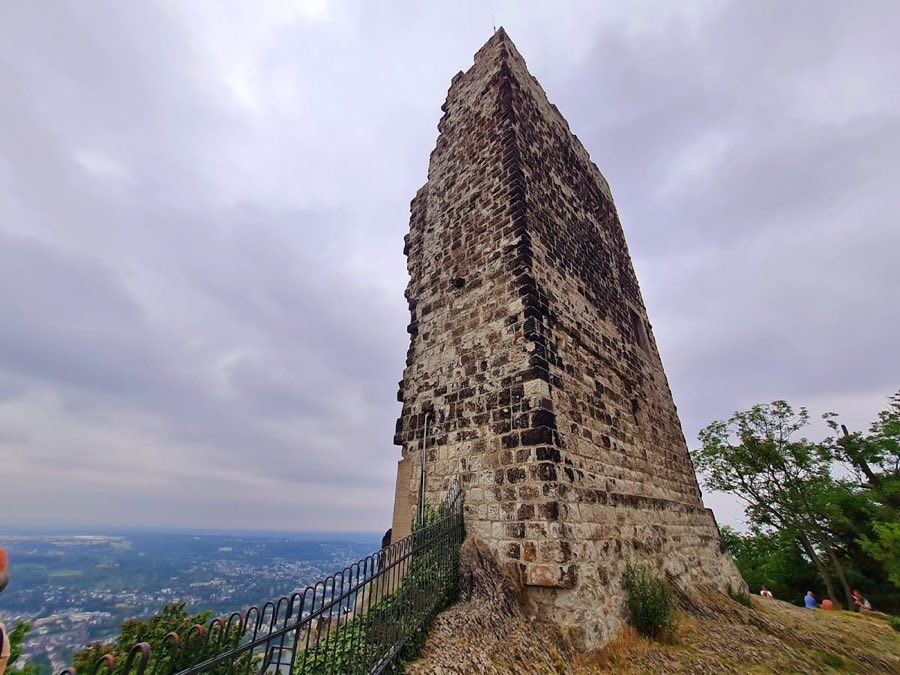
No. 76371
Burg Drachenfels
Germany
CastleRuin12th century
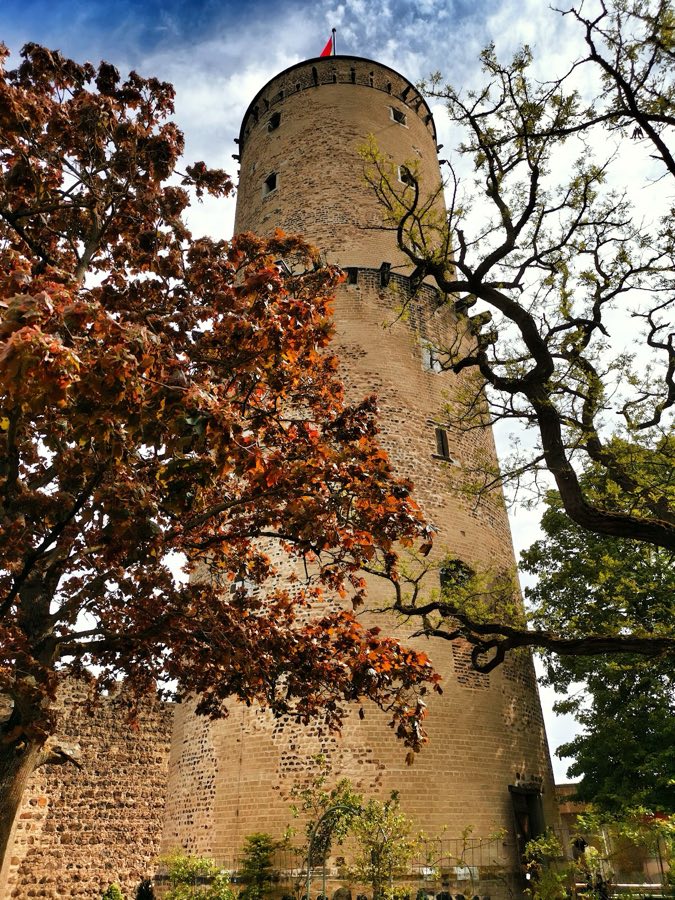
No. 18658
Castle · Germany
No. 18658 · 50.685 N, 7.151 E
For rent
Godesburg is marked for bookable castle accommodation. Nightly pricing, sleeps count, stay rules, and amenities are displayed only when public operator data is available.
Rental type: Hotel / bookable stay, Short-stay rental
Short-term availability: Bookable accommodation signal
Quick summary
Godesburg is a castle in Germany with origins associated with the 19th century.
See all castles in GermanyGodesburg occupies a prominent hill above Bonn and was probably first used by the Franks as a refuge stronghold. The hill was recorded in 722 as Woudensberg or Wotansberg, linked to the god Ubic and indicating a long history of ritual use. A Roman votive stone dated to about 200 CE and dedicated to Aesculapius and Hygia was found on the site in 1583; a replica has stood in the courtyard since 1981.
On 15 October 1210 Archbishop Dietrich I of Hengebach laid the fortress foundation stone; construction continued after his death in 1224 and successive archbishops extended the work. In 1244 Archbishop Konrad von Hochstaden added the first five storeys of the principal keep, and later Archbishop Walram of Jülich raised the tower to its recorded height of 32 metres and ordered an outer bailey. Subsequent archbishops strengthened walls, enlarged moats and added a curtain wall.
During the Cologne War the Godesburg was besieged in 1583 by forces supporting the new Elector Ernst of Bavaria. Attackers blew a breach and brought the fortress under their control on 17 December 1583 after a mercenary entered through the latrine; the explosion and fighting left the castle largely ruined.
In 1891 Emperor Wilhelm II transferred the ruin to Bonn municipality. In 1959 the wreck was rebuilt to plans by Gottfried Böhm to house a hotel and restaurant; the restaurant still operates and the former hotel was later converted into apartments. A World War II air-raid shelter lies beneath the site. The city carried out major restoration work, with the principal tower renovated in 2006 and sanitary work completed between 2012 and early 2014; the restored tower now contains a small information centre. The nearby burial ground by the Michaels chapel contains ornate 19th-century bourgeois graves, including those of Herbert Wehner, Paul Kemp and Aennchen Schumacher.
The ruin is a stone-built fortress with a central cylindrical keep and surrounding defensive enclosures. The masonry shows thick rounded walls and multiple phases of building and repair, reflecting medieval construction and later conservation; 20th-century restoration conserved much of the visible fabric while preserving a ruinous aspect.
The keep stands at about 122 metres above sea level and offers wide views over the Rhine valley. Built up during the 13th century and raised to 32 metres under Walram of Jülich, it was partly rebuilt in 1959 and has been the subject of restoration campaigns in 2006 and 2012–2014; it now houses a small information centre.
An outer bailey added under Walram and expanded by later archbishops includes curtain walls, enlarged moats and strong gates studded with iron. Inner areas once contained a small residence, dungeon chambers and a chapel, and the castle court is now reachable by an elevator. Material remains include an ancient altar stone incorporated into the fabric and the replica of the Roman votive stone in the courtyard; beneath the ruins a World War II air-raid shelter survives. The Michaels chapel burial ground preserves many richly designed 19th-century bourgeois graves and named interments that form part of the site’s later history.
No. 76371
No. 36556
No. 35335
No. 77821
Comments
Comments for Godesburg will require a verified account before posting.
We'll send a verification link before your first comment is published.