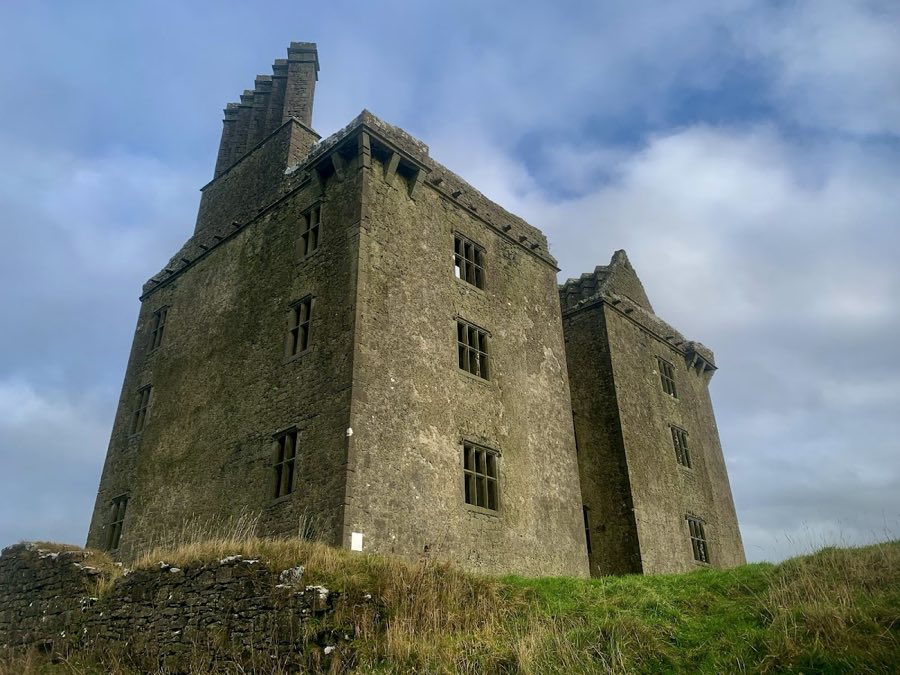
No. 30903
Glinsk Castle
Ireland
Tower houseRuin17th century
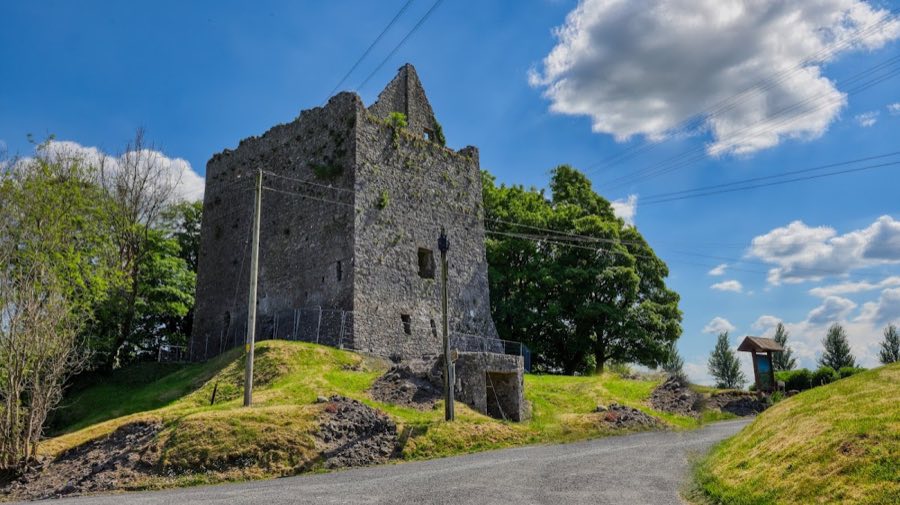
No. 82477
Castle · Ireland
No. 82477 · 53.624 N, 8.756 W
Quick summary
Dunmore Castle, Castlefarm is a castle in Castlefarm, Ireland with origins associated with the 13th century.
See all castles in IrelandDunmore Castle, Castlefarm in County Galway was erected by the Anglo-Norman de Bermingham family. Local tradition holds that the place-name derives from the Irish for “great hillfort” and that the site served as a subsidiary residence of the ancient Kings of Connacht, preserving a symbolic association with an earlier defensive location on the hill.
The first known fortification here was established in the early thirteenth century by the de Berminghams as a defensive stronghold against neighbouring Gaelic Irish groups. The castle saw repeated military action in the medieval period: it was attacked and set on fire by the Ó Conchubhair in 1249, besieged in 1284 by the Síol Maelruain under Fiachra O’Flynn, and damaged in 1315 when Rory O’Conor struck the place during the Bruce campaign in Ireland.
Most of the surviving fabric of the castle dates to the early fourteenth century, when the site functioned as a two-storey hall keep. In the sixteenth century the building was altered to add extra floors and domestic features, including roof gables, chimneys, new windows and a ground-level entrance to improve comfort and access.
During the Tudor period the de Bermingham family rebelled against Queen Elizabeth I. In 1569 Sir Henry Sidney, the Lord Deputy of Ireland, took the castle from the family, though it was later returned. In the mid-seventeenth century the fortress was seized permanently during the Cromwellian settlements and passed to the Ouseley family, whose descendants, including Gideon Ouseley, occupied the property into the nineteenth century. A lime kiln was added on the site in the nineteenth century, marking further reuse.
The principal surviving structure is a rectangular keep rising through five storeys, its base measuring roughly 14 by 8.2 metres and standing on a pronounced sloping plinth or base-batter. Archaeological evidence indicates that most of the keep dates to the early fourteenth century, while later alterations record the sixteenth-century insertions of extra floors and domestic fittings.
A garderobe projects from the northwest corner of the building and is archaeologically attested; this small projection served as a medieval privy and remains visible in the tower fabric. Openings in the walls show a variety of window types: a circular oculus, mullioned openings with vertical stone divisions, and narrow defensive slits once used for archery, reflecting both the original defensive design and later domestic adaptation.
Fragments of the surrounding curtain wall survive and convey the sense of a former enclosure, though much of the perimeter defences no longer stand. A nineteenth-century lime kiln occupies part of the site, and the monument lies about one kilometre northwest of Dunmore on the north bank of the Sinking River. It is protected as a national monument under the care of the Office of Public Works.
No. 30903
No. 76027
No. 35978
No. 57763
Comments
Comments for Dunmore Castle, Castlefarm will require a verified account before posting.
We'll send a verification link before your first comment is published.