No. 30903
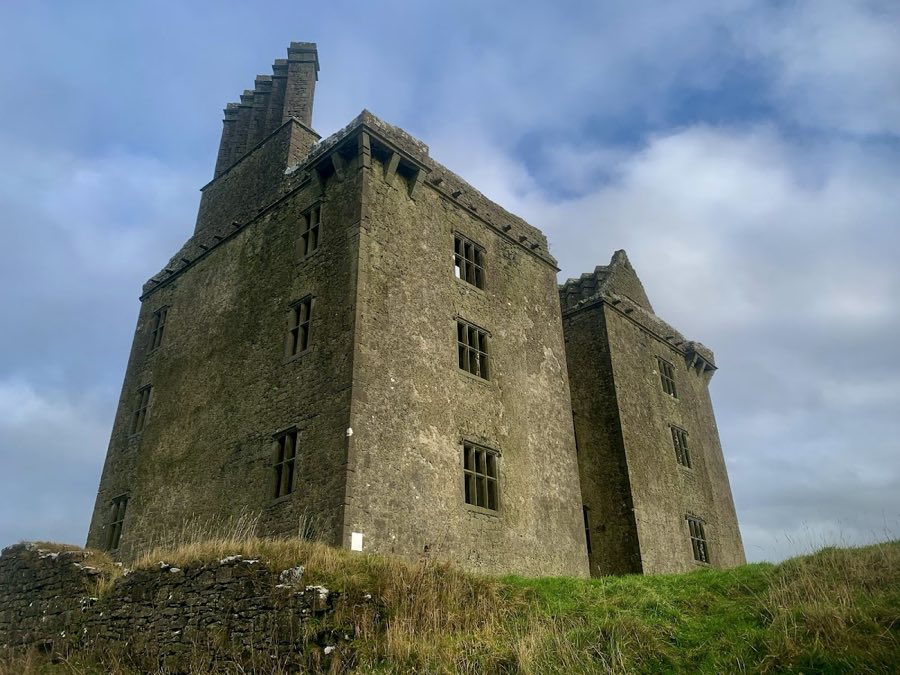
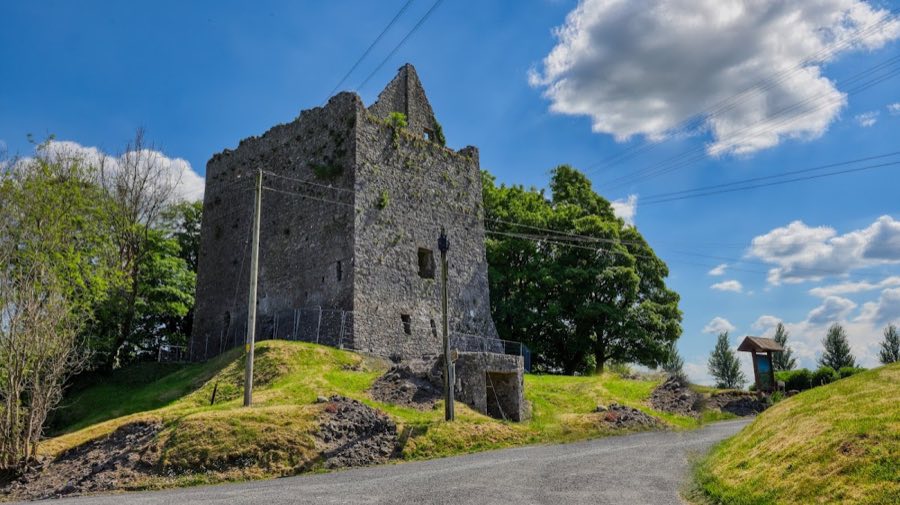
Glinsk Castle
Ireland
Tower houseRuin17th century
No. 76027
Castle · Ireland
No. 76027 · 53.632 N, 8.319 W
For events
Donamon Castle is marked as a château or castle venue lead. Capacity, indoor/outdoor spaces, catering rules, and accommodation options are published only after public verification.
Event types: Private events, Cultural gatherings, Filming and photography
Quick summary
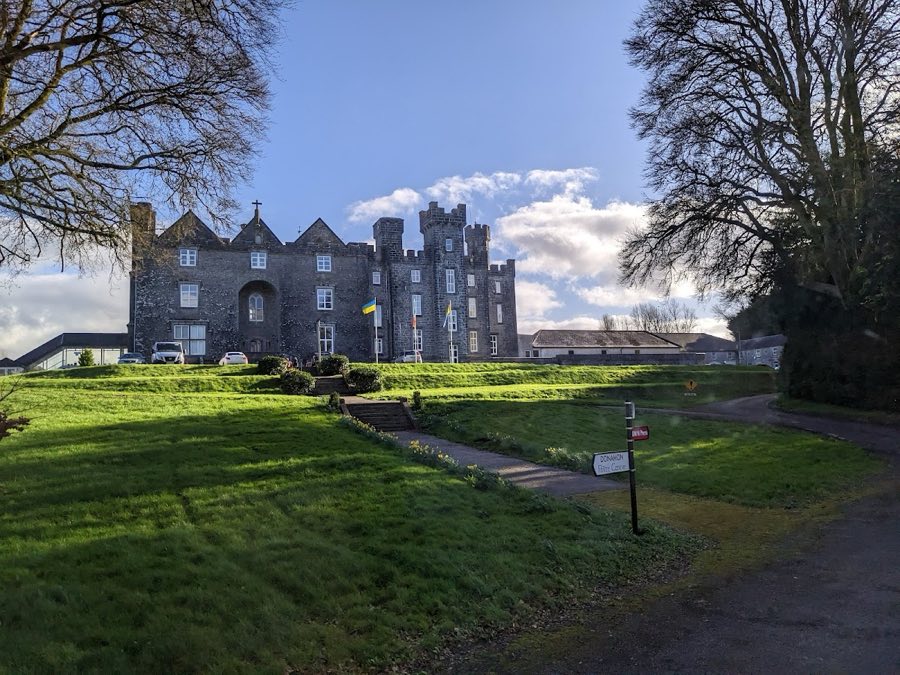
Donamon Castle is a castle in Ireland with origins associated with the 12th century.
See all castles in IrelandDonamon Castle, Castle, Donamon, Toberkeagh, Ireland, was established by early Irish Gaelic people.
An early fortified site occupied the hill here from antiquity and the place is recorded in Irish as Dún Iomáin or Dún Lomáin, meaning fort of Iomán or fort of Lomáin. The first surviving written reference to the site appears in the Annals of the Four Masters for the year 1154, and it served as the seat of the Ó Fionnachta chief of Clann Chonnmhaigh.
In 1232 Adam de Staunton, acting within the broader Norman advance in Connacht, fortified the site. The following year the O’Connors took the position back and demolished the fortifications. A later rebuilding is recorded in 1294 when a de Oddingseles occupied the castle; he died in 1295 and the property then passed to the de Birminghams. The O’Connors again destroyed the structure, a destruction recorded in a source for 1303.
In 1307 the Burkes, from the branch headed by the man known as MacDavid, supplanted the O’Connors and the MacDavid Burkes held Donamon Castle and its lands for roughly three centuries. In the 1600s a junior branch of the Caulfeild or Caulfield family came to own the castle and surrounding territory and the family retained ownership through the period of the Protestant Ascendancy. One account records that in 1656 Robert King Rickingham, an officer in Oliver Cromwell’s army, bought the castle, and that in 1668 the property was leased to Thomas Caulfeild, described in that account as Lord Kingston and as a son of the king of England.
In late 1932 an IRA unit under Seán McCool and Mick Price occupied Donamon Castle and used it as a training camp. In 1939 the Divine Word, or Steyler, Missionaries bought the property from the Irish Land Commission. The missionaries repaired the castle, erected several new buildings and developed a campus and training facility. The missionary society continued to own the castle; the associated campus and former student village were later managed as a national holiday centre by the Irish Wheelchair Association until its closure in 2019. One record states the centre reopened in 2022 to house Ukrainian refugees, while another describes the former student village as owned by a society for disabled people and used as a rehabilitation and holiday centre.
Donamon Castle occupies a raised hill above the River Suck near Williamstown (coordinates 53.63167, -8.31899). The site is consistently identified as a fortified hilltop, its name preserving the early function as a dún, or fort, associated in tradition with the personal names Iomán and Lomáin. The surviving landscape thus reflects a long history of occupation on an elevated position beside the river.
The medieval complex at the hill underwent repeated phases of construction and destruction during the 1200s and 1300s. In 1232 the site was strengthened by Adam de Staunton, then in 1233 it was retaken and pulled down by the O’Connors. A castle was rebuilt and recorded as occupied in 1294 by de Oddingseles; the structure passed to the de Birminghams and was again destroyed by the O’Connors in the early 14th century. From 1307 the MacDavid Burkes occupied and held the place for about three hundred years, a sequence of events that affected the fabric of the castle through cycles of repair, rebuilding and demolition.
In the 20th century the Divine Word Missionaries carried out repairs to the castle and added several purpose-built structures to create a campus and a student village. Those later buildings, and the repaired castle, were used as an institutional training and holiday complex, managed for a period by the Irish Wheelchair Association as a national holiday centre until 2019. The castle and its associated campus remained in the possession of the missionary society, and one record describes the former student village as in use as a rehabilitation and holiday centre for disabled people, while another record states that the centre was reopened in 2022 to provide accommodation for Ukrainian refugees. The main hilltop castle, repaired in the 20th century, survives as the core of this mixed medieval and modern complex.
No. 30903
No. 62449
No. 18339
No. 82477
Comments
Comments for Donamon Castle will require a verified account before posting.
We'll send a verification link before your first comment is published.