No. 35053
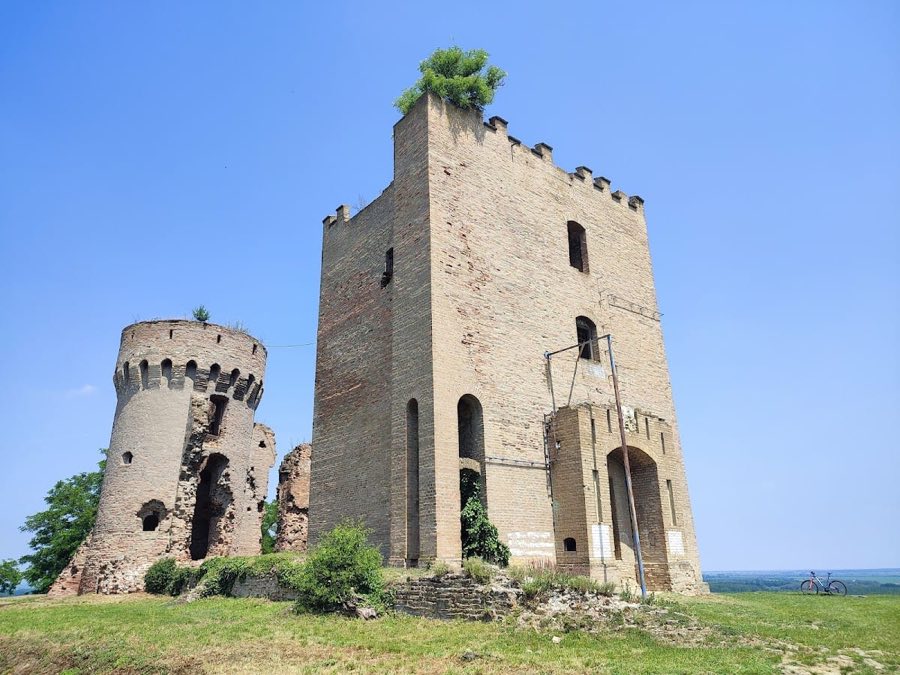
Erdut Castle
Croatia
CastleRuin14th century
No. 19916
Manor house · Croatia
No. 19916 · 45.358 N, 18.995 E
Quick summary
Eltz Manor, Vukovar is a manor house in Vukovar, Croatia with origins associated with the 18th century.
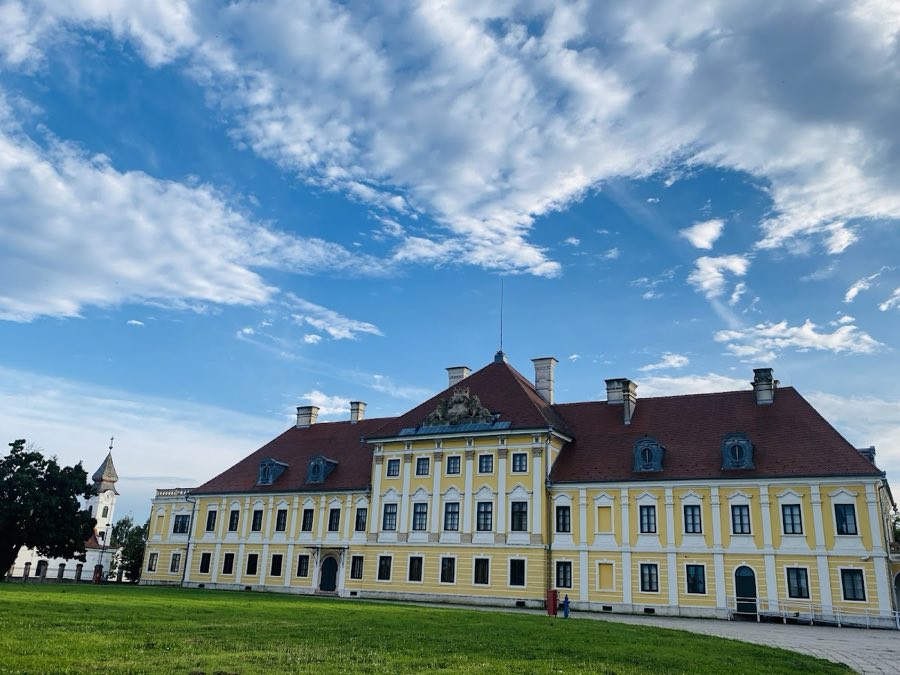
See all castles in CroatiaEltz Manor in Vukovar, Croatia is an 18th-century Baroque palace built by members of the German Catholic House of Eltz during the era of Habsburg rule. Constructed in the mid-1700s, the manor later housed the Vukovar City Museum and its image was reproduced on Croatia’s 20 kuna banknote issued in 1993 and 2001. The estate formed an important landed seat for the Eltz family on the eastern edge of Habsburg Slavonia and played a continuous role in local landholding and administration.
The estate’s modern story begins in 1736, when Philipp Karl von Eltz‑Kempenich, who served as Archchancellor of the Holy Roman Empire and Prince‑Archbishop of Mainz, acquired a manor in Vukovar while the region was ruled by Emperor Charles VI. Descendants of Philipp Karl undertook the main construction phase between 1749 and 1751, creating the Baroque palace and then enlarging it in stages over subsequent years. During this period the Lordship of Vukovar lay close to the Military Frontier, exposing its estates to raids by Ottoman troops and to activity by local Hajduk irregulars.
In the closing months of the Second World War, Yugoslav Partisans took control of the country and in 1944 the communist authorities confiscated the manor; the family of Jakob Graf zu Eltz was compelled to leave Vukovar. Jakob later returned from Eltville after the establishment of the modern Croatian state in 1990 and served as a member of the Croatian parliament in Zagreb. After his death in 2006 his heir Georg Graf von und Eltz‑Vukovar pursued a legal process to recover the family property.
During the Croatian War of Independence the palace endured severe destruction in 1991, when it was bombarded by the Yugoslav People’s Army during the Battle of Vukovar. Restoration work carried out after the conflict culminated in October 2011, when the building was returned to its pre-war appearance.
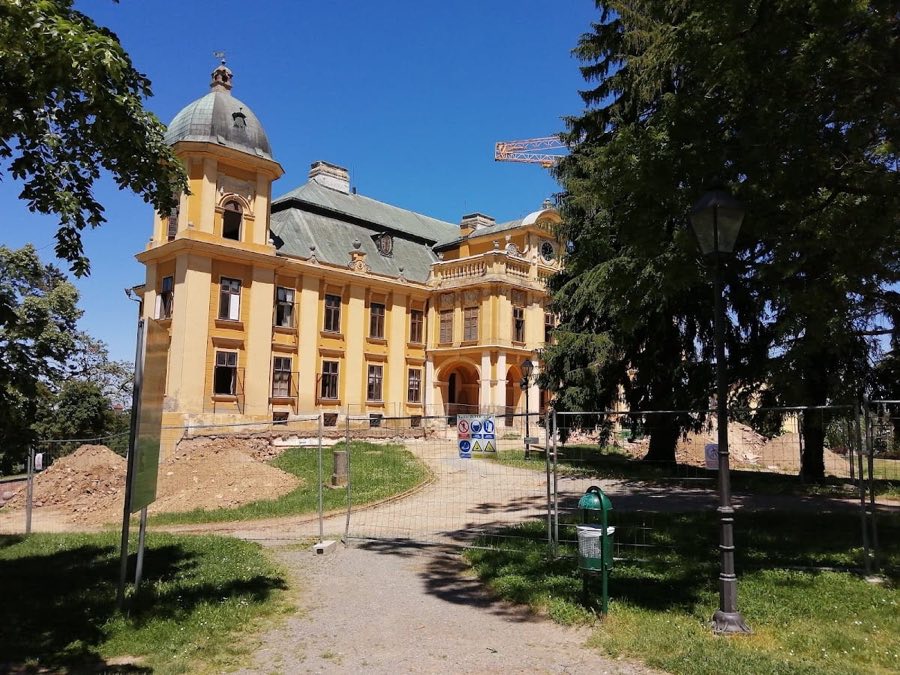
The site is laid out as an 18th-century Baroque manor at the center of an estate that developed in the same century. The main building served as the family residence and later as a municipal museum; it dates to the construction campaign of 1749–1751 and was altered and extended over time. Photographic records created before restoration show a badly damaged main façade and other war-torn elevations; a program of repair and conservation was completed so that the palace regained its appearance from before the 1991 fighting.
The wider complex contains several identified estate structures. A gallery known as the Bauer Gallery stands within the grounds and is recorded as part of the estate complex. An old water tower rises on the property and an orangerie, a heated greenhouse used for tender plants, is also present. The Church of St. Roch sits within the manor grounds and forms part of the estate ensemble. Before the post‑war repairs, images show a ruined tower and a demolished outbuilding amid the grounds, and angel sculptures were photographed set against ruined background structures; the palace itself has since been restored to its pre‑war look.
No. 35053
No. 37799
No. 64275
No. 62564
Comments
Comments for Eltz Manor, Vukovar will require a verified account before posting.
We'll send a verification link before your first comment is published.