No. 53528
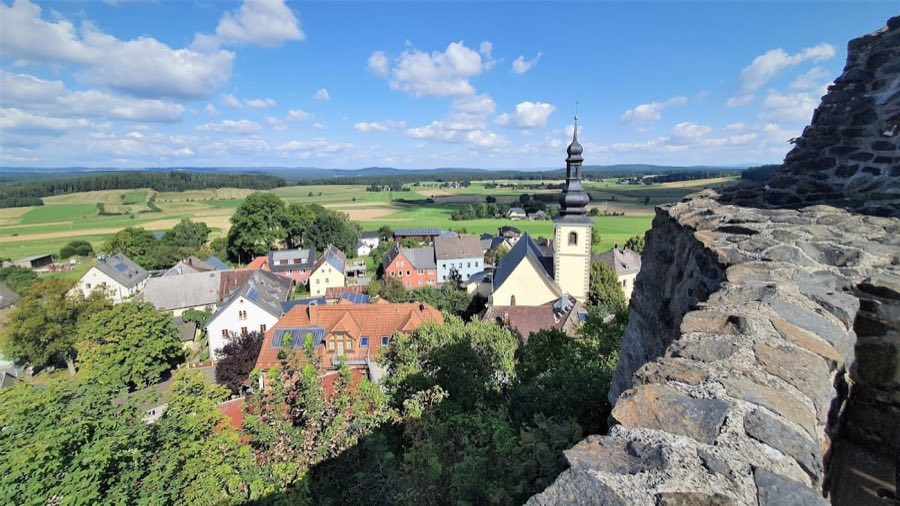
Thierstein Castle
Germany
CastleRuin14th century
No. 99011
Castle · Germany
No. 99011 · 50.146 N, 11.917 E
Quick summary
Epprechtstein Castle is a castle in Germany with origins associated with the 15th century.
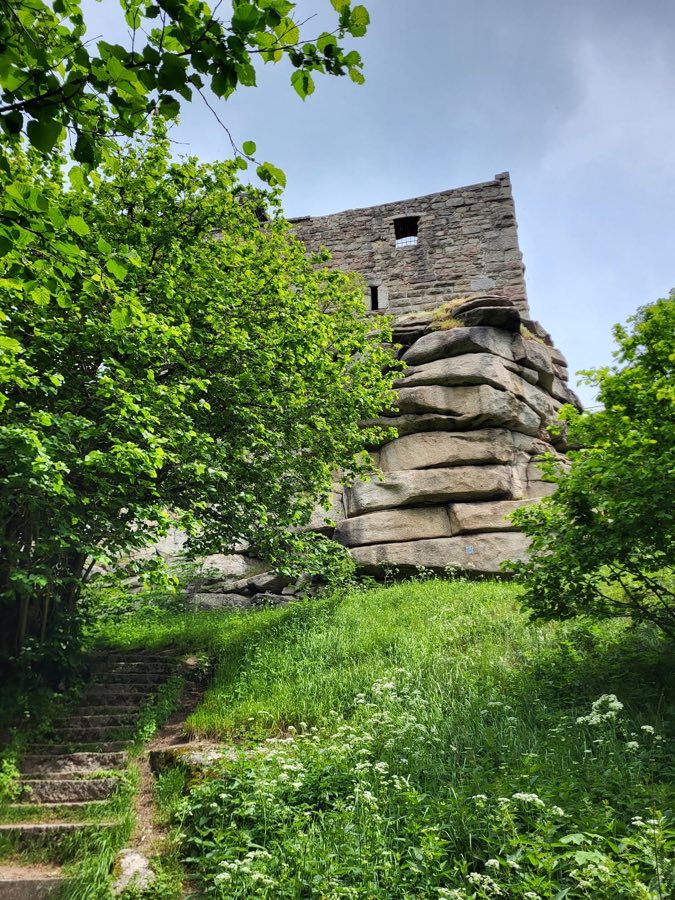
See all castles in GermanyEpprechtstein Castle is located in the municipality of Kirchenlamitz, Germany. This medieval fortress was constructed by German settlers during the High Middle Ages, serving as a regional stronghold.
The earliest known record of the castle dates to 1248 when Duke Otto II of Merania mentioned a figure named Eberhardus de Eckebretsteine in a deed of gift. In 1308, King Henry VII granted possession of the fortress to three brothers—Ulrich, Henry, and Nickel—from the Sack family. Around the same period, the Wild family also held joint ownership, reflecting the castle’s importance as a feudal seat.
In 1337, Emperor Louis IV granted a small portion of the castle to Henry of Plauen, who served as Vogt, or protector. Nearly two decades later, in 1352, forces led by the burgraves of Nuremberg, which included Henry of Kotzau and his brothers, captured the fortress through military action. Following this event, the burgraves purchased both the castle and the nearby administrative office, as well as the parish of Kirchenlamitz, between 1355 and 1356. This acquisition incorporated both territories into the Sechsämterland, a regional administrative district, with Epprechtstein Castle becoming the residence of the local officials known as Amtmänner.
By the late 15th century, the castle’s tower was integrated into a wider defensive network called the Wartordnung, established in 1498 to coordinate military watch and signal systems. However, the castle’s prominence declined in the following century. During the 1500s, troops under Henry of Plauen destroyed the fortress, leading to its abandonment and gradual ruin.
Interest in Epprechtstein Castle’s remains resurfaced in the late 18th century when historian Johann Theodor Benjamin Helfrecht and cartographer Johann Christoph Stierlein studied the site. The ruined castle also inspired artist Georg Könitzer, who produced a lithograph depicting its scattered stones and surrounding landscape as part of his work focusing on the Fichtel Mountains region.
The castle ruins occupy the summit of Epprechtstein mountain, a rocky peak rising to 782.1 meters. The fortress was built on a long granite ledge that offers steep drops along its sides, enhancing its natural defenses. The most significant surviving structure is the tower house, known as the Wohnturm, which originally served as the main living quarters. Constructed directly on solid granite, this tower was the central building of the castle complex.
Today, a staircase within the tower leads to a wooden viewing platform added in 1982, allowing perspectives across the surrounding countryside. From this vantage point, one can see notable landmarks such as the Waldstein ridge and Großer Kornberg, as well as towns including Schwarzenbach an der Saale, Oberkotzau, and Hof. Looking to the south, the view extends over the inner Fichtel Mountains reaching as far as the Kösseine.
Around 250 meters to the southeast of the ruins lies a small service hut used by the Kirchenlamitz mountain rescue team. While the castle was constructed entirely of granite, no specific decorative elements, inscriptions, or archaeological artifacts like tools or pottery have been documented at the site. The remains stand primarily as fragmentary walls and foundations that mark the outline of the former fortress, offering valuable insight into its medieval defensive purpose.
No. 53528
No. 66507
No. 85466
No. 28519
Comments
Comments for Epprechtstein Castle will require a verified account before posting.
We'll send a verification link before your first comment is published.